Coffee Station For Small Kitchen
A coffee station for small kitchen doesn’t have to mean sacrificing your morning brew. The real challenge is fitting a dedicated setup without cluttering your countertops. You’re in the right place—this guide cuts through the noise, offering space-saving solutions, smart storage hacks, and compact gear that turns even the tiniest corner into a functional, stylish coffee hub.
How to Plan a Coffee Station for a Small Kitchen
Measure your available counter space first
Before buying any equipment or supplies, measure your available counter space to ensure everything fits without overcrowding. Use a tape measure to record the length, depth, and height of the area where you plan to place the station.
A typical small coffee station needs at least 12 inches of width for a single-serve machine or drip brewer, plus extra room for a mug and supplies.
If your counter is narrower than 15 inches, consider a wall-mounted shelf or a rolling cart to create dedicated space without sacrificing prep area. Prioritize a flat, stable surface near an outlet to avoid cord clutter.
Also, check clearance above for any upper cabinets—you want at least 15 inches of vertical space to comfortably operate a coffee maker. This measurement step prevents returns and redesigns, saving time and frustration.
Once you know your exact dimensions, you can confidently select compact appliances and organizers that maximize every inch. Remember, precision now means a functional station later.
Choose a dedicated corner or wall area
Select a specific corner or wall area that can be exclusively used for your coffee station, even if it’s small. Look for underutilized spots like the end of a counter, a narrow gap between cabinets, or a corner near the sink for easy water access.
This dedicated zone keeps coffee-making supplies contained and prevents them from spreading across your kitchen. If your kitchen lacks obvious counter space, consider a wall-mounted fold-down shelf or a tiered cart that fits into a corner.
The goal is to create a visual and functional boundary that signals “this is the coffee area.” Use a small tray or mat to define the space and catch drips. Avoid placing the station in high-traffic zones or near the stove where heat and grease can affect coffee quality.
By choosing a consistent, dedicated spot, you streamline your morning routine and reduce clutter. This approach also makes it easier to keep the station organized and tidy, as everything has a designated home.
Consider vertical storage for mugs and supplies
Maximize your small kitchen by using vertical storage for mugs, pods, and accessories. Install under-cabinet hooks or a mug rack to hang cups, freeing up counter space. For supplies like coffee beans, filters, and stirrers, use wall-mounted shelves or magnetic strips for metal containers.
A tiered spice rack can hold small jars of sugar or cocoa, while a hanging basket beneath a shelf stores pods or tea bags. If you have a cabinet above the station, add stackable bins or a lazy Susan to keep items accessible.
For open shelving, use clear canisters with labels to maintain a tidy look and easy identification. Even a small pegboard on the wall can hold tools like a tamper or frother. By thinking upward, you transform unused wall space into functional storage, keeping your counter clear for the coffee maker.
This strategy not only saves space but also creates a visually appealing, organized station that’s easy to use daily. Remember, every inch upward counts in a small kitchen.
Best Coffee Makers for Tight Countertops
Compact single-serve pod machines
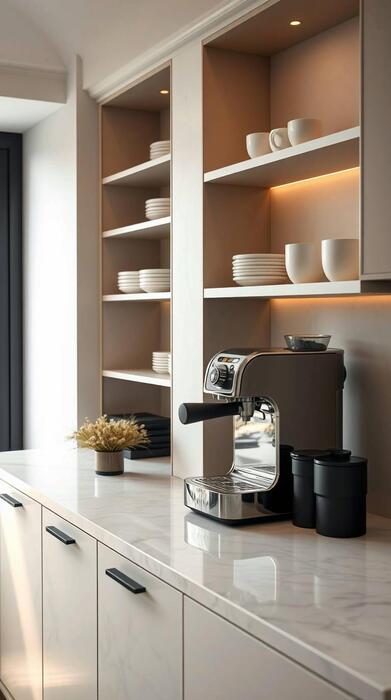
For tight countertops, a compact single-serve pod machine is your best bet for instant coffee with minimal footprint. Look for models under 7 inches wide, like the Nespresso Vertuo Next or Keurig K-Mini, which can brew directly into your mug without a bulky carafe.
Prioritize a removable water reservoir that can be filled at the sink—this saves space and simplifies refilling. Many compact units now include programmable cup sizes and auto-off features to save energy. To maximize counter space, store pods in a slim drawer or a wall-mounted holder.
Pro tip: Choose a machine with a single-serve pod system that matches your preferred brew strength—pod variety ensures you never sacrifice flavor for convenience. Regular descaling will keep your machine running efficiently, preventing scale buildup that can affect taste and lifespan.
Space-saving drip coffee makers under 10 inches wide
If you need multiple cups but have limited counter space, a drip coffee maker under 10 inches wide is ideal. Models like the Cuisinart DCC-3200BK (9 inches wide) or Zojirushi EC-DAC50 offer a 5-cup capacity without dominating your counter.
Key features to look for: a programmable timer to brew before you wake, a pause-and-serve function to grab a cup mid-brew, and a compact carafe that fits under standard cabinets. Brew strength control lets you adjust flavor, while a self-cleaning cycle reduces maintenance.
To save even more space, opt for a model with a built-in charcoal water filter to improve taste and avoid bulky pitchers.
Placement tip: Position the maker at the edge of your counter to allow easy access to the water reservoir and carafe, and use a slim drip tray to catch spills.
Manual pour-over setups that store easily
A manual pour-over setup is the ultimate space-saving solution for coffee lovers who value control and freshness. Choose a ceramic or glass dripper like the Hario V60 or Chemex that nests inside your mug when not in use.
Store filters in a small canister or drawer, and keep a gooseneck kettle (many have compact, cordless designs) on a shelf or in a cabinet. Key advantage: No machine footprint—just a dripper and a mug.
To streamline, pre-grind beans weekly and store in an airtight container, or use a manual hand grinder that fits in a drawer. Pour-over technique: Use a 1:16 coffee-to-water ratio for balanced flavor, and bloom the grounds for 30 seconds. Cleaning is simple: Rinse the dripper and mug immediately after brewing.
This method offers zero counter clutter and allows you to enjoy café-quality coffee in tight spaces.
Storage Solutions for Coffee Supplies in Small Kitchens
Use wall-mounted shelves for beans and filters
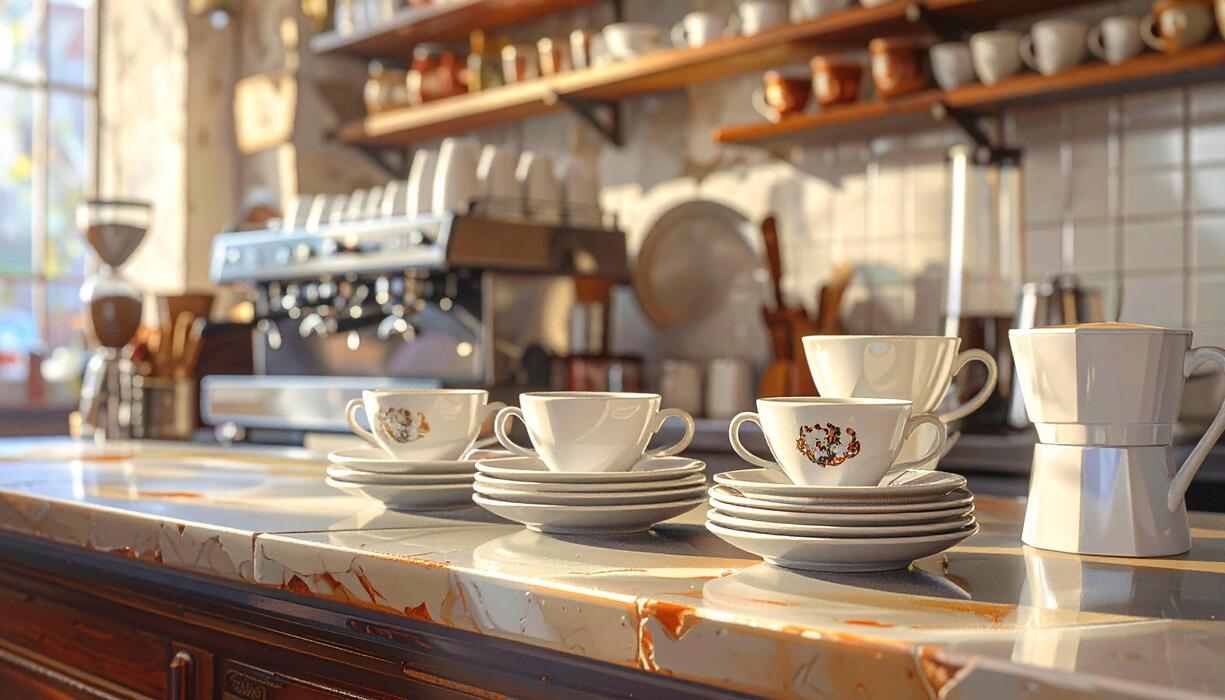
Maximize vertical space by installing a sturdy wall-mounted shelf above your coffee maker. This keeps beans, filters, and mugs within easy reach without cluttering countertops. Choose a shelf with a raised lip or guard rail to prevent items from tipping over during daily use.
For a cohesive look, match the shelf material to your kitchen’s existing decor—wood adds warmth, while metal offers a modern touch. Store coffee beans in opaque, airtight containers on the shelf to preserve freshness and block light.
Use small baskets or bins to corral filters, stirring sticks, and napkins, making them easy to grab. If you have multiple bean varieties, label containers clearly to avoid mix-ups.
A shelf that’s 12 to 16 inches deep works well for standard coffee supplies, and installing it at eye level ensures effortless access. This approach frees up precious counter space for your coffee maker and mug warmer, creating a dedicated, clutter-free coffee zone.
Magnetic strips to hold metal canisters and tools
Attach a magnetic strip to the wall or the side of your fridge to store metal canisters and frequently used tools. This trick keeps your coffee station tidy by lifting small items off the counter.
Use the strip to hold stainless steel canisters filled with coffee beans, sugar, or tea bags—just ensure the containers are magnetic. You can also hang metal measuring spoons, a frothing wand, or a tamper for quick access.
For safety, mount the strip away from the stove or sink to avoid heat and moisture damage. Choose a strip with strong neodymium magnets to securely hold heavier items, and consider a length of 12 to 18 inches for optimal capacity.
This solution is especially useful in tiny kitchens where every inch counts, as it turns unused wall space into functional storage. Plus, the visual appeal of neatly arranged metal items adds a sleek, professional vibe to your coffee corner.
Drawer organizers for pods, stirrers, and syrups
Transform a shallow drawer near your coffee station into an organized hub with customizable drawer organizers. These dividers keep coffee pods, stirrers, sugar packets, and syrup bottles neatly separated and easy to find. Start by measuring your drawer depth—most organizers fit standard 2- to 4-inch depths.
Use adjustable bamboo or plastic inserts to create compartments for different items: one section for pods, another for sweeteners, and a deeper one for syrup bottles. For single-serve pods, stack them vertically to maximize space, and place stirrers in a narrow slot.
Label each compartment with small tags to speed up your morning routine. This system prevents clutter and saves time because you no longer rummage through a messy drawer. To keep syrups from leaking, store them in a separate, lidded container within the organizer.
With everything in its place, you can grab what you need quickly, making your coffee station efficient and stress-free.
Tips for Organizing a Coffee Station Without Clutter
Limit visible items to daily essentials only
To maintain a clutter-free coffee station in a small kitchen, keep only your daily essentials on the counter. This means storing rarely used items like specialty syrups, backup mugs, or seasonal brewing gear in a cabinet or drawer.
For example, display just your coffee maker, a canister of whole beans, a single mug, and a spoon. This minimalist approach not only reduces visual noise but also makes your morning routine faster—you grab exactly what you need without sorting through extras.
Use a small tray to corral these items, ensuring they stay within a defined footprint. If you have limited counter space, consider a wall-mounted shelf or a rolling cart to keep the station compact.
By ruthlessly editing down to the essentials, you’ll create an efficient, tidy setup that feels intentional rather than crowded. Remember, every item visible should serve a purpose daily; store the rest out of sight to preserve that clean, streamlined look.
Group similar items in baskets or trays
Grouping similar items in baskets or trays is a powerful strategy to organize your coffee station without clutter. Start by categorizing your supplies: coffee pods or beans in one container, stirrers and sweeteners in another, and mugs in a third.
Use small, uniform baskets or trays that fit your counter or shelf dimensions—think matching woven bins or sleek metal caddies. This approach creates visual order by hiding individual items behind a cohesive container, so the eye sees a neat collection rather than a jumble.
For a small kitchen, choose stackable or tiered trays to maximize vertical space, like a two-tiered stand for mugs and pods. Label each basket’s purpose (e.g., “Tea” or “Spoons”) to streamline your routine. By grouping, you also make it easy to grab the whole set for quick cleanup or refilling.
This method turns your station into a self-contained, organized zone that feels curated, not chaotic.
Label containers to keep everything easy to find
Labeling containers is a simple yet effective way to keep your coffee station organized and accessible in a small kitchen.
Use clear, uniform labels on jars, canisters, and baskets to identify contents like “Espresso Beans,” “Sugar,” or “Filters.” This eliminates guesswork and speeds up your morning routine—no more opening multiple containers to find what you need.
For a cohesive look, choose a label maker or handwritten tags on chalkboard stickers for a rustic touch. Place labels on the front or top of each container, using a consistent font and size to maintain visual harmony.
In a compact space, this system also prevents buying duplicates, as you’ll always know what’s on hand. To maximize efficiency, group labeled containers by use—for example, all brewing supplies together. This clarity reduces clutter by ensuring every item has a designated spot, making it easy to return things after use.
With labels, your coffee station becomes intuitive and tidy.
Essential Accessories for a Small Coffee Station
A compact electric kettle or gooseneck kettle
For a small coffee station, a compact electric kettle or gooseneck kettle is essential for efficient and precise brewing without taking up too much counter space. Opt for a model with a small footprint, ideally under 1 liter capacity, which heats water quickly and saves room.
A gooseneck spout offers controlled pouring for pour-over methods like Chemex or V60, ensuring even extraction and better flavor. Choose a kettle with temperature control features, such as preset buttons for 195°F–205°F, to avoid burning delicate coffee grounds.
Look for a cordless design with a swivel base for easy handling and storage. Many compact kettles also have a keep-warm function and auto shut-off for safety. Prioritize stainless steel or BPA-free plastic interiors for durability.
This single appliance replaces bulky stovetop kettles and reduces clutter, making your station both functional and streamlined. A compact kettle is a space-saving hero that elevates your daily coffee ritual without overwhelming your small kitchen.
Stackable mugs and reusable cups
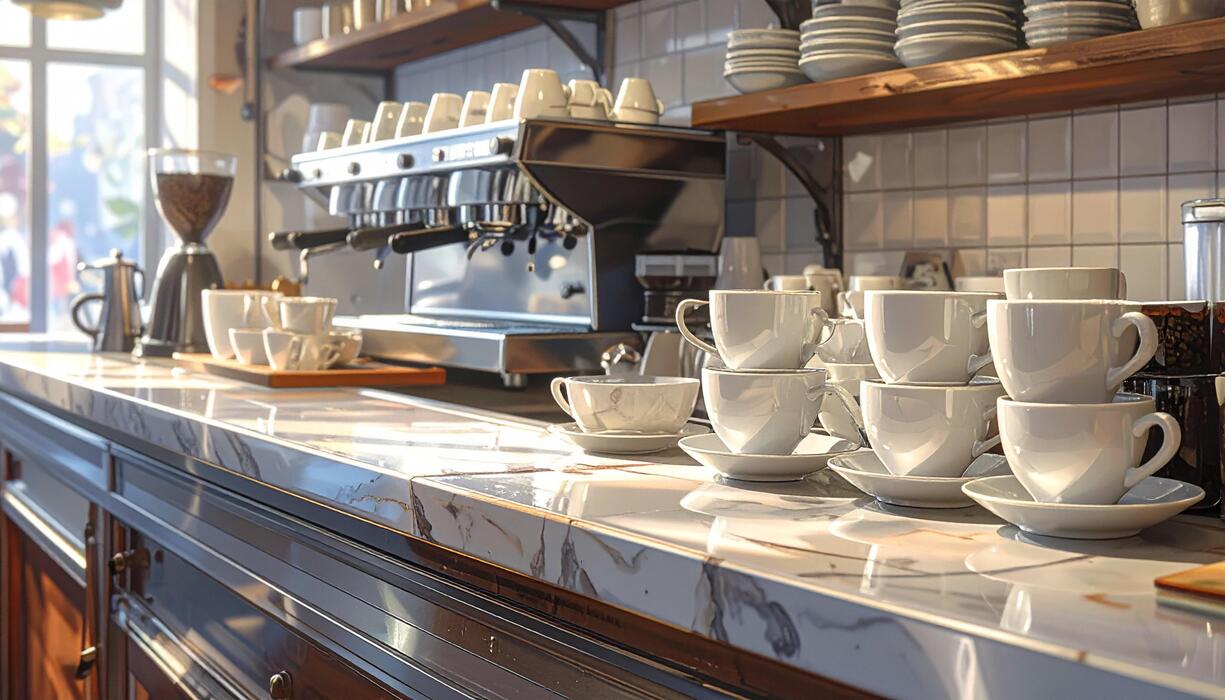
Stackable mugs and reusable cups are a space-saving marvel for a small coffee station, maximizing vertical storage while minimizing clutter. Choose mugs made of thin ceramic or double-wall glass that nest securely to reduce height and prevent chipping.
Look for uniform sizes (8–12 oz) to stack neatly and fit under low cabinets. Reusable cups, such as collapsible silicone or stainless steel travel mugs, can be flattened or nested for compact storage when not in use. Prioritize dishwasher-safe and microwave-friendly materials for easy maintenance.
Consider mugs with ergonomic handles that don’t protrude excessively, allowing tighter stacking. A set of 4–6 stackable mugs takes up the same space as 2 traditional mugs, freeing counter space for other essentials.
For sustainability, reusable cups reduce single-use waste and can be stored inside larger mugs or on a small wall rack. This accessory transforms your station into an organized, multi-functional hub that supports daily brewing without sacrificing style or practicality.
A small frother for milk-based drinks
A small frother is a game-changer for milk-based drinks like lattes, cappuccinos, and macchiatos, even in a tiny kitchen. Opt for a handheld battery-powered frother—it’s compact, affordable, and requires no counter space.
These devices whisk hot or cold milk into creamy microfoam in seconds, perfect for adding a café touch at home. For a dedicated appliance, choose a mini electric milk frother (around 10 oz capacity) with separate settings for hot foam and cold foam.
Look for stainless steel interiors for easy cleaning and a non-stick coating to prevent residue. Prioritize models with quiet operation and a detachable whisk for quick rinsing. A small frother fits inside a drawer or on a shelf, and many come with a storage base for the whisk.
It’s ideal for single servings, reducing waste and cleanup. Pair it with a compact espresso maker or aeropress to create barista-quality drinks without bulky equipment. This accessory adds versatility to your station, making it a must-have for milk lovers with limited space.
Creative Ways to Maximize Vertical Space for Coffee
Install floating shelves above the counter
Transform unused wall space into a dedicated coffee zone by mounting floating shelves just above your counter. Choose sturdy, moisture-resistant materials like solid wood or metal to hold your coffee essentials securely.
Use the top shelf for decorative canisters storing beans, grounds, or pods, and the lower shelf for your favorite mugs and glasses. This arrangement keeps everything within arm’s reach while freeing up precious counter space.
To maximize efficiency, add small hooks underneath the lower shelf for hanging measuring scoops or espresso tools. For a polished look, group items by height and color, and ensure shelves are installed at a comfortable height—typically 12-18 inches above the counter—to avoid cluttering your workspace.
This vertical solution not only organizes your coffee station but also adds a stylish, airy feel to your small kitchen.
Use a pegboard to hang mugs and tools
A pegboard offers a customizable and visually appealing way to store coffee gear vertically without taking up counter space. Mount it on a wall near your coffee area, then use hooks, shelves, and baskets to arrange mugs, espresso cups, and tools like tampers or milk frothers.
Hang mugs by their handles on standard hooks to keep them accessible and display them as decor. Use small shelves for coffee pods, syrups, or a digital scale, and baskets for filters or stir sticks.
The key is to keep frequently used items at eye level and lower, while storing backups above. This system adapts to your needs—simply rearrange hooks as your collection grows. For a cohesive look, paint the pegboard to match your kitchen walls or cabinets.
This solution turns an empty wall into a functional, ever-changing coffee station that maximizes every inch of vertical space.
Add a narrow cart or rolling trolley for extra storage
A narrow cart or rolling trolley provides flexible, movable storage that fits into tight gaps between cabinets or next to counters. Choose a slim design, ideally 12-18 inches wide, with multiple shelves to hold your coffee maker, grinder, and supplies.
Use the top shelf for daily-use equipment, the middle for mugs and pods, and the bottom for bulk beans or a waste bin. The wheels allow you to roll the cart to your workspace when brewing and tuck it away when not in use, freeing up floor space.
Look for carts with built-in hooks or towel bars for hanging small tools or a dishcloth. For a cohesive look, coordinate the cart’s finish with your kitchen hardware—metal for modern, wood for rustic.
This solution transforms a neglected corner into a dedicated coffee station, offering easy access and effortless reorganization as your needs change.
Common Mistakes to Avoid When Setting Up a Coffee Station
Overcrowding the counter with too many gadgets
In a small kitchen, every inch of counter space is precious. A common mistake is cramming your coffee station with every gadget imaginable, from espresso machines to milk frothers and grinders. This not only looks cluttered but also reduces your usable prep area.
Instead, prioritize a single, versatile machine that handles multiple tasks, like a drip brewer with a built-in grinder or a pod system. Store infrequently used items, such as a dedicated milk steamer, in a cabinet and pull them out only when needed.
Keep only daily essentials—your coffee maker, a mug, and a small canister of beans—on the counter. Use vertical space with a wall-mounted shelf for syrups or a magnetic strip for stirring spoons.
This approach frees up room for food prep and creates a calm, functional station that works with your kitchen’s flow, not against it.
Forgetting to account for electrical outlets
A coffee station without accessible outlets is a recipe for frustration. Many small kitchen setups fail because people place their coffee maker in a spot that requires an extension cord or blocks other appliances.
Before finalizing your station location, check outlet proximity and avoid using power strips that can create trip hazards. Ideally, position your coffee maker within 2 feet of a dedicated outlet to keep cords tidy and safe.
If your kitchen lacks nearby outlets, consider a wall-mounted coffee maker or a slim countertop that aligns with existing sockets. Also, avoid sharing an outlet with high-wattage appliances like toasters or microwaves, which can trip breakers.
Plan for future needs by leaving one outlet free for a milk frother or electric kettle. This simple step ensures your station operates smoothly without electrical headaches.
Choosing bulky furniture that blocks workflow
In a compact kitchen, bulky furniture can disrupt the entire workflow. A large cart or a deep cabinet may seem appealing for storage, but it often blocks access to cabinets, drawers, or the sink.
Instead, opt for slim, multi-functional furniture like a narrow rolling cart (under 12 inches wide) that fits between counters or a wall-mounted shelf above the main workspace. Avoid pieces with deep footprints that extend into walkways; prioritize vertical storage with hooks and racks for mugs and filters.
Measure your space carefully, leaving at least 18 inches of clearance for comfortable movement. A coffee station should enhance your morning routine, not create obstacles.
By choosing furniture that is proportional to your kitchen, you maintain an efficient path from coffee maker to sink to fridge, making each step quick and easy without unnecessary detours.
Frequently Asked Questions
What is the best way to set up a coffee station in a small kitchen?
Use vertical space with wall-mounted shelves or a slim cart to store your coffee maker, mugs, and supplies. Keep essentials like beans, filters, and a grinder within arm’s reach to maximize counter space.
How can I save counter space for a coffee station in a tiny kitchen?
Opt for a compact coffee maker like a single-serve pod machine or an AeroPress. Use a magnetic strip on the wall to hold metal canisters or tools, and choose stackable or nesting mugs to reduce clutter.
What are essential items for a small coffee station?
A small coffee maker, a few mugs, a spoon, and airtight containers for beans or grounds are key. Add a small electric kettle if you prefer pour-over, but skip bulky extras like a separate grinder by using pre-ground coffee.
Can I create a coffee station in a corner or under a cabinet?
Yes, utilize an unused corner with a narrow table or install a wall-mounted drop-leaf shelf that folds down when not in use. Under-cabinet coffee makers are also great for freeing up counter space.
How do I organize a coffee station to avoid clutter in a small kitchen?
Use drawer dividers or small baskets for pods, sugar, and stirrers. Hang mugs on hooks under a shelf, and keep the coffee maker and one canister visible while storing extras in a nearby cabinet.
What type of coffee maker is best for a small kitchen?
A compact drip machine, a single-serve pod brewer, or a manual pour-over setup like a Chemex works well. French presses are also space-efficient and don’t require electricity, saving counter space.
Should I include a coffee grinder in a small coffee station?
Only if you have space—opt for a small manual grinder that fits in a drawer or on a shelf. Otherwise, buy pre-ground coffee to keep the station minimal and functional.
How can I make a small coffee station stylish on a budget?
Use a pretty tray to corral items, add a small plant or decorative canister, and choose matching mugs. A wall-mounted shelf with hooks adds charm without taking up floor space.
Conclusion
In summary, a dedicated coffee station in a small kitchen is achievable through vertical storage, wall-mounted shelves, and multi-functional tools. Prioritize your must-have brewing method and keep supplies organized in compact containers. With these smart solutions, you can enjoy a barista-worthy morning ritual without sacrificing counter space. Embrace the challenge, get creative with your layout, and savor every sip from your perfectly tailored nook.