How To Brew Your Own Iced Coffee
Stop spending five dollars every morning and learn how to brew your own iced coffee right from your kitchen. Whether you prefer a quick flash-brew over ice or a smooth, overnight cold brew, making cafe-quality drinks at home is surprisingly simple. Stick with us to discover the fastest, most delicious ways to master your home barista skills today.
Different Methods for Making Iced Coffee at Home
The Flash Brew Method
The flash brew method, also known as Japanese-style iced coffee, is the best way to preserve bright acidity and complex floral notes. To start, replace approximately one-third to one-half of your brewing water with ice cubes placed directly in the carafe.
Brew your coffee at normal strength using a pour-over dripper, letting the hot liquid drip immediately onto the ice. This instant chilling process locks in the volatile aromatics that are often lost during slow cooling.
Because the ice melts as the coffee drips, it dilutes the concentrated brew to the perfect strength. Ensure you use freshly ground beans and a slightly finer grind than usual to compensate for the faster extraction time.
This method provides a crisp, refreshing cup that is ready to drink immediately without the long wait times associated with traditional steeping methods.
Traditional Cold Brew Basics
Traditional cold brew is favored for its low acidity and smooth, chocolatey profile. To make this at home, combine coarsely ground coffee beans with room temperature water in a large jar or French press. Use a ratio of roughly one part coffee to four parts water for a concentrated base.
Stir gently to ensure all grounds are saturated, then cover and let it steep for 12 to 24 hours on your counter or in the fridge. Once finished, filter the mixture through a fine-mesh sieve or paper filter to remove all sediment.
This creates a heavy concentrate that should be diluted with water or milk before serving over fresh ice. Because the coffee never touches hot water, it avoids extracting bitter oils, resulting in a naturally sweet beverage that stays fresh in the refrigerator for up to two weeks.
Using an Aeropress for Quick Results
The AeroPress is a versatile tool for making a high-quality iced coffee in under three minutes. To begin, use the inverted method by placing the plunger inside the chamber and turning it upside down. Add a rounded scoop of fine grounds and just enough hot water to cover them.
Stir for 30 seconds to create a highly concentrated coffee shot similar to espresso. Attach the cap with a rinsed paper filter, flip the device over a sturdy glass filled with plenty of ice, and plunge slowly.
The pressure-driven extraction ensures a full-bodied flavor that stands up well against melting ice. You can customize the strength by adding a splash of cold water or your favorite creamer.
This technique is perfect for those who want the richness of a slow brew with the speed of an instant preparation.
The Instant Coffee Shortcut
If you are short on time or equipment, the instant coffee shortcut is a surprisingly effective way to satisfy a caffeine craving.
Start by dissolving two tablespoons of high-quality instant coffee granules in a very small amount of hot water; using just enough to create a liquid paste ensures the powder fully dissolves without warming up the entire drink.
For a frothy texture, you can whisk the coffee and sugar with a splash of water until it becomes light and airy, similar to the popular Dalgona style.
Fill a tall glass with ice and pour your choice of cold milk or water over the cubes, then stir in your coffee concentrate. This method is incredibly convenient for travel or busy mornings.
By using filtered water and premium instant brands, you can achieve a clean, consistent flavor profile without any specialized brewing gear.
Best Coffee Beans and Roast Profiles for Cold Drinks

Why Dark Roasts Work Best with Ice
When you brew coffee directly over ice or dilute a concentrate with cold milk, the lower temperatures tend to mute delicate flavor nuances. This is why dark roast beans are often the superior choice for iced preparations.
Darker roasts offer robust, smoky, and chocolatey profiles that can stand up to the significant dilution caused by melting ice cubes. Because these beans are roasted longer, they develop caramelized sugars that provide a natural sweetness, which balances the refreshing coldness of the drink.
While a light roast might taste sour or tea-like when chilled, a dark roast maintains its body and punch, ensuring your beverage still tastes like coffee rather than flavored water.
For a consistent experience, look for roasts labeled as Italian or French to ensure the bitterness is intentional and provides a sturdy foundation for any added creamers or sweeteners you might enjoy in your glass.
Single-Origin vs. Blends
Choosing between single-origin beans and blends depends entirely on your desired flavor complexity. Coffee blends are specifically engineered for consistency and balance, making them an excellent choice for a daily iced coffee that tastes great every time.
They often combine beans from different regions to create a profile that is smooth and mellow, which is ideal when adding milk or syrups. On the other hand, single-origin beans are perfect for the adventurous brewer who prefers to drink their iced coffee black.
Using beans from a specific region, like Ethiopia or Colombia, allows unique fruity or floral notes to shine through even at cold temperatures. If you enjoy a bright, acidic snap in your iced beverage, a single-origin African bean can offer a refreshing citrus-forward experience.
However, for most home brewers looking for that classic, rich iced coffee taste, a high-quality espresso blend usually provides the most reliable and satisfying results for various cold brewing methods.
The Importance of Freshness and Grind Size
The quality of your iced coffee is heavily dictated by the state of your beans before they ever touch water. Always prioritize freshly roasted whole beans and grind them immediately before brewing to preserve the volatile oils and aromatic compounds.
For most iced coffee methods, such as the Japanese flash-brew or cold brew immersion, a medium-coarse grind is the gold standard. If the grind is too fine, your iced coffee may end up over-extracted and overly bitter; if it is too coarse, the result will be weak and watery.
Achieving the right texture, similar to sea salt, ensures that the water extracts the flavors efficiently during the brewing process. Furthermore, ensure you are using a high-quality burr grinder to maintain uniformity in particle size.
Consistent particles lead to an even extraction, which is crucial when you want to capture the sweetness of the bean without the harshness that can become magnified once the coffee is chilled.
How to Brew Iced Coffee Using the Pour-Over Method

Equipment You Will Need
To master the pour-over iced coffee technique, often referred to as the Japanese flash-chilling method, you must gather a few specific tools to ensure a crisp and refreshing result. You will need a high-quality manual dripper, such as a Hario V60 or a Chemex, along with the corresponding paper filters.
A precision digital scale is non-negotiable for this process, as you must accurately divide your total water weight between hot liquid and solid ice cubes. Additionally, you require a gooseneck kettle for controlled pouring, which prevents over-extraction of the grounds.
Choose freshly roasted coffee beans and grind them slightly finer than you would for a standard hot brew to compensate for the faster drip time. Finally, ensure you have a sturdy glass carafe or server that can withstand thermal shock when the hot coffee hits the ice.
Having these items ready allows for a seamless transition from brewing to drinking without diluting the complex flavor profile of your favorite single-origin beans.
Step-by-Step Brewing Instructions
Begin by placing your paper filter in the dripper and rinsing it with hot water to remove any papery taste, then discard the rinse water. Add your freshly ground coffee to the filter and create a small well in the center.
Place the required amount of ice directly into the carafe below the dripper. Start the timer and pour just enough hot water to saturate the grounds, allowing them to bloom for 30 seconds; this releases trapped gases and improves flavor.
Continue pouring the remaining hot water in slow, concentric circles, maintaining a steady flow to ensure even extraction. As the concentrated coffee drips onto the ice, it flash-chills instantly, locking in bright acidity and delicate aromatics that are often lost in traditional cold brewing.
Once the water has completely drawn through, give the carafe a gentle swirl to melt any remaining ice and fully aerate the beverage. Pour the chilled coffee into a fresh glass filled with ice and enjoy your professional-grade homemade brew immediately.
Calculating the Coffee-to-Ice Ratio
The secret to a perfect DIY iced pour-over lies in the precise balance of hot water and ice, ensuring your drink is cold but never watery. A standard golden rule is to use a 1:15 or 1:16 coffee-to-total-liquid ratio, but you must split the liquid component.
Ideally, you should allocate one-third of your total water weight to ice and the remaining two-thirds to hot brewing water. For example, if your recipe calls for 300 grams of total water, you would place 100 grams of ice in the carafe and brew with 200 grams of hot water.
This method compensates for the dilution that occurs as the hot coffee melts the ice during the filtration process. Using less hot water creates a more concentrated extract that reaches the perfect strength once the ice incorporates.
Always use filtered water for both the brew and the ice cubes to prevent off-flavors from interfering with the bean’s natural sweetness. Adjusting these ratios allows you to customize the body and intensity to your specific palate.
Tips for Preventing Watered-Down Iced Coffee
How to Make Coffee Ice Cubes
One of the most effective strategies for maintaining the integrity of your beverage is to create coffee ice cubes. To do this, simply brew an extra pot of your favorite blend and let it cool completely to room temperature.
Pour the liquid into standard silicone trays and freeze them until solid. By using these frozen coffee blocks instead of traditional water-based cubes, you ensure that as they melt, they release concentrated coffee flavor rather than diluting your drink into a watery mess.
This method allows you to enjoy a slow sip without the pressure of finishing before the ice disappears. For an added touch of luxury, you can even stir in a small amount of simple syrup or vanilla extract into the brew before freezing.
This simple preparation step transforms the physics of your glass, ensuring that the final drop is just as robust and caffeinated as the very first pour you enjoyed.
Brewing Double Strength for Better Flavor
When you are learning how to brew your own iced coffee, the most critical adjustment is to double the coffee grounds while keeping the water amount the same. This technique, known as double-strength brewing, compensates for the immediate dilution that occurs when hot liquid hits cold ice.
By creating a highly concentrated extraction, you provide a buffer against the melting process. If you typically use two tablespoons of grounds for six ounces of water, increase that to four tablespoons. This creates a bold, punchy base that maintains its complex flavor profile even after significant ice melt.
It is also wise to let the concentrate sit for a few minutes before pouring it over ice to reduce the initial thermal shock.
This professional approach ensures that the nuances of the bean—whether chocolatey, nutty, or citrusy—remain prominent throughout your drinking experience, providing a consistent and professional-grade result from the comfort of your own kitchen every morning.
Choosing the Right Type of Ice
The geometry and density of your ice play a surprisingly significant role in how quickly your drink becomes watered down. For the best results, opt for large, dense ice spheres or oversized cubes rather than small chips or crushed ice.
Large cubes have a lower surface-area-to-volume ratio, which means they melt much slower while still keeping your beverage at an optimal temperature. If you are using a standard freezer tray, try to use filtered water to ensure the ice is clear and free of off-flavors that could taint your brew.
Additionally, filling your glass to the brim with these large pieces is actually better than using just a few; more ice keeps the liquid colder for longer, which paradoxically slows the overall melting rate.
By being intentional about the shape and quality of your ice, you control the dilution rate and preserve the strength of your homemade iced coffee, resulting in a refreshing, high-quality drink that rivals any premium café offering.
Ways to Flavor and Sweeten Your Homemade Brew

How to Make Simple Syrup at Home
Granulated sugar often fails to dissolve in cold liquids, leaving a gritty residue at the bottom of your glass. To ensure a professional finish, you should make a basic simple syrup by combining equal parts water and sugar in a small saucepan.
Heat the mixture over medium heat, stirring constantly until the liquid becomes completely clear and the sugar crystals have fully dissolved. This process creates a stable liquid sweetener that blends instantly with cold coffee.
For a richer profile, try using brown sugar or honey as your base, which adds deep caramel notes to your brew. Once the syrup has cooled, store it in a sealed glass jar in the refrigerator for up to one month.
By having this pre-made sweetener ready to use, you can customize the sweetness level of every glass without dealing with undissolved grains. It is the most efficient way to achieve a consistent, cafe-quality taste in your homemade iced coffee recipes every single morning.
Natural Flavor Add-ins Like Vanilla and Cinnamon
Elevating the taste of your iced coffee doesn’t require expensive store-bought syrups filled with preservatives. You can easily infuse natural flavors directly into your brew for a cleaner, more vibrant profile.
Adding a few drops of pure vanilla extract or scraping a fresh vanilla bean into your coffee grounds before brewing provides an aromatic sweetness that complements dark roasts.
If you prefer a touch of spice, try whisking ground cinnamon into your milk or adding a cinnamon stick to your cold brew concentrate while it steeps. For those who enjoy citrus notes, a small piece of orange zest can brighten the acidity of the beans.
You might also consider unsweetened cocoa powder for a subtle mocha undertone or almond extract for a nutty finish. These natural additions allow you to experiment with complex flavor profiles while avoiding artificial chemicals.
By using whole spices and botanical extracts, you create a sophisticated beverage that highlights the natural characteristics of your chosen coffee beans.
Best Milk and Dairy-Free Alternatives
The choice of whitener significantly impacts the texture and mouthfeel of your iced coffee. For a traditional, creamy experience, whole milk or heavy cream offers a rich fat content that balances the inherent bitterness of strong coffee.
However, if you prefer plant-based options, oat milk is widely considered the best dairy-free alternative because of its naturally sweet flavor and remarkably creamy consistency that mimics cow’s milk. Almond milk provides a lighter, nuttier finish but may separate if the coffee is too acidic.
For a tropical twist, coconut milk adds a velvety thickness that pairs exceptionally well with cold brew. If you want to achieve a frothy texture at home, use a handheld milk frother to aerate your chosen milk before pouring it over the ice.
This creates a layered, visually appealing drink while ensuring every sip is smooth. Experimenting with different fat contents and plant bases will help you find the perfect balance that suits your personal dietary needs and taste preferences.
Essential Equipment for Every Home Barista
Top-Rated Cold Brew Makers
To master the art of iced coffee at home, investing in a dedicated cold brew system is the most efficient starting point. Look for brewers that feature a fine-mesh stainless steel filter, which ensures a sediment-free concentrate while allowing essential oils to pass through for a rich flavor profile.
Large-capacity carafes made of borosilicate glass are ideal because they are durable and do not absorb odors, keeping your brew tasting fresh for up to two weeks in the refrigerator.
When selecting a model, prioritize one with an airtight seal to prevent oxidation and protect the delicate aromatic compounds of your coffee beans. These specialized makers simplify the immersion process, allowing you to steep grounds for twelve to twenty-four hours with minimal cleanup.
By using a brewer designed for cold extraction, you avoid the bitterness often associated with hot-brewed coffee that has been cooled down, resulting in a smooth, low-acid beverage that serves as the perfect base for your favorite iced creations.
Precision Scales and Grinders
The secret to a professional-grade iced coffee lies in the consistency of your measurements and the freshness of your beans. A digital coffee scale is an essential tool for maintaining a strict water-to-coffee ratio, which is typically much higher for cold brew concentrates than for standard drip coffee.
Aim for a ratio of 1:4 or 1:5 to ensure a bold result that holds up when diluted with ice. Complement your scale with a conical burr grinder to achieve the necessary extra-coarse texture.
Unlike blade grinders that create uneven dust, burr grinders provide uniform particle size, which is critical for even extraction during the long steeping process. Grinding your beans immediately before brewing preserves the volatile oils and complex notes of the roast.
For the best iced experience, choose a medium to dark roast with chocolatey or nutty undertones, as these profiles tend to shine when served cold. Investing in these precision tools allows you to replicate your favorite cafe results with scientific accuracy every single morning.
Glassware and Reusable Straws
Presentation and temperature retention are the final steps in perfecting your home barista setup. High-quality double-walled insulated glasses are highly recommended for iced coffee because they prevent condensation from forming on the exterior while keeping your drink chilled for significantly longer periods.
This insulation ensures that your ice cubes melt slowly, preventing the dilution of your coffee concentrate and maintaining the intended strength of the brew. To complete the experience, incorporate eco-friendly reusable straws made from glass or stainless steel.
These straws are not only better for the environment but also provide a cleaner taste compared to plastic alternatives. Wider straws are particularly useful if you enjoy adding cold foam or thicker syrups to your beverages.
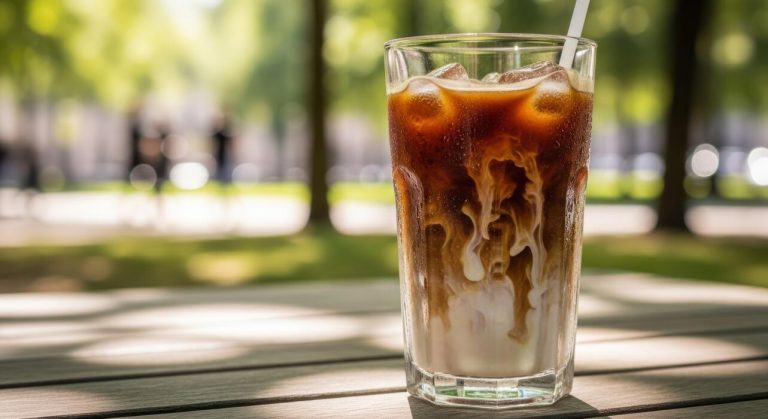
Using the right glassware allows you to appreciate the visual layers of milk and coffee as they swirl together, turning a simple caffeine fix into a premium sensory experience. Proper vessels and accessories ensure that every sip remains as crisp and refreshing as the first, regardless of the temperature outside.
Common Mistakes to Avoid When Making Iced Coffee
Using Hot Coffee Over Small Ice Cubes
One of the most frequent errors beginners make is pouring freshly brewed hot coffee directly over standard small ice cubes, which leads to immediate dilution and a watery flavor profile.
To solve this, you should utilize the flash-chilling method or brew your coffee at double strength to account for the inevitable melting.
A professional tip is to create coffee ice cubes by freezing leftover brew in trays, ensuring that as they melt, they contribute more flavor rather than thinning the drink.
Additionally, using larger, solid ice spheres can significantly reduce the surface area contact, allowing your beverage to stay cold without losing its structural integrity too quickly.
By pre-chilling your glassware and ensuring your coffee reaches room temperature before it hits the ice, you maintain the vibrant acidity and complex notes of the beans.
This simple adjustment transforms a mediocre, translucent drink into a robust and refreshing professional-grade iced coffee that maintains its bold character until the very last sip.
Ignoring Water Quality and Filtration
Since a glass of iced coffee is nearly ninety-eight percent water, using unfiltered tap water can introduce chlorine, minerals, and metallic undertones that ruin the delicate flavor of high-quality beans.
To elevate your home brewing, you must use filtered or bottled spring water to ensure a clean canvas for the extraction process. Hard water prevents the coffee solubles from dissolving correctly, often resulting in a flat or unpleasantly bitter taste that becomes even more apparent when chilled.
You should monitor the mineral content of your water source, as a balanced magnesium and calcium level helps highlight the natural sweetness of the roast.
Investing in a simple charcoal filter pitcher is a cost-effective way to eliminate off-putting odors and impurities that mask the nuanced floral or nutty notes of your favorite blend.
By prioritizing water quality, you ensure that the primary ingredient in your iced beverage enhances the coffee’s profile rather than detracting from the overall sensory experience of your homemade brew.
Incorrect Steeping Times for Cold Brew
When opting for the cold brew method, timing is everything, yet many home baristas either under-extract or over-steep their grounds. Steeping for less than twelve hours results in a weak, tea-like consistency, while exceeding twenty-four hours can produce a harsh, woody, or overly acidic concentrate.
The ideal window is typically between sixteen and eighteen hours at room temperature to achieve that signature smooth and chocolatey finish. You must set a precise timer the moment the water hits the grounds to maintain consistency across different batches.
If you prefer brewing in the refrigerator, remember that the lower temperature slows down extraction, requiring you to extend the steeping duration to a full twenty-four hours for optimal results.
Properly managing these variables prevents the development of bitter tannins that occur when grounds are left in contact with water for too long.
Mastering the clock ensures a rich, low-acid concentrate that serves as the perfect base for your iced coffee, providing a consistently delicious caffeine kick without any unwanted bitterness.
Frequently Asked Questions
What is the difference between iced coffee and cold brew?
Iced coffee is brewed hot at double strength and then immediately chilled or poured over ice. Cold brew is made by steeping coarse grounds in room temperature water for 12-24 hours, resulting in a smoother, less acidic concentrate.
How do I prevent my iced coffee from tasting watery?
To avoid dilution, brew your coffee at double strength to account for the melting ice. Alternatively, you can freeze coffee into ice cubes so that as they melt, they add more coffee flavor instead of water.
What is the best coffee-to-water ratio for iced coffee?
A standard ratio is 2 tablespoons of ground coffee for every 6 ounces of water, but for iced coffee, you should use 4 tablespoons for the same amount of water. This creates a concentrate that maintains its flavor once ice is added.
Can I use a regular drip coffee maker to make iced coffee?
Yes, you can use a drip machine by filling the water reservoir halfway while using the full amount of coffee grounds. Once brewed, pour the hot concentrate into a pitcher filled with ice to chill it instantly.
What type of coffee roast works best for brewing iced?
Medium to dark roasts are generally preferred because they have bold, chocolatey, or nutty notes that stand up well to ice and milk. Lighter roasts can sometimes taste overly acidic or thin when served cold.
How should I sweeten my homemade iced coffee?
Granulated sugar does not dissolve well in cold liquids, so it is best to use simple syrup or agave nectar. If you prefer granulated sugar, stir it into the coffee while it is still hot before pouring it over ice.
Conclusion
Mastering the art of home-brewed iced coffee is both rewarding and cost-effective. By selecting quality beans, experimenting with brewing methods like cold brew or flash chilling, and perfecting your dilution ratios, you can create a cafe-quality beverage tailored to your taste. Don’t be afraid to customize your glass with creative syrups or creamy milks. Now that you have the essential techniques, it is time to start brewing. Enjoy the refreshing process and your perfect homemade chill.