Comparison: Milk Street Best Cutting Board (Updated | Jul 30th)
If you’ve ever chopped, sliced, or diced in the kitchen, you know the right cutting board can make all the difference. Enter the **Milk Street Best Cutting Board**—a contender that’s been turning heads and winning over home cooks. But is it truly the kitchen hero it claims to be? In this honest comparison, we’ll break down how it stacks up against top rivals in durability, ease of care, and everyday performance. No fluff, just real insights from real use. Ready to find your perfect cutting companion? Let’s dive in.
- Best for checkered dual-use: THETCHRY Cutting Boards for Kitchen
- Best for ergonomic paring: Milk Street Kitchin-kiji Knife
- Best for bamboo serving tray: Extra Large Cutting Board
- Best for versatile carving: OXO Good Grips Plastic Carving & Cutting Board
- Best for maple farmhouse workhorse: J.K. Adams 20-Inch-by-14-Inch Maple Wood Farmhouse Carving Board with Juice Groove
- Best for cracker-well pro: Sonder Los Angeles
- Best for mortise‑tenon strength: FYCTIO Cutting Boards for Kitchen
- Best for lightweight polypropylene: Pearl Metal Licute C-1242 Light and Non-slip Cutting Board
- Best for compact non‑slip: Pearl Metal C-1236 Light and Non-slip Cutting Board
- Best for compact maple classic: J.K. Adams 12-Inch-by-8-Inch Sugar Maple Wood Takes Two Cutting Board
Product Comparison: Milk Street Best Cutting Board
THETCHRY Cutting Boards for Kitchen, Checkered Cutting Board Upgraded, Acacia Wood Chopping Board with Juice Grooves & Handles, Large Butcher Block Serving Tray with Gift Box, 16.5″ x 11.6″ x 0.8″
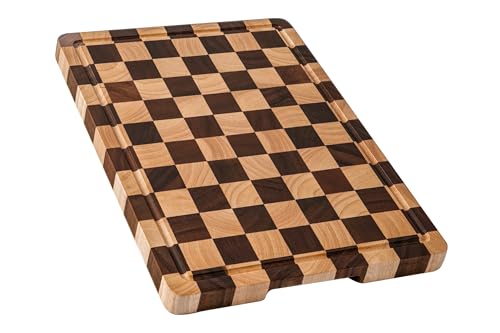
If you are tired of looking at the same old slab of wood on your counter, the THETCHRY Checkered Cutting Board is a refreshing change of pace. It genuinely stands out for its visual flair; the alternating acacia and rubber wood creates a mosaic effect that makes it look more like a piece of home decor than a utility tool. I think it is a great choice for someone who lives in a small apartment where the cutting board is always visible, as it elevates the kitchen’s aesthetic instantly.
In terms of practicality, the built-in juice grooves and the inclusion of non-slip rubber pads show that the designers were thinking about real-world stability. It is the perfect size for daily prep—large enough for a pile of veggies but not so massive that it becomes a chore to clean. I would recommend this primarily for the home cook who loves to host, as it transitions beautifully from a prep station to a charcuterie serving tray.
The honest trade-off here is the thickness. At only 0.8 inches, it is significantly thinner than a traditional butcher block. While this makes it lightweight and easy to store, it lacks the “heft” required for heavy-duty cleaver work, and thinner wood boards are generally more prone to warping over time if you aren’t meticulous about drying them immediately after a wash.
Milk Street Kitchin-kiji Knife, 3.5 Inch Blade, 1.4116 German Steel, Ergonomic Handle Paring Knives for Home Chefs, Ultimate Paring Knife for Utility Tasks

The Milk Street Kitchin-kiji Knife is a fascinating little tool because it solves a problem most people don’t realize they have until they start chopping. Most paring knives force your fingers against the board, but this one features a clever angled handle that provides actual knuckle clearance. It feels like a hybrid between a chef’s knife and a traditional paring blade, giving you way more control for intricate tasks like mincing garlic or shallots without the awkward hand positioning.
I would suggest this for the home chef who finds standard 3.5-inch knives too cramped for comfort. It is also an absolute “gadget” in the best way; the German 1.4116 steel is sharp enough to handle tough potato eyes or strawberry hulls using just the point. If your kitchen routine involves a lot of small-scale precision work, this will likely become your most-reached-for blade.
However, keep in mind that this is a specialized utility knife. Because of that unique handle angle, it might feel a bit alien at first if you are used to the straight-line ergonomics of a classic paring knife. It is designed for the board, so if you prefer peeling an apple “in the air” towards your thumb, the offset geometry might actually feel slightly less intuitive than a standard, cheaper alternative.
Extra Large Cutting Board, 17.6″ Bamboo Cutting Boards for Kitchen with Juice Groove and Handles Kitchen Chopping Board for Meat Cheese board Heavy Duty Serving Tray, XL, Empune

The Empune Extra Large Bamboo Cutting Board is the definition of a kitchen workhorse for someone on a budget. What makes it stand out is the sheer 17.6-inch surface area you get for the price. Bamboo is naturally dense and water-resistant, which means it won’t scar as deeply as some softer woods might. It is a solid, reliable choice for families who do a lot of “big batch” cooking and need space to chop a mountain of onions and peppers without everything falling off the edges.
This is the ideal board for the weekend griller. The deep juice grooves are essential when you are resting a large steak or a roast, keeping the mess off your counters. It is also quite light for its size, so moving it from the counter to the table using the side handles is easy, even when it is loaded up with bread or cheese for a party.
The downside to consider is that bamboo is exceptionally hard—harder than many hardwoods. While this makes it durable, it is also tougher on your knife edges. If you own high-end, expensive Japanese steel, you might find yourself sharpening your blades more often than if you were using a maple or walnut board. It is a trade-off between the board’s longevity and your knife’s edge.
OXO Good Grips Plastic Carving & Cutting Board

The OXO Good Grips Plastic Carving & Cutting Board is a masterclass in functional design. While wood boards get all the glory for their looks, this non-porous plastic board is what you actually want when you are breaking down a raw chicken or carving a greasy Sunday roast. The standout feature is the drip-catcher with easy-pour corners, which allows you to drain away juices without making a swampy mess of your workstation. It stays exactly where you put it, too, thanks to the non-slip feet on both sides.
I would recommend this to anyone who prioritizes food safety and convenience above all else. Since it is dishwasher safe, you can sanitize it thoroughly after working with proteins, which is something you just can’t do with wood. It’s also huge—at over 21 inches long, it can handle the largest turkey or brisket you can find.
The trade-off is purely aesthetic and tactile. It is a large piece of plastic, so it doesn’t have that “heirloom” feel of a wooden block, and it will eventually show visible knife scars over time. It is a utility player, not a showpiece, but for heavy-duty kitchen tasks, it is arguably the most practical option on this list.
J.K. Adams 20-Inch-by-14-Inch Maple Wood Farmhouse Carving Board with Juice Groove, Brown
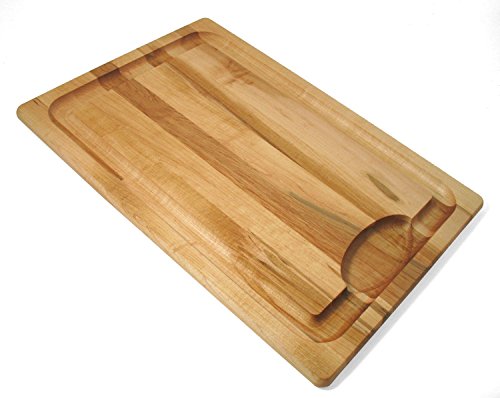
There is something deeply satisfying about a product made in Vermont with a lifetime guarantee, and the J.K. Adams Farmhouse Carving Board delivers that classic Americana feel. Crafted from North American Maple, this board stands out because of its heritage quality. It feels substantial and professional. Unlike cheaper mass-produced boards, the grain is tight and the finish is smooth, making it a “forever” item if you take care of it properly.
This is the best choice for the serious home cook who views their kitchen tools as an investment. It is a 20-inch workhorse that provides ample room for carving large meats, and the generous juice groove is carved deeply enough to actually be useful. If you want one board that can handle a decade of Thanksgiving dinners and still look great on the table, this is it.
The honest catch here is the maintenance. This is high-quality maple wood, which means you cannot just toss it in the sink and forget it. It requires regular mineral oil or beeswax conditioning to prevent drying and cracking. If you are the type of person who finds hand-washing and oiling chores to be a nuisance, the upkeep on this board might eventually feel like a burden.
Sonder Los Angeles, Made in USA, Large Thick Maple Wood Cutting Board for Kitchen with Juice Groove, Sorting Compartment, Charcuterie Wooden Board 17x13x1.5 in (Gift Box Included)
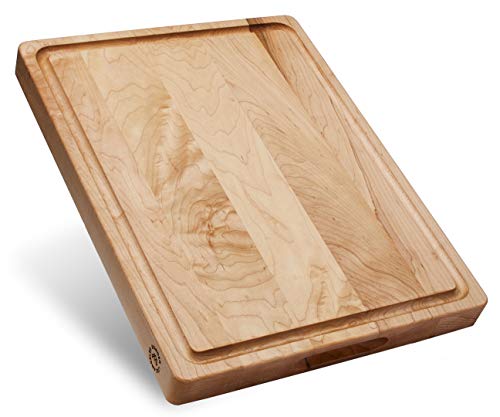
The Sonder Los Angeles Winsome Board is clearly designed for the modern “Instagrammable” kitchen. What makes it stand out is the integrated sorting compartment, or “cracker well.” It is a brilliant touch that makes this 1.5-inch thick maple block much more versatile than a flat board. You can use the well to stash chopped herbs during prep so they don’t get in the way, or flip it over and use it as a stunning charcuterie base where nuts and olives won’t roll away.
I think this is the perfect gift for a housewarming or a wedding. It feels premium, comes in a beautiful gift box, and has enough heft to stay put on the counter without needing extra rubber feet. It’s for the person who loves a “multitasker”—someone who wants a professional-grade edge-grain cutting surface that can also serve as the centerpiece of a wine and cheese night.
The trade-off is the weight. At 1.5 inches thick and made of solid maple, it is quite heavy. While that provides excellent stability, it can be a bit of a workout to carry it to the sink for cleaning, especially if you have smaller hands or limited wrist strength. It’s a substantial piece of equipment that demands a dedicated spot on your counter.
FYCTIO Cutting Boards for Kitchen, Large Acacia Wood Chopping Board, Thick Checkered Cutting Board with Juice Grooves & Handles, Charcuterie Board Butcher Block with Gift Box, 16″ x 11″ x 1.4″
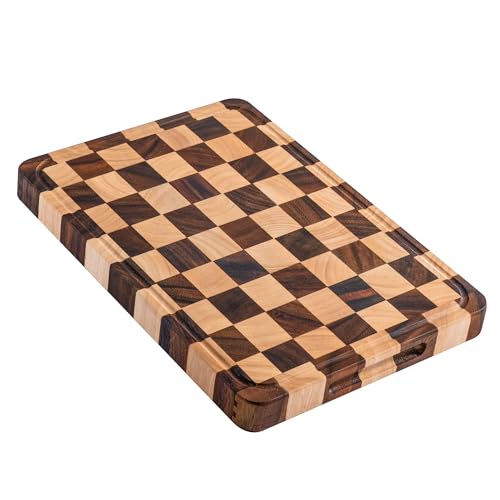
The FYCTIO Acacia Wood Chopping Board brings a bit of old-school engineering to the modern kitchen with its mortise-and-tenon construction. This isn’t just a marketing buzzword; it’s a traditional joinery method that makes the board incredibly shock-resistant. In real life, this translates to a board that feels exceptionally sturdy under the knife. The checkered end-grain design is also better for your knives than side-grain boards, as the blade slips between the wood fibers rather than cutting across them.
This board is a great fit for someone who wants the look of a luxury butcher block without the $200 price tag. It is 1.4 inches thick, giving it that professional “thud” when you chop, and the acacia and walnut blend creates a rich, dark aesthetic that looks expensive. It’s a great mid-range option for someone stepping up from basic plastic or bamboo.
One thing to watch out for is the color variation. Because it uses a mix of woods like acacia and rubber wood to achieve that checkered look, the patterns can be a bit inconsistent, and the “bright” colors mentioned might not match every kitchen. Also, end-grain boards like this one are extra thirsty—you will need to oil it frequently in the first few months to keep it from drying out.
Pearl Metal Licute C-1242 Light and Non-slip Cutting Board, Large, Dishwasher Safe, Made in Japan

The Pearl Metal Licute C-1242 is a fascinating departure from the heavy, chunky boards common in American kitchens. Made in Japan, this board stands out because it is incredibly lightweight and thin (only 0.4 inches). It features a polypropylene body with an elastomer edge that prevents it from sliding around on the counter. It feels more like a precision tool than a piece of furniture, which is very much in line with Japanese kitchen philosophy.
This is the perfect board for someone with a small kitchen or limited storage space. If you find yourself constantly reaching for a board just to slice a single lemon or a sandwich, this is much more convenient than hauling out a heavy wooden block. It is also dishwasher safe, making it a breeze to sanitize after a quick meal prep session.
The trade-off is the internal core material. It uses a “carton” or paper-based core to keep it lightweight. While the exterior is heat-resistant and durable, the board feels a bit “hollow” compared to solid plastic or wood. It’s also on the smaller side at roughly 9 by 13 inches, so if you are trying to carve a large roast or chop a whole head of cabbage, you are going to run out of room very quickly.
Pearl Metal C-1236 Light and Non-slip Cutting Board, Sweet Herb, Dishwasher Safe, Made in Japan

The Pearl Metal C-1236 is the smaller sibling in the Licute line, and it is essentially the “quick-start” board for your kitchen. What makes it stand out is its Sweet Herb aesthetic and its extreme portability. Weighing only about 12.5 ounces, it is one of the lightest functional boards you can find that still includes non-slip elastomer edges. It’s the kind of board you grab when you’re in a rush and just need to dice an onion without any fuss.
I would recommend this for solo cooks or people living in dorms or RVs where every inch of counter space is a luxury. Because it is made in Japan and rated for high temperatures, you can toss it in the dishwasher without worrying about it warping like cheaper thin plastic mats. It’s also great as a secondary board—the one you use for “smelly” ingredients like garlic so you don’t ruin your main wooden board.
However, the size is a major limitation. At roughly 8 by 11 inches, it is barely larger than a standard sheet of printer paper. If you are doing any serious meal prep, you will likely find it frustratingly small. It is a utility board for small tasks, not a primary surface for a multi-course dinner. If you have big knives, this board will feel undersized almost immediately.
J.K. Adams 12-Inch-by-8-Inch Sugar Maple Wood Takes Two Cutting Board

The J.K. Adams “Takes Two” Cutting Board is a smart, no-nonsense solution for the organized cook. What makes it stand out is the simple branding on opposite sides—one side is marked for meat and the other for vegetables. It’s a low-tech way to prevent cross-contamination without needing a color-coded plastic set. Handcrafted in Vermont from Sugar Maple, it has that beautiful, creamy wood grain that only gets better with age and proper oiling.
This is the “best buy” for a couple or a single person who wants USA-made quality in a compact size. At 12 by 8 inches, it is thick enough (1 inch) to feel substantial but small enough to tuck into a drawer. It’s the ideal size for daily tasks like slicing fruit, cheese, or a single chicken breast. Plus, that lifetime warranty gives you peace of mind that you’re buying a quality piece of woodcraft.
The trade-off is that it’s too small for “big” cooking. If you try to chop a bunch of kale or carve a chicken on this, you’ll have scraps flying all over your counter. It also lacks a juice groove, so if you’re cutting anything particularly juicy on the “meat” side, you might end up with a bit of a mess. It’s a perfect companion board, but it probably shouldn’t be your only one.
Product prices and availability are accurate as of the date/time indicated and are subject to change. Any price and availability information displayed on Amazon.com at the time of purchase will apply to the purchase of this product.
Buying Guide
FAQs
What factors should I consider when choosing a cutting board size and material?
First, match the board dimensions to your typical prep tasks; larger surfaces like the 17.6″ bamboo board or the 16.5″ THETCHRY board give you room for big items, while smaller boards are easier to store. Material matters for knife preservation—hard woods such as maple and walnut are gentle on blades, bamboo is harder but still forgiving, and plastic offers easy sanitation but can dull knives faster. Also think about weight, stability, and whether you need features like handles or a juice groove.
How do wood boards like THETCHRY, J.K. Adams, and Sonder compare to bamboo and plastic options?
Wood boards (THETCHRY, J.K. Adams, Sonder) provide a classic look, natural antimicrobial properties, and are gentle on knife edges, but they require regular oiling and cannot go in the dishwasher. Bamboo boards, like the Empune model, are eco‑friendly, harder than most woods, and resist stains, yet they are still softer than plastic on the blade. Plastic boards such as OXO’s are the most low‑maintenance and dishwasher‑safe, but they can develop deep cuts that harbor bacteria and may wear knives more quickly.
Which boards offer the best juice management for messy prep?
The THETCHRY board, Empune bamboo board, OXO Good Grips, J.K. Adams farmhouse board, and Sonder maple board all feature built‑in juice grooves that capture liquids and keep countertops clean. Among them, Sonder’s deep 3.5 oz groove and OXO’s integrated drip‑catcher are especially effective for large roasts or juicy fruits. If you frequently carve meat, a board with a wide, deep groove like Sonder or J.K. Adams will reduce mess the most.
Are reversible or double‑sided boards worth the extra cost?
Reversible boards, such as THETCHRY and Sonder, let you dedicate one side to raw protein and the other to ready‑to‑serve foods, helping prevent cross‑contamination. They also double as serving platters, adding value for entertaining. If you need a single surface for all tasks, a standard one‑sided board may be sufficient, but the versatility of a double‑sided board often justifies the higher price.
How important is board thickness for stability and knife care?
Thicker boards (1.4‑1.5 in) like the THETCHRY and Sonder models provide a solid, stable cutting surface that resists warping and offers a gentler feel on knife edges. Thinner boards, such as the 0.4‑in Pearl Metal plastic boards, are lightweight and easy to store but may feel less stable, especially when cutting heavy items. For most home cooks, a thickness of at least 0.8 in balances stability with storage convenience.
What maintenance is required for wood versus bamboo versus plastic boards?
Wood boards need regular hand‑washing, thorough drying, and periodic oiling with food‑grade mineral oil to prevent cracking and maintain antimicrobial properties. Bamboo boards also benefit from occasional oiling but are less prone to warping; they should be washed by hand and dried promptly. Plastic boards can be washed in the dishwasher, but you should replace them when deep gouges appear, as those can harbor bacteria.
Which cutting board provides the best value for gifting?
Sonder’s maple board comes in a premium gift box, offers a reversible design, a deep juice groove, and a 1.5‑in thickness, making it a high‑impact present. THETCHRY also includes a stylish gift box and a unique checkered aesthetic at a slightly lower price point. For a budget‑friendly yet elegant option, the J.K. Adams farmhouse board offers a lifetime guarantee and classic craftsmanship.
How does the Milk Street Kitchin‑kiji paring knife complement these cutting boards?
The Milk Street Kitchin‑kiji paring knife, with its 3.5‑inch German steel blade and knuckle‑clearance handle, works especially well on softer wood and bamboo boards that protect the blade edge. Its ergonomic grip reduces fatigue during detailed work, making it ideal for tasks like fruit coring on the small side of a double‑sided board. Pairing this knife with a board that has a juice groove (e.g., THETCHRY or Sonder) keeps your prep area tidy while preserving the knife’s sharpness.