Comparison: Best Cutting Board For Japanese Knife (Updated | Jun 27th)
If you’ve invested in a sharp, precision-crafted Japanese knife, you know it deserves more than just any old cutting board. The right surface can preserve that razor-sharp edge, enhance your slicing experience, and even elevate your kitchen’s vibe. But with so many options—wood, bamboo, plastic, composite—how do you choose? We’ve tested the top contenders to find which boards truly complement the delicate artistry of Japanese blades. Spoiler: not all cutting boards play nice with your prized knife. Let’s dive into the best matches for performance, longevity, and style.
- Best for large hinoki luxury: Shun Cutlery Large Hinoki Cutting Board
- Best for medium hinoki classic: Shun Hinoki Cutting Board – Medium – 15.75″ x 10.75″ x 0.5″
- Best for high-soft pro: Yoshihiro Hi Soft High Performance Professional Grade Cutting Board Japanese Sashimi Chef’s Tool Made in Japan (Large)
- Best for high-soft medium: Yoshihiro Hi Soft High Performance Professional Grade Cutting Board Japanese Sashimi Chef’s Tool Made in Japan (Medium)
- Best for compact hinoki charm: Shun Cutlery Small Hinoki Cutting Board
- Best for lightweight hinoki: Hinoki Japanese Cypress Wood Cutting Board
- Best for cypress edge guard: Yoshihiro Hinoki Cypress Cutting Board
- Best for uji mini hinoki: YAMASAN KYOTO UJI Japanese Hinoki Cutting Board – Small – Natural Cypress Wood Cutting Board
- Best for durable plastic pro: Japanese Cutting Board 19.6 x 10.6 x 0.8 High Soft High Performance Professional Grade Sashimi Cutting Chopping Board Chef Tool Large Dishwasher for Kitchen Restaurants Home Sashimi Meat Vegetables
- Best for rubber cutting guard: Asahi Cookin Cut Rubber Cutting Board
Product Comparison: Best Cutting Board For Japanese Knife
Shun Cutlery Large Hinoki Cutting Board, 17.75″ x 11.75″ Large Wooden Japanese Chopping Board for Kitchen, Medium-Soft Wood Preserves Knife Edges, Forest Stewardship Council Certified

If you have invested in high-end Japanese cutlery, the Shun Large Hinoki Cutting Board is essentially the gold standard for protecting that investment. What makes this board stand out is the hinoki (Japanese cypress) wood, which has a unique medium-soft density. When your blade strikes the surface, the wood “gives” slightly rather than resisting, which is critical for preventing the micro-chipping that often plagues hard steel. Plus, the natural citrus-like fragrance is a lovely sensory bonus during prep work.
I would recommend this specifically for home chefs who use Shun or other thin-edged Japanese knives and need a spacious 17.75-inch surface for “all-in-one” meal prep. It is large enough to handle a pile of chopped veggies without feeling cramped. However, the trade-off with such a soft, beautiful wood is its high maintenance requirement. You absolutely must dampen it before every use to prevent staining, and because it is relatively thin for its size, it is prone to warping if you don’t air-dry it perfectly or if you leave it in a puddle of water.
Shun Hinoki Cutting Board – Medium – 15.75″ x 10.75″ x 0.5″

The Medium Shun Hinoki Board offers the exact same professional-grade “soft touch” as its larger sibling but in a much more manageable 15.75-inch footprint. In real-life kitchen settings, this is often the “sweet spot” size; it fits comfortably in standard sinks for cleaning and doesn’t take up your entire counter. The FSC-certified hinoki provides that signature cushioned impact that keeps your edges razor-sharp for much longer than a standard bamboo or plastic board ever could.
This is the best choice for someone with a smaller kitchen or limited storage space who still wants a premium wood surface for their daily dicing. It’s a versatile workhorse for everything from onions to herbs. The honest downside here is the 0.5-inch thickness. At this weight, the board feels a bit light on the counter and lacks the “heft” of a thick butcher block. It can slide around if you don’t put a damp paper towel underneath, and that thinness makes it even more susceptible to bowing if it isn’t cared for with strict adherence to the hand-wash-only instructions.
Yoshihiro Hi Soft High Performance Professional Grade Cutting Board Japanese Sashimi Chef’s Tool Made in Japan (Large)

The Yoshihiro Hi Soft (Large) board is a completely different beast compared to traditional wood. Made from a specialized synthetic high-performance material, it feels almost like a firm eraser. What stands out in a professional environment is how the blade literally sinks into the surface just enough to stop the edge from dulling, but without the blade getting “stuck.” It is widely considered the best surface for high carbon steel knives and delicate sashimi work because it mimics the benefits of wood while being much more hygienic.
I’d suggest this for the serious enthusiast or professional chef who works with expensive Sashimi or Sujihiki knives and wants a massive 19.6-inch workspace. It’s built for heavy-duty use and longevity. The trade-off, however, is the aesthetic and the price. It looks like a plain, beige slab of plastic, which lacks the beauty of natural grain. It’s a functional tool, not a display piece, and it carries a premium price tag that might be hard to justify if you care about your kitchen’s “look” as much as your knife’s edge.
Yoshihiro Hi Soft High Performance Professional Grade Cutting Board Japanese Sashimi Chef’s Tool Made in Japan (Medium)
This Medium Yoshihiro Hi Soft board brings professional Japanese technology into a size that actually fits the average home cook’s countertop. At 17.3 inches, it provides plenty of room for slicing large proteins or piles of produce. The standout feature is the impact absorption; you can feel the difference in your wrists after a long prep session because the synthetic material soaks up the vibration of the knife strike. It’s also incredibly odor-resistant, which is a massive plus when switching between fish and vegetables.
This is the perfect buy for the “knife nerd” who wants the absolute best edge retention possible but doesn’t want to deal with the cracking or oiling required by natural wood. It’s a low-maintenance, high-performance slab. The downside to watch out for is that despite being synthetic, it is not dishwasher safe. Excessive heat can warp the material, so you still have to hand-wash it. Also, because it is so soft, it will develop visible “scars” or cut marks quite quickly, which can look a bit messy over time.
Shun Cutlery Small Hinoki Cutting Board, 10.75″ x 8.25″ Small Wooden Japanese Chopping Board for Kitchen, Medium-Soft Wood Preserves Knife Edges, Forest Stewardship Council Certified
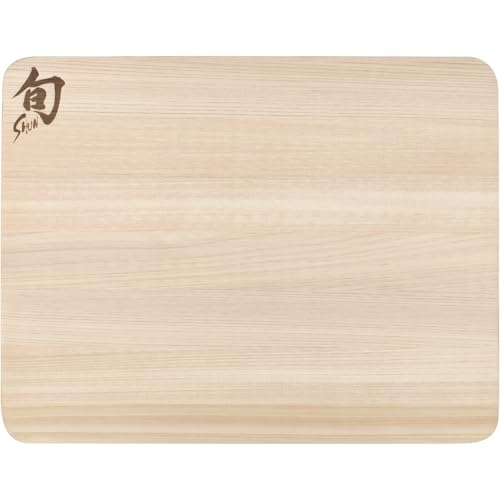
The Small Shun Hinoki Board is the “utility player” of the collection. At roughly 10.75 by 8.25 inches, what makes it stand out is its sheer convenience for those quick tasks—slicing a lemon, mincing a single clove of garlic, or cutting a sandwich. It features the same premium Japanese cypress as the larger models, ensuring that even your smallest paring knives are protected from dulling on a hard surface. It’s incredibly lightweight and easy to grab from a drawer.
This is the ideal purchase for someone who already has a main cutting board but needs a secondary, knife-friendly surface for small jobs or bar prep. It also doubles as a beautiful small serving board for cheese. The obvious trade-off is the limited surface area. You cannot effectively chop a head of cabbage or a large onion on this without food flying off the edges. It’s a specialized tool for small tasks, and trying to use it as your primary board will likely lead to frustration and a messy counter.
Hinoki Japanese Cypress Wood Cutting Board, Large

This Large Hinoki Japanese Cypress Wood board is a great entry point into the world of traditional Japanese prep surfaces. What stands out here is the ultra-lightweight nature of the cypress; even at nearly 16 inches long, it is remarkably easy to maneuver with one hand. The wood density is specifically tuned to protect against chipping and dulling, making it a safe haven for brittle, high-hardness Japanese steel. It’s a simple, elegant, and functional piece of craftsmanship.
I would recommend this to the budget-conscious cook who wants the benefits of authentic Hinoki without the “brand name” markup of higher-end cutlery companies. It’s a pure, honest wood board. The downside to be aware of is that it is relatively thin and lacks the structural reinforcements (like core-layers) found in more expensive versions. This means it is highly sensitive to humidity changes. If you live in a very dry climate or forget to dry it evenly, it may develop a slight wobble or curve faster than a thicker, reinforced board would.
Yoshihiro Hinoki Cypress Cutting Board, Japanese Hinoki Wood, Knife Friendly, Professional Grade (X-Large)
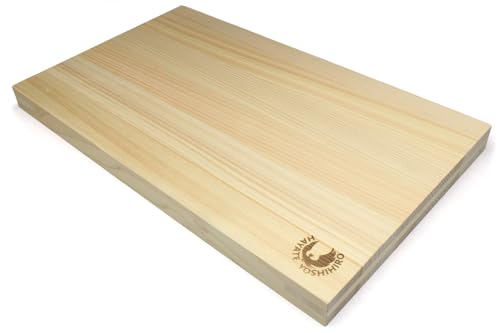
The Yoshihiro Hinoki (X-Large) stands out because it addresses the biggest flaw of most wood boards: warping. It features a clever maple anti-twist core sandwiched inside the Hinoki. This gives you the soft, knife-protecting benefits of cypress on the outside with the structural integrity of a much heavier board. It’s handcrafted in Japan and feels significantly more “professional grade” than the thinner, single-slab boards often found in retail stores.
This is the best choice for a serious cook who wants a large, 17.7-inch wood surface that can actually withstand daily, heavy use without turning into a taco shape. It’s a “buy it once” kind of wood board. The trade-off is the weight and thickness. At 2.5cm thick, it is much bulkier than the Shun boards, making it harder to store in a slim cabinet slot. It also requires more effort to wash in a standard-sized sink because it doesn’t flex and occupies a lot of physical space.
YAMASAN KYOTO UJI Japanese Hinoki Cutting Board – Small – Natural Cypress Wood Cutting Board, Kitchen Chopping Board, High Durability, Made in Japan (14.17×8.66×0.59 inch) (Small)

The YAMASAN KYOTO UJI board is a compact, 14-inch slab of natural cypress wood that feels very authentic. What makes it stand out is its simplicity and the quality of the wood grain, which provides that essential “give” for Japanese blades. It’s a made-in-Japan product that doesn’t feel mass-produced; it has a rustic, traditional kitchen vibe. The durability is high for its class, and it handles moisture reasonably well for a natural product.
This is a great fit for someone who prepares traditional Japanese meals at home and needs a dedicated board for smaller proteins or vegetables. It’s the right size for a small apartment kitchen. However, the size is quite restrictive for Western-style cooking. If you are used to a massive “chef’s board,” this 14-inch surface will feel very cramped very quickly. Additionally, since the description is quite minimal, you have to be diligent about your own seasoning and oiling to keep the wood from drying out over time.
Japanese Cutting Board 19.6 x 10.6 x 0.8 High Soft High Performance Professional Grade Sashimi Cutting Chopping Board Chef Tool Large Dishwasher for Kitchen Restaurants Home Sashimi Meat Vegetables

This Japanese Cutting Board (LDPE) stands out for its sheer practicality and “no-nonsense” approach to hygiene. Made from High Soft LDPE plastic, it provides a resilient, elastic surface that mimics the blade-saving properties of soft wood but with the added benefit of being dishwasher safe. It’s a massive 19.6-inch slab that features a non-slip texture, which is a lifesaver when you are working with wet vegetables or slippery raw fish.
I’d recommend this for the busy home cook or small restaurant owner who wants Japanese-level knife protection without the “babying” that wood requires. If you want to be able to throw your board in the dishwasher after cutting raw chicken, this is your winner. The trade-off is that it lacks the soul and scent of natural wood. It feels industrial and looks like a piece of commercial kitchen equipment. While it’s great for your knives, it won’t be the centerpiece of your kitchen aesthetic, and it’s quite a large item to fit into a home dishwasher.
Asahi Cookin Cut Rubber Cutting Board, NE05102, Home Use, Made in Japan L 15.7 x 9.1 x 0.5 inches (40cm x 23cm x 1.3cm)

The Asahi Cookin Cut is legendary in the world of professional sushi chefs. What makes it stand out is the synthetic rubber composition. It feels unlike anything else; it has the weight and “thud” of wood, but the resilience of rubber. It is incredibly gentle on knives, and unlike wood, it doesn’t absorb liquids or bacteria. It dries almost instantly after a wipe-down, which is why it’s a staple in high-end fish markets and sushi bars in Japan.
This is the ultimate choice for the serious home sushi chef or anyone who works frequently with raw proteins and demands the highest level of sanitation. It’s built to last a lifetime. The honest downside is that it is extremely heavy for its size and can be quite expensive. It also has a very “functional” look—it’s a tan, rubbery slab that doesn’t look particularly pretty on a counter. Furthermore, it can sometimes have a slight “rubbery” smell when brand new, though this typically fades with use and proper cleaning.
Product prices and availability are accurate as of the date/time indicated and are subject to change. Any price and availability information displayed on Amazon.com at the time of purchase will apply to the purchase of this product.
Buying Guide
FAQs
What type of material is best for preserving the edge of a Japanese knife?
Japanese knives benefit most from a slightly soft, non‑porous surface that gives a little as you slice, reducing blade wear. Wood options like Hinoki cypress provide a gentle, fragrant surface, while high‑soft LDPE plastics also protect the edge and are easy to clean. Both materials are knife‑friendly, but wood adds aesthetic appeal and a natural scent.
How does board size affect usability with a Japanese chef’s knife?
Larger boards (around 17–20 inches) give ample space for rocking motions and handling big ingredients, which is ideal for professional or frequent home cooks. Medium boards (15–16 inches) balance workspace with storage convenience, while small boards (under 11 inches) are best for quick prep or limited kitchen space. Choose a size that matches your typical prep volume and countertop area.
What are the advantages of Hinoki wood versus synthetic high‑soft plastic boards?
Hinoki wood offers a natural, pleasant aroma, a beautiful grain, and a gentle give that protects blade edges, but it requires regular oiling and careful drying to avoid warping. High‑soft LDPE plastic boards, like the Yoshihiro Hi Soft models, are dishwasher‑safe, odor‑resistant, and provide consistent hardness with minimal maintenance. The choice depends on whether you prioritize aesthetics and tradition or low‑maintenance durability.
Is a double‑sided board worth the extra cost?
Double‑sided boards let you designate one side for raw proteins and the other for vegetables or cooked foods, reducing cross‑contamination risk. They also double the usable surface area without increasing footprint, which is useful in smaller kitchens. Most Hinoki boards from Shun and Yoshihiro are double‑sided, offering added versatility for a modest price premium.
How do I care for a Hinoki cutting board to keep it in top condition?
After each use, wipe the board with a damp cloth, then wash with mild detergent and towel‑dry; avoid soaking or placing it in a dishwasher. Periodically rub a food‑grade mineral oil into the surface to prevent drying and cracking. For stubborn stains, rubbing a cut lemon can lift discoloration while preserving the wood’s natural fragrance.
Do synthetic boards like the Yoshihiro Hi Soft retain odors or stains?
High‑soft LDPE plastic boards are non‑porous, so they resist absorbing liquids, odors, and stains, making them ideal for strong‑smelling foods like garlic or fish. They can be cleaned in the dishwasher or with a simple soap‑water rinse, and the surface quickly dries without warping. This makes them a hygienic choice for busy kitchens.
Which board offers the best value for a home chef who uses a Japanese knife regularly?
For a balance of quality, size, and price, the Shun Medium Hinoki Cutting Board (15.75″ x 10.75″) provides authentic Japanese wood, double‑sided use, and a knife‑friendly surface at a moderate cost. If you need a larger work area, the Shun Large Hinoki board adds extra space for a slightly higher price. Synthetic options like the Yoshihiro Hi Soft board are often cheaper and lower‑maintenance, offering good value for those who prefer practicality over aesthetics.
Can I use a cutting board designed for Western knives with a Japanese knife?
Yes, but boards made from very hard woods or glass can dull a Japanese knife more quickly because they lack the slight give that softer woods provide. Boards like the Asahi rubber or high‑soft plastic are safe, but they may not offer the same aesthetic or scent as Hinoki. For optimal edge retention, choose a board with a modest softness, such as Hinoki or high‑soft LDPE.