Comparison: Best Japanese Cutting Board (Updated | Jun 27th)
When it comes to kitchen essentials, a great cutting board can make all the difference—and Japanese craftsmanship has long set the gold standard. From sleek end-grain wood to durable hinoki and innovative composite materials, Japanese cutting boards blend beauty, function, and tradition in every slice. We’ve tested the top contenders to help you find the perfect balance of sharpness protection, ease of care, and timeless style. Let’s dive into the **best Japanese cutting board**s that bring both precision and artistry to your kitchen prep.
- Best for medium hinoki classic: Shun Hinoki Cutting Board – Medium – 15.75″ x 10.75″ x 0.5″
- Best for spacious hinoki surface: Shun Cutlery Large Hinoki Cutting Board
- Best for synthetic edge saver: Yoshihiro Hi Soft High Performance Professional Grade Cutting Board Japanese Sashimi Chef’s Tool Made in Japan (Large)
- Best for compact rubber board: Asahi Cookin Cut Rubber Cutting Board
- Best for petite hinoki charm: YAMASAN KYOTO UJI Japanese Hinoki Cutting Board – Small – Natural Cypress Wood Cutting Board
- Best for dishwasher safe rubber: Kitchen Star Tsukihoshi Rubber Cutting Board Made in Japan
- Best for pure titanium pro: HIBINO Titanium Cutting Board | 99.5% Pure Japanese Titanium | Non-Toxic | Lightweight & Dishwasher Safe | L Size | Made in Japan | With Non-Slip Mat | For Kitchen & Camping Use
- Best for compact hinoki elegance: Shun Cutlery Small Hinoki Cutting Board
- Best for large rubber workhorse: Asahi Cookin Cut Rubber Cutting Board
- Best for scented hinoki luxury: Hinoki Japanese Cypress Wood Cutting Board
Product Comparison: Best Japanese Cutting Board
Shun Hinoki Cutting Board – Medium – 15.75″ x 10.75″ x 0.5″

There is something incredibly satisfying about the way a high-end Japanese blade interacts with Hinoki cypress. This medium-sized Shun board is the sweet spot for most home kitchens, measuring 15.75″ x 10.75″. What makes it stand out in a real-world kitchen is the “give” of the wood; it feels almost like the blade is being cushioned rather than hitting a hard wall. This soft density is the secret to keeping your expensive knives sharp for much longer between hones.
I would recommend this specifically for the home cook who owns a set of Shun or other high-carbon Japanese knives and wants to protect that investment. It’s large enough for a standard dinner prep—onions, carrots, and a protein—but compact enough that it won’t dominate your counter space or feel like a chore to move around. The FSC certification is a nice touch for those who care about sustainable sourcing.
However, the trade-off with such a soft, beautiful wood is its high maintenance level. You absolutely must dampen the board before every use to prevent juices from soaking into the grain, and it is prone to staining if you aren’t diligent. If you’re the type to leave a board in the sink overnight, this delicate cypress will warp or discolor before you know it.
Shun Cutlery Large Hinoki Cutting Board, 17.75″ x 11.75″ Large Wooden Japanese Chopping Board for Kitchen, Medium-Soft Wood Preserves Knife Edges, Forest Stewardship Council Certified

If you find yourself constantly pushing chopped veggies off the edge of your board to make room for more, the Large Shun Hinoki Cutting Board is the upgrade you need. At 17.75″ x 11.75″, it offers a sprawling workspace that feels luxurious during heavy meal prep. The standout feature here is the sensory experience; the moment the wood gets wet, it releases a clean, delicate citrus fragrance that makes the kitchen feel like a high-end sushi den.
This is the best choice for the “weekend warrior” chef or someone who frequently hosts gatherings. Because of its size and the natural beauty of the Japanese Cypress, it doubles beautifully as a charcuterie or cheese board. You can do all your prep on one side, flip it over, and present your appetizers on a clean, aromatic surface. It’s a versatile piece for someone who treats cooking as a ritual rather than a chore.
The downside is simply the physical footprint. Because it’s a medium-soft wood and relatively thin for its surface area, it is much more susceptible to warping if not dried perfectly even on both sides. You can’t just lean this against a flat wall while wet; it needs airflow, and finding a drying rack that fits this large profile can be a genuine hassle in a smaller kitchen.
Yoshihiro Hi Soft High Performance Professional Grade Cutting Board Japanese Sashimi Chef’s Tool Made in Japan (Large)

The Yoshihiro Hi Soft is a professional-grade tool that looks unassuming but is actually a masterpiece of synthetic engineering. Unlike wood, this is made from a specialized high-performance acetate that mimics the softness of wood while offering the hygiene of a non-porous surface. In a real-life setting, the “thud” of the knife is silenced, and the impact on your wrist is significantly reduced. It feels almost “gummy” in a way that grips the food, making sashimi-level precision much easier to achieve.
I’d suggest this for the serious enthusiast who uses high-carbon steel knives that are prone to chipping on harder surfaces. If you find yourself doing a lot of repetitive slicing or delicate fish work, the Hi Soft material is a lifesaver for your blade’s edge. It’s built for the chef who prioritizes performance and edge retention over the rustic aesthetic of a wooden board.
The honest trade-off here is the price and the look. It’s a significant investment for what essentially looks like a beige slab of plastic. It doesn’t have the “wow” factor of a wood grain on your counter, and it can develop deep knife marks over time because it is so soft. While those marks are a sign it’s doing its job, they can make the board look “beaten up” faster than a hardwood equivalent.
Asahi Cookin Cut Rubber Cutting Board, NE05103, Home Use, Made in Japan LL 16.5 x 9.8 x 0.5 inches (42cm x 25cm x 1.3cm)

The Asahi Cookin Cut is a legendary name in Japanese commercial kitchens, and this LL size (16.5″ x 9.8″) brings that industrial reliability into the home. What makes this board stand out is the synthetic rubber composition. It feels remarkably similar to wood under the knife—providing that essential “bite”—but it’s completely non-absorbent. It won’t harbor bacteria, it won’t smell like the garlic you chopped yesterday, and it dries almost instantly.
This is the “no-nonsense” board for the cook who wants the performance of a high-end Japanese surface without the finicky maintenance of Hinoki wood. If you handle a lot of raw proteins and worry about cross-contamination, this is your best bet. It’s heavy enough to stay put on the counter without sliding, providing a very stable and safe cutting experience during fast-paced prep work.
However, the trade-off is that it is not dishwasher safe. Even though it’s rubber, the high heat of a dishwasher can cause it to bow or lose its perfectly flat profile. You still have to hand-wash it, and because it’s quite heavy and stiff, it can feel a bit cumbersome to maneuver in a standard-sized home sink compared to a lightweight wooden board.
YAMASAN KYOTO UJI Japanese Hinoki Cutting Board – Small – Natural Cypress Wood Cutting Board, Kitchen Chopping Board, High Durability, Made in Japan (14.17×8.66×0.59 inch) (Small)

The Yamasan Kyoto Uji board is a beautiful example of traditional Japanese craftsmanship, specifically utilizing Natural Hinoki. At roughly 14 inches, this small board stands out for its incredible lightness and the high durability of the specific cypress cuts used. It has a tighter grain than some mass-produced versions, which helps it stand up to daily use while still providing that signature “soft touch” that protects your Global or Shun knives from dulling prematurely.
This is the ideal choice for someone with a compact kitchen or an apartment dweller who doesn’t have the counter real estate for a massive chopping block. It’s also perfect as a “secondary board”—the one you grab quickly to slice a single lemon, a piece of ginger, or a small garnish without having to wash a giant heavy slab afterward. It’s a minimalist’s dream tool.
The main drawback is the thickness. At about 0.59 inches, it is quite thin. While this makes it easy to store, it also means it is highly sensitive to humidity changes. If you live in a very dry climate or a very humid one, this board requires regular oiling or very careful drying to ensure it doesn’t develop a permanent curve, which would make it wobble during use.
Kitchen Star Tsukihoshi Rubber Cutting Board Made in Japan,Dishwasher-Safe Size:13.54×8.38×0.39inches(344×213×10mm) Equipped with a Cutting Board Scraper for Synthetic Rubber Cutting Boards (M)

The Kitchen Star Tsukihoshi board is a clever hybrid that solves several common kitchen frustrations. It stands out because it combines a scratch-resistant synthetic rubber with a design that is actually dishwasher-safe, which is a rarity for this material. It even comes with a dedicated scraper to help resurface the board if it gets stained or heavily marked over time. The “appropriate weight” mentioned is real—it feels substantial and “planted” on your counter, so it won’t scoot away while you’re dicing onions.
I would recommend this for the practical home cook who values hygiene and convenience above all else. If you want a board that feels professional and soft on your blades but you refuse to hand-wash your kitchen gear, this is one of the few high-quality Japanese options that fits the bill. The side-distinguishing marks are also a great feature for those who are meticulous about separating meat and veg prep.
The trade-off here is the aesthetic and size. At 13.5 inches, it’s on the smaller side for a main cutting board, which might feel restrictive if you’re prepping a large family meal. It also has a very “utility” look to it; it’s a tool meant for a drawer or a rack, not a beautiful piece of decor you’d want to leave out on display.
HIBINO Titanium Cutting Board | 99.5% Pure Japanese Titanium | Non-Toxic | Lightweight & Dishwasher Safe | L Size | Made in Japan | With Non-Slip Mat | For Kitchen & Camping Use
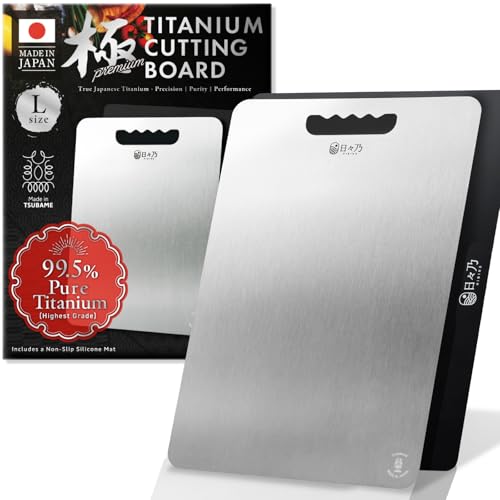
The HIBINO Titanium Cutting Board is a total departure from traditional wood or rubber. Crafted in Tsubame City, it’s made of 99.5% pure Japanese titanium. What makes it stand out is its incredible hygiene and durability. It is completely non-porous, meaning it cannot absorb odors, stains, or bacteria. It’s also incredibly thin—almost like a sheet of heavy-duty cardstock—which makes it the most portable and easy-to-store option on this list.
This is the ultimate board for outdoor enthusiasts, campers, or people who deal with very “stinky” ingredients like fish or garlic. It’s also a great choice for those who are health-conscious and want to avoid any risk of microplastics or mold. Because it’s dishwasher safe and virtually indestructible, it’s a “buy it once for life” kind of product that can handle everything from a kitchen counter to a campfire.
The honest trade-off is the acoustic experience. While the brand claims it is “knife-friendly,” cutting on metal will never feel as soft as cutting on wood or rubber. You will hear a metallic “clink” with every stroke, and while titanium is softer than steel, it will still likely dull your knives faster than a soft Hinoki or Hi-Soft board would. It’s a trade-off of convenience and hygiene over blade edge longevity.
Shun Cutlery Small Hinoki Cutting Board, 10.75″ x 8.25″ Small Wooden Japanese Chopping Board for Kitchen, Medium-Soft Wood Preserves Knife Edges, Forest Stewardship Council Certified
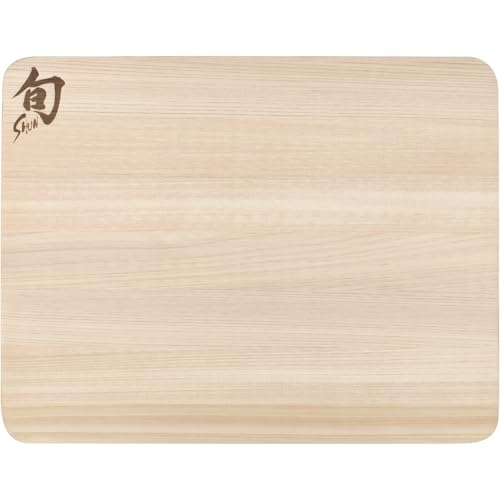
This Small Shun Hinoki Board is essentially the “paring knife” of the cutting board world. Measuring just 10.75″ x 8.25″, it stands out for its portability and precision. In a busy kitchen, this is the board you reach for when you just need to mince a few cloves of garlic or slice a garnish for a cocktail. It features the same medium-soft Japanese cypress as its larger siblings, ensuring that even your smallest utility knives are treated with respect.
I’d recommend this for cocktail enthusiasts who want a dedicated citrus board, or for anyone who lives alone and does minimal meal prep. It’s also a fantastic gift for a knife nerd who already has everything else. Because it’s so small, it’s very easy to handle under the tap and takes up almost zero space in a drying rack or cabinet.
The downside is that it is too small for serious cooking. If you try to chop a head of cabbage or a large onion on this, food will be flying off the sides immediately. It’s a specialized tool for small tasks, and if you try to use it as your primary board, you’ll likely find it frustratingly cramped. It’s a supplement to a kitchen, not the foundation of one.
Asahi Cookin Cut Rubber Cutting Board, NE05102, Home Use, Made in Japan L 15.7 x 9.1 x 0.5 inches (40cm x 23cm x 1.3cm)

The Asahi Cookin Cut L (15.7″ x 9.1″) is the standard-bearer for professional-grade synthetic rubber boards. What makes it stand out in a real kitchen is the surface tension; it has a unique texture that holds food in place, preventing that dangerous “sliding” effect when you’re working with wet vegetables or slippery fish. It’s 0.5 inches thick, giving it a solid, stiff feel that doesn’t flex, providing a very consistent and predictable cutting surface.
This is the best purchase for a home cook who is transitioning from cheap plastic boards to serious Japanese cutlery. It offers the protection your knives need without the “preciousness” of wood. You don’t have to oil it, and you don’t have to worry about it cracking if the humidity drops. It’s a workhorse designed to be used hard every single day for decades.
The trade-off is that it can retain deep scratches if you use a very heavy hand or a serrated knife (which you should never use on this anyway). While it’s more hygienic than plastic, those scratches can eventually become harder to scrub clean by hand. Also, like its larger brother, it is not dishwasher safe, so you need to be prepared for manual cleanup after every meal.
Hinoki Japanese Cypress Wood Cutting Board, Large

This Large Hinoki Japanese Cypress board is all about that traditional, ultra-lightweight feel. At a full 1-inch thickness, it stands out because it provides the stability of a thick chopping block without the back-breaking weight of a maple or oak equivalent. The soft wood density is specifically designed to act as a shock absorber for your knife, which is why you’ll see similar boards in the best sushi bars in Tokyo. It’s gentle, fragrant, and beautiful.
This is the best choice for a cook who wants a substantial, thick board but has trouble lifting heavy items. If you have any wrist strain or just prefer a board that feels “significant” on the counter, this 1-inch thick Hinoki is perfect. It’s also the go-to for someone who wants that authentic Japanese aesthetic in their kitchen—it looks like a piece of functional art.
The honest trade-off here is staining and drying time. Because it is a thicker piece of soft wood, it can soak up moisture and pigments (like beet juice or carrot stains) quite easily if not pre-soaked correctly. It also takes a long time to air dry completely. If you store it in a dark cabinet while it’s still damp inside, you run a real risk of mold or mildew developing in the grain, so it needs a well-ventilated spot to live.
Product prices and availability are accurate as of the date/time indicated and are subject to change. Any price and availability information displayed on Amazon.com at the time of purchase will apply to the purchase of this product.
Buying Guide
FAQs
What material should I choose for a cutting board to protect my knives?
Hinoki (Japanese cypress) and other soft woods gently “give” as you cut, which helps preserve knife edges longer than hard hardwoods. Rubber and synthetic boards also offer a forgiving surface, but they can feel less natural and may not develop the same aromatic appeal. Titanium boards are ultra‑light and non‑porous, but their very hard surface can be harsher on delicate blades over time.
How do the Shun Hinoki boards differ by size and which size is right for me?
Shun offers three sizes: Small (10.75″ × 8.25″), Medium (15.75″ × 10.75″), and Large (17.75″ × 11.75″). The small board is ideal for compact kitchens or quick prep tasks, while the medium balances workspace and storage. The large board provides ample surface for big cuts, charcuterie displays, and multiple‑ingredient prep, making it best for serious home cooks or small gatherings.
Are synthetic or rubber boards better for food safety and cleaning?
Rubber boards, like the Asahi Cookin and Kitchen Star Tsukihoshi models, are non‑porous, dishwasher‑safe, and resist water absorption, which reduces bacterial growth. Synthetic boards often have similar properties but may lack the weight and grip of rubber, making them easier to move during prep. Both types are easy to sanitize, but rubber typically offers a softer feel on the hands and knives.
What are the benefits of a titanium cutting board compared to wood?
Titanium boards are ultra‑light, virtually rust‑proof, and can be washed in a dishwasher without warping, offering low‑maintenance convenience. They provide a very flat, hard surface that resists cuts and stains, but the hardness can dull fine‑edge knives faster than soft wood. Wood boards, especially hinoki, give a pleasant scent, natural antimicrobial properties, and a gentler impact on blades, though they need regular oiling and careful drying.
How important is sustainability when selecting a Japanese cutting board?
Many hinoki boards, such as the Shun models, carry Forest Stewardship Council (FSC) certification, confirming they come from responsibly managed forests. Choosing FSC‑certified wood helps support sustainable harvesting and reduces environmental impact. While rubber and titanium boards have a lower renewable‑resource footprint, they are often made from petroleum‑based or mined materials, so wood can be the greener choice when sourced responsibly.
What maintenance does a hinoki board require versus a rubber board?
Hinoki boards should be lightly dampened before each use, cleaned with mild detergent, towel‑dried, and air‑dried away from direct sunlight; occasional lemon rubs help remove stains and restore fragrance. They also benefit from periodic oiling with food‑grade mineral oil to prevent drying and cracking. Rubber boards need only a quick rinse or dishwasher cycle, followed by drying; no oiling is required, making them lower‑maintenance but less aromatic.
Is a larger board worth the extra cost for occasional use?
A larger board, like the Shun Large Hinoki or the 17 × 12 inch titanium board, provides versatile workspace for big cuts, multiple ingredients, and even serving cheese or sushi, adding functional value beyond basic prep. If you only cook small meals, the added surface area may feel unnecessary and the price premium may not be justified. However, for entertaining or batch cooking, the extra size can improve efficiency and justify the higher investment.