Oz In A Half Barrel Keg
The quick answer is 1,984 ounces, which translates to about 165 standard twelve-ounce pours. Whether you are calculating costs or just making sure you have enough for your guests, we have got you covered. This guide breaks down the math and provides helpful tips to ensure your next event is perfectly tapped.
How many ounces are in a half barrel keg?
The exact fluid ounce count
A standard half barrel keg, which is the most common size used in bars and restaurants across the United States, contains exactly 1,984 fluid ounces. This volume is based on the legal definition of a U.S. liquid barrel, which is 31 gallons, making a half barrel equivalent to 15.5 gallons.
When you are planning an event or managing bar inventory, understanding this precise ounce count is vital for calculating your potential yield. For instance, if you are serving standard 12-ounce pours, a single half barrel will provide approximately 165 servings.
However, if you prefer the larger 16-ounce pint glasses, you can expect to pour about 124 servings per keg. It is important to account for a small percentage of waste due to foam or line cleaning, typically estimated at 5% to 10%.
By keeping the 1,984-ounce total in mind, you can accurately price your pours and ensure you have enough beverage supply to satisfy all your guests without running dry prematurely.
Half barrel keg dimensions and capacity
Understanding the physical footprint of a half barrel keg is just as important as knowing its liquid capacity, especially when it comes to storage and refrigeration logistics. A standard half barrel keg typically stands 23.3 inches tall and has a diameter of 16.125 inches.
Because it holds 1,984 ounces of liquid, the total weight of a full keg is significant, usually weighing in at approximately 160 pounds. This weight includes both the stainless steel shell and the 129 pounds of beer contained within.
When organizing your walk-in cooler or home kegerator, ensure you have adequate clearance for the coupler and beer lines, which often add another 4 to 6 inches to the required vertical space. Because of their 15.5-gallon capacity, these kegs are the industry standard for high-volume service.
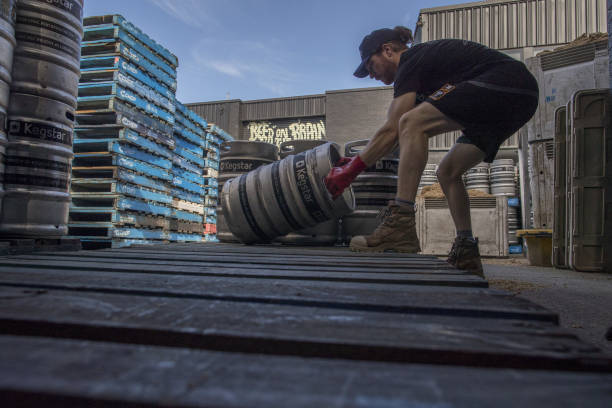
Always use proper lifting techniques or a keg dolly when moving these units, as the combination of high weight and a rounded shape can make them difficult to maneuver safely in tight commercial kitchen spaces or basement bars.
How it compares to other keg sizes
To put the 1,984 ounces of a half barrel keg into perspective, it helps to compare it to other common industry sizes like the quarter barrel and the sixth barrel.
A quarter barrel keg, often called a pony keg, contains 992 ounces, which is exactly half the volume of a half barrel and provides about 62 pints.
The increasingly popular sixth barrel keg, or sixtel, holds only 661 ounces, making it ideal for craft beers with lower turnover rates or limited cooler space. While the half barrel is the largest standard size, providing 15.5 gallons, it is significantly more efficient for high-traffic venues than smaller alternatives.
For example, you would need three sixth barrels to nearly match the volume of a single half barrel. Choosing the right size depends on your consumption rate and storage limits.
While the half barrel offers the best value per ounce, smaller kegs are better for maintaining freshness if you cannot finish 1,984 ounces within a few weeks. Always evaluate your expected guest count against these capacities to minimize waste.
Calculating 12oz and 16oz pours from a half barrel
Total 12oz servings per keg
A standard half barrel keg contains exactly 15.5 gallons of liquid, which converts to a total of 1,984 ounces. When you are calculating your inventory for standard 12oz bottles or cans, this volume theoretically yields 165 total servings per unit.
To maximize your profitability, it is essential to understand that this number represents the maximum liquid capacity before accounting for any operational variables. For high-volume events or bars that specialize in smaller pours, tracking these 12oz units allows for precise cost-per-pour analysis.
You should always ensure your tap lines are properly balanced to maintain this yield, as incorrect pressure can lead to excessive head that reduces the actual liquid volume in each glass. By focusing on a consistent 12-ounce pour, managers can accurately predict revenue based on a full 15.5-gallon inventory.
This measurement is the industry standard for bottled beer equivalents, making it a vital metric for comparing draft sales against packaged goods performance during your weekly or monthly inventory audits.
Total 16oz pints per keg
If your establishment primarily serves traditional 16oz pints, a half barrel keg will provide approximately 124 full servings under perfect conditions. Since there are 1,984 ounces in the keg, dividing by 16 gives you a clear baseline for your sales expectations.
However, it is a common mistake to assume you will sell all 124 pints at full price; smart operators usually project a yield of 110 to 115 pints to account for the physical space taken up by the foam head.
A standard ‘clean’ pour typically includes a half-inch to one-inch head, which actually saves liquid, but this is often offset by the initial foam cleared at the start of a new keg. To optimize your 16oz pint yield, ensure your refrigeration is set between 36 and 38 degrees Fahrenheit.
Temperature fluctuations are the primary cause of carbonation breakouts, which can significantly lower your pints per keg count. Monitoring these 16-ounce metrics daily helps in identifying issues with your draft system before they impact your bottom line.
Accounting for foam and spillage waste
While the mathematical total is 1,984 ounces, real-world conditions necessitate a buffer for foam, line cleaning, and spillage. Most industry professionals suggest factoring in a 20% waste margin for less efficient systems, though well-maintained direct-draw systems can keep waste under 5%.
This means your actual sellable ounces might drop from 1,984 to roughly 1,600 or 1,800 ounces. Every time a keg is changed, the air in the coupler and the initial foam burst results in lost product.
Furthermore, routine draft line cleaning every two weeks is non-negotiable for quality but does require flushing out several ounces of beer. To mitigate these losses, consider installing Foam on Beer (FOB) detectors, which automatically shut off the flow when a keg empties, preventing the lines from filling with foam.
By proactively accounting for these losses in your pricing model, you ensure that your business remains profitable even when the theoretical maximum yield is not met due to unavoidable operational waste and daily pouring inconsistencies.
How many cases of beer are in a half barrel keg?
Standard 12oz bottle case equivalents
A standard half barrel keg contains exactly 15.5 gallons of liquid, which translates to 1,984 ounces of beer. When you are trying to calculate the equivalent number of standard 12oz bottles, the math results in approximately 165.3 individual servings.
Since a standard case of beer typically contains 24 bottles, a half barrel keg is equivalent to roughly 6.8 cases of beer. For event planners and hosts, rounding this figure up to 7 cases is a safe way to estimate inventory needs.
Understanding that you are getting nearly seven full cases in a single vessel helps in managing storage space and cooling requirements. Instead of managing 165 individual glass bottles, you are dealing with a single pressurized container.
This volume is ideal for large gatherings of 40 to 60 people, ensuring that you have enough 1,984 ounces to satisfy a crowd without the clutter of excessive glass recycling. Always remember to account for a small amount of foam waste when pouring from a tap system.
Comparison to 24-count cans
When comparing a half barrel keg to standard 24-count aluminum cans, the volume remains consistent at roughly 6.8 cases. Because cans and bottles both typically hold 12 ounces of fluid, the conversion factor does not change; however, the logistical benefits become more apparent.
A single half barrel keg replaces 165 cans, which significantly reduces the amount of trash and recycling generated during a party or commercial event.
In terms of total fluid ounces, the 1,984 ounces in a half barrel provide a continuous flow of beer that eliminates the need for guests to constantly open new containers.
If you are planning a wedding or a large backyard barbecue, visualizing seven stacks of 24-count cans gives you a clear perspective on the sheer volume of a keg. This comparison is vital for determining if your refrigeration setup can handle a large keg versus several smaller cases.
Opting for the keg format ensures a consistent temperature and carbonation level for all 165 servings compared to individual cans that may warm up quickly.
Cost savings of kegs vs cases
Investing in a half barrel keg is often the most cost-effective way to purchase beer for a large group, frequently offering a 40% to 60% discount compared to buying individual cases.
When you break down the price per ounce, the 1,984 ounces found in a keg are significantly cheaper than the equivalent 165 bottles or cans purchased at retail prices. By bypassing the packaging costs associated with glass, cardboard, and aluminum, breweries can pass those savings on to the consumer.
To maximize your return on investment, it is essential to factor in the cost of a CO2 rental and a tap, but even with these additions, the bulk purchase usually wins. For those hosting regular events, the savings accumulated over several kegs can eventually pay for a dedicated kegerator system.
Choosing a keg over seven cases of beer not only saves money but also provides a premium draft experience that is difficult to replicate with packaged goods. Always check with local distributors for wholesale pricing to see exactly how much you can save per ounce.
Weight and transport facts for half barrel kegs
Full vs empty keg weight
When calculating the logistics for your event or inventory, understanding the specific mass of a standard half barrel keg is essential for safety and planning. A full half barrel contains exactly 15.5 gallons of liquid, which translates to 1,984 ounces of beer.
This volume results in a total weight of approximately 160 pounds when the keg is filled to capacity. In contrast, an empty stainless steel shell weighs roughly 30 pounds, meaning the liquid payload accounts for the vast majority of the total mass.
Knowing that there are nearly two thousand ounces per unit helps you estimate how many servings you can provide, typically yielding about 124 pints or 165 twelve-ounce pours. Always account for the heavy 160-pound full weight when determining floor load capacities or shelf strength in walk-in coolers.
Precise weight knowledge ensures you do not overload your storage equipment or transport vehicles during high-volume beverage operations.
Safe lifting and moving techniques
Handling a vessel that contains 1,984 ounces of fluid requires strict adherence to ergonomic safety standards to prevent back injuries. Because a full half barrel weighs 160 pounds, it should never be lifted by a single person.
Always use a team-lift approach or specialized equipment like a keg dolly or hand truck equipped with security straps. When manual adjustment is necessary, keep your back straight, bend at the knees, and keep the keg as close to your body as possible to maintain a stable center of gravity.
If you must move the keg across a flat floor without a dolly, you can slightly tilt it and roll it on its bottom rim, but maintain a firm grip to prevent it from tipping over.
Remember that the shifting liquid inside can cause sudden changes in balance, making the heavy 160-pound load unpredictable. Prioritizing these mechanical aids ensures you can safely manage the large volume of beer without physical strain.
Vehicle space requirements for transport
Transporting a half barrel keg requires a vehicle with adequate suspension and floor space to accommodate its 160-pound weight and physical dimensions. A standard unit stands about 23.5 inches tall and has a diameter of 16.125 inches, so ensure your trunk or cargo area has sufficient vertical clearance.
When placing the keg in a vehicle, it must be positioned upright and secured with tie-down straps to prevent it from sliding or tipping during sudden stops.
Never transport a keg on its side, as this can damage the internal spear and disturb the 1,984 ounces of beer, leading to excessive foam upon tapping.
If you are picking up multiple units, verify that your vehicle’s payload capacity can handle the cumulative weight; for example, four kegs will add over 640 pounds to your rear axle.
Using a rubber mat can provide extra friction to keep the base stable, ensuring your liquid cargo arrives in perfect condition for serving.
Tips for getting the most ounces out of your keg
Ideal temperature settings to reduce foam
To maximize the 1,984 ounces found in a standard half barrel keg, maintaining a consistent temperature is the most critical factor for success. Most draft beers are designed to be stored and served at a precise range between 36 and 38 degrees Fahrenheit.
If the liquid inside the keg warms up even slightly, the CO2 will break out of the solution, resulting in excessive foam that forces you to pour potential profits down the drain.
To ensure you get the full 124 pints or 165 twelve-ounce pours, use a calibrated thermometer to check the internal temperature of the beer rather than relying on the air temperature of the cooler.
Keep the keg refrigerated for at least 24 hours before tapping to ensure the core is chilled. Fluctuating temperatures are the primary cause of ‘wild’ beer, so insulate your draft lines and keep the keg away from the cooler door to maintain stability and yield every possible ounce.
Proper CO2 pressure levels
Achieving the full volume of a half barrel keg requires balancing the internal pressure to prevent waste. For a standard domestic lager, the regulator should typically be set between 10 and 12 PSI, depending on your altitude and the length of your draft lines.
If the pressure is too low, the CO2 will escape the beer, leading to flat pours and a foamy head that wastes ounces. Conversely, over-pressurizing the system will cause the beer to come out too fast, creating a turbulent pour that fills the glass with nothing but foam.
To get the most out of your 15.5 gallons, check for leaks in the gas lines using soapy water and ensure your CO2 tank is sufficiently filled.
A balanced system ensures that the carbonation level remains exactly as the brewer intended from the first glass to the very last drop, preventing the loss of several pints due to improper gas settings and poor flow control.
Glassware cleaning and pouring techniques
Even with perfect temperature and pressure, poor handling can waste several ounces per pour, significantly reducing the yield of your half barrel. Always use ‘beer clean’ glassware that is free of soap film, oils, or lint, as these contaminants cause the CO2 to react violently and create excessive head.
Before pouring, rinse the glass with cold water to reduce friction and lower the glass temperature. When you are ready to pour, hold the glass at a 45-degree angle and open the faucet quickly and completely.
Aim the stream at the middle of the glass slope and gradually straighten the glass as it reaches half full to develop a perfect one-inch head. Never allow the faucet nozzle to touch the beer or the glass, as this creates hygiene issues and unnecessary turbulence.
Mastering this technique ensures you capture nearly all 1,984 ounces, minimizing the ‘pour-off’ that occurs when bartenders try to settle a foam-heavy glass by letting the tap run.
Equipment needed to serve a half barrel keg
Standard US Sankey D-system couplers
To successfully tap a standard 15.5-gallon keg containing 1,984 ounces of beer, you must utilize a Sankey D-system coupler. This specific piece of hardware is the industry standard for the vast majority of North American domestic brews.
The coupler acts as the bridge between your liquid and the dispensing line, ensuring a pressurized seal that prevents oxidation. When setting up your equipment, ensure the sealing gasket is lubricated and free of debris to avoid foamy pours.
It is critical to match your coupler to the keg valve type; while most domestic brands use the D-system, some European imports require an S-system or A-system. To maximize your yield of approximately 124 pints, always engage the lever handle fully until it clicks into place.
This ensures the probe is correctly seated, allowing for a steady flow of carbonated beverage without wasting precious ounces due to improper pressure or gas leaks at the connection point.
Kegerator vs party pump setups
Choosing the right dispensing method depends on how quickly you plan to consume the 1,984 ounces found in a half barrel. A kegerator setup is the superior solution for long-term freshness because it uses pressurized CO2 tanks to push the beer.
This method prevents oxygen from touching the liquid, allowing the beer to stay fresh for several months. In contrast, a manual party pump is a budget-friendly option for events where the entire keg will be finished in a single day.
Party pumps introduce outside air into the keg to create pressure, which causes the beer to go flat and sour within 12 to 24 hours. If you want to enjoy every one of the 165 twelve-ounce servings over a week, invest in a CO2 regulator and gas lines.
For a one-day backyard bash, the party pump is portable and effective, provided you keep the pressure consistent through manual pumping throughout the event duration.
Cooling jackets and ice bucket methods
Maintaining a consistent temperature is vital for serving the 1,984 ounces in a half barrel without excessive foam. A half barrel keg is large, weighing roughly 160 pounds when full, so you need a heavy-duty plastic cooling tub or a specialized insulated cooling jacket.
If using the ice bucket method, place the keg in the tub before filling it with a mixture of ice and a small amount of water to create a cold bath that surrounds the entire surface area.
For more professional or mobile setups, an insulated jacket with integrated ice packs offers a cleaner solution that prevents condensation buildup. Keeping the beer at a steady 38 degrees Fahrenheit is the secret to ensuring that all 124 sixteen-ounce pours remain crisp and carbonated.
If the keg warms up, the CO2 will break out of the liquid, resulting in a glass full of foam rather than the perfect drink your guests expect at your gathering.
Common questions about half barrel keg volume
How long does a tapped keg stay fresh?
When you tap a standard half barrel keg containing 1,984 ounces of beer, the clock begins ticking on its peak flavor profile.
If you are using a professional CO2 draft system, your beer will typically remain fresh and carbonated for 45 to 60 days, provided the temperature is strictly maintained between 34 and 38 degrees Fahrenheit.
However, if you are using a manual party pump that introduces oxygen into the keg, the beer will likely go flat and develop an oxidized, cardboard-like taste within 12 to 24 hours. To maximize the lifespan of your investment, always keep the keg chilled and avoid agitation.
Monitoring the pressure settings on your regulator is also essential to prevent the beer from becoming over-carbonated or foamy.
For home enthusiasts, investing in a dedicated kegerator is the best way to ensure that every one of those nearly 2,000 ounces tastes as crisp as the first pour from the brewery.
Difference between a half barrel and a full barrel
In the commercial brewing industry, a common point of confusion involves the terminology used for container sizes.
It is important to understand that a half barrel keg is the industry standard for what most consumers colloquially refer to as a ‘full keg.’ A true ‘full barrel’ is a unit of measurement equal to 31 gallons, but beer is almost never distributed in a single container of that size because it would be far too heavy and cumbersome to transport safely.
Therefore, the largest standard vessel you will find at a liquor store or distributor is the half barrel, which holds 15.5 gallons or 124 pints. This volume equates to exactly 1,984 ounces.
When planning your logistics, remember that a full half barrel weighs approximately 160 pounds, requiring a sturdy dolly and proper lifting techniques. Understanding this distinction ensures you order the correct volume for your draft system and avoid confusion when discussing inventory with suppliers or event coordinators.
How many people does one keg serve?
Determining how many guests a single half barrel keg can accommodate depends largely on the duration of your event and the drinking habits of your attendees.
Since a half barrel provides 165 servings of 12-ounce pours, it is generally sufficient for a party of 40 to 50 people if you estimate roughly three to four drinks per person over a four-hour window.
If your guest list is larger, or if you are serving 16-ounce ‘pint’ glasses, you will only get about 124 servings, which may require a second backup keg to avoid running dry mid-event.
To ensure a smooth experience, always account for ‘beers on the floor’—the inevitable waste that occurs from foam during the initial tap or drip tray losses. A helpful rule of thumb for wedding planners and event hosts is to assume one keg per 50 guests to provide a safe buffer.
This proactive calculation helps you manage your budget while ensuring that no guest leaves thirsty during your celebration.
Frequently Asked Questions
How many ounces are in a standard half barrel keg?
A standard half barrel keg in the United States contains 1,984 ounces. This is based on the total volume of 15.5 gallons multiplied by 128 ounces per gallon.
How many 12 oz pours can I get from a half barrel keg?
You can expect to get approximately 165 12-ounce servings from a half barrel keg. This estimate accounts for the total volume of 1,984 ounces, though actual yield may be slightly lower due to foam or waste.
How many 16 oz pints are in a half barrel keg?
A half barrel keg contains roughly 124 16-ounce pints. This is the most common metric used by bars and restaurants to calculate inventory and pricing for draft beer.
Is a half barrel keg the same as a ‘standard’ full-size keg?
Yes, what most people refer to as a ‘full-size keg’ is technically a half barrel keg. It contains 15.5 gallons (1,984 oz), which is exactly half of a full beer barrel (31 gallons).
How many ounces are in a half barrel vs a quarter barrel keg?
A half barrel keg contains 1,984 ounces, while a quarter barrel keg (often called a pony keg) contains 992 ounces. The half barrel provides exactly double the volume of a quarter barrel.
How do I calculate the weight of 1,984 ounces of beer?
Since beer is mostly water, you can estimate the weight by knowing that 1,984 ounces of liquid weighs about 130 pounds. When you add the weight of the stainless steel keg itself, the total weight is approximately 160 pounds.
Conclusion
Whether you are calculating servings for a large party or managing bar inventory, knowing this volume ensures you never run out of refreshments. By mastering these measurements, you can pour with confidence and efficiency.

