Comparison: Is End Grain The Best Cutting Board (Updated | Jul 29th)
If you’ve ever stood in the kitchen, knife in hand, wondering whether your cutting board is helping or hurting your prep work, you’re not alone. Lately, everyone seems to be raving about end grain cutting boards—calling them the gold standard for knife care and durability. But are they truly worth the hype and the higher price tag? In this article, we’ll slice through the noise, compare the facts, and help you decide if end grain really is the best cutting board for your kitchen.
- Best for extra-thick walnut: XXL American Black Walnut End Grain Cutting Board – 24 x 15 x 1.7 Inch – Premium Quality & Professional Butcher Block. Heavy Duty Wood Chopping Board for Kitchen (Oil bottle & Plate included)
- Best for compartment charcuterie: THETCHRY Walnut Wood Cutting Boards for Kitchen
- Best for american walnut pro: Sonder Los Angeles Alfred Cutting Board Made in USA | Black Walnut End Grain Cutting Board with Non-Slip Feet
- Best for acacia grain utility: Ironwood Gourmet Oslo End Grain Utility Cutting Board
- Best for handcrafted mahogany luxury: SHUMARU Mahogany End-Grain Wood Cutting Board – 20×13×1.6″ Butcher Block | Handmade in Bali – Silky-Smooth
- Best for triple bamboo set: Kikcoin Extra Large Bamboo Cutting Boards
- Best for premium walnut thickness: American Black Walnut Cutting Board (ExtraThick 1.7″)
- Best for slim walnut versatile: THETCHRY Walnut Wood Cutting Board for Kitchen
- Best for reversible butcher block: Wooden Butcher Block End Grain Cutting Board – 17x13x1.5in Reversible Multipurpose Chopping Board with Juice Groove
- Best for handcrafted maple masterpiece: The Boardsmith Maple End Grain Cutting Board – Premium
Product Comparison: Is End Grain The Best Cutting Board
XXL American Black Walnut End Grain Cutting Board – 24 x 15 x 1.7 Inch – Premium Quality & Professional Butcher Block. Heavy Duty Wood Chopping Board for Kitchen (Oil bottle & Plate included)
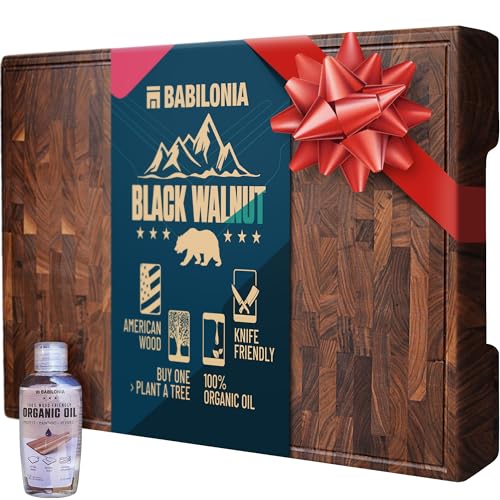
If you have ever felt the frustration of chasing chopped onions across the counter, Babilonia has actually solved it. This XXL American Black Walnut board stands out because of its innovative “slide” design. It features a notch and an included plate that lets you sweep your prep work directly off the board without having to lift a heavy 1.7-inch thick slab of wood. At 24 x 15 inches, it is a massive workspace that doubles as a stunning charcuterie centerpiece when you flip it over to use the hidden handles.
I would recommend this for the serious home cook who has plenty of counter space and handles high-volume meal prep. It is a “pro-sumer” tool that feels like a permanent fixture in a kitchen rather than something you tuck away in a cabinet. The end-grain construction is famously kind to high-end knives, making it a great pairing for someone who invests in Japanese or German steel.
The trade-off here is the sheer footprint and maintenance. At nearly two feet wide and quite heavy, it is a beast to wash in a standard sink. You also have to be diligent with the included organic oil; walnut is beautiful but can look thirsty if you neglect the seasoning process. It’s an heirloom piece, but it demands heirloom-level care.
THETCHRY Walnut Wood Cutting Boards for Kitchen, Large Chopping Board Double Sided, End Grain Cutting Board with Handle, Charcuterie Butcher Block for Meal Prep & Serving with Gift Box, 17″×13″×1″

The THETCHRY Walnut Wood Cutting Board is a clever middle-ground for people who want the “self-healing” benefits of end grain without the back-breaking weight of a full-sized butcher block. What really catches the eye is the multi-functional sorting compartment. Instead of just a flat surface, you get a dedicated space to stash diced garlic or herbs while you move on to the next ingredient. It’s a workflow-oriented board that acknowledges how messy actual cooking gets.
This is the ideal choice for the organized prepper or someone living in an apartment with limited counter space. Since it’s 17 x 13 x 1 inches, it’s manageable enough to move around easily but still offers that premium walnut feel. The addition of stick-on rubber feet is a nice touch for stability, especially if you’re working on slick granite or marble surfaces.
However, the one-inch thickness is a bit of a double-edged sword. While it makes the board lighter and easier to store, it is thinner than traditional professional end-grain blocks. There is a slightly higher risk of warping over time compared to a two-inch thick slab if you aren’t perfectly consistent with oiling both sides. It’s a stylish, practical tool, but perhaps not as “heavy-duty” as the chunkier options on the market.
Sonder Los Angeles Alfred Cutting Board Made in USA | Black Walnut End Grain Cutting Board with Non-Slip Feet, Juice Groove, Sorting Compartments | Gift Box Included | 17x13x1.5 in

There is something deeply reassuring about the Sonder Los Angeles Alfred board. It feels like a piece of professional equipment that was actually designed by people who cook daily. The standout feature is the three built-in sorting wells. Unlike boards that just give you a flat surface, these wells allow you to keep your mise en place organized or hold olives and nuts when using it as a charcuterie board. It’s Made in the USA from American Black Walnut, and the craftsmanship shows in the seamless end-grain transitions.
I’d suggest this for the “foodie” who loves to host. It transitions perfectly from a heavy-duty prep station to a sophisticated serving platter. The deep 3.5 fl oz juice groove is a lifesaver if you’re carving a rested steak or slicing juicy tomatoes, as it actually holds the liquid rather than letting it overflow onto your clean counters.
The honest downside is the maintenance schedule. To keep this premium walnut from cracking or losing its luster, Sonder Los Angeles recommends oiling it every three weeks. It’s a high-performance tool, but if you’re the type of person who wants a “zero-effort” board you can just throw in the rack and forget about, the upkeep might feel like a chore.
Ironwood Gourmet Oslo End Grain Utility Cutting Board, 14 x 16 Inches, Natural Acacia Wood

The Ironwood Gourmet Oslo board brings the striking aesthetic of Acacia wood to the forefront. Acacia is famous for those dramatic, contrasting light and dark swirls, and in an end-grain pattern, it looks like a mosaic. This board stands out because it provides a 14 x 16 inch workspace that is more square than the typical rectangle, which can be a real advantage if you have deep counters but narrow prep areas.
This is a great entry point for someone who wants to move away from plastic or edge-grain boards without spending a fortune. It’s marketed as a utility board, meaning it’s meant to be used hard. It’s perfect for the daily tasks—slicing bread, dicing onions, or carving a small roast. Because it’s one inch thick, it’s relatively easy to maneuver during cleanup.
The trade-off with Acacia is that it can be a bit more temperamental than Walnut or Maple. It is a very hard wood, which is great for durability, but it can be prone to “checking” or small cracks if it gets too dry or sits in a humid environment. You’ll want to be very proactive with the butcher block oil to keep those beautiful natural patterns from splitting over time.
SHUMARU Mahogany End-Grain Wood Cutting Board – 20×13×1.6″ Butcher Block | Handmade in Bali – Silky-Smooth, Knife‑Friendly, Ergonomic Grips & Non‑Slip Feet
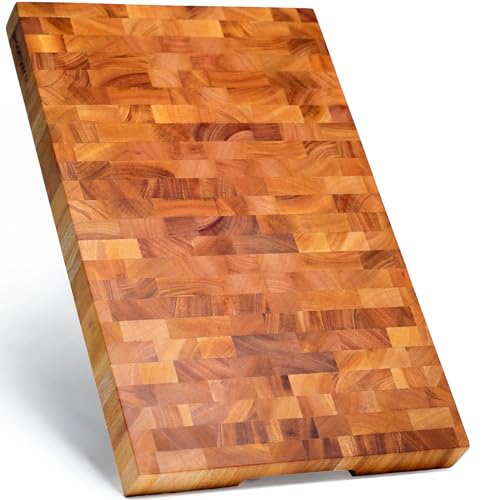
The SHUMARU Mahogany board is a bit of an outlier in a world of walnut and maple, and that is exactly why it’s interesting. Handcrafted in Bali, it uses sustainably sourced mahogany, which gives it a distinct, warm reddish hue and a very dense, silky-smooth finish. At 20 x 13 x 1.6 inches, it has the “heft” you want in a real butcher block, staying planted on the counter while you’re working through heavy tasks.
I think this board is for the person who values artisan craftsmanship and wants something unique for their kitchen. The non-slip rubber feet are pre-installed and elevate the board, which is a huge plus for hygiene. It allows air to circulate underneath, preventing the moisture trap that often leads to mold or rot on flat-bottomed boards. It’s a solid choice for someone who does a lot of heavy carving and needs a stable, elevated surface.
The main thing to consider is that Mahogany is a slightly different animal than traditional hardwoods like Maple. While it’s beautiful and knife-friendly, it can be more porous. You’ll need to be diligent about cleaning it immediately after working with raw proteins to ensure nothing lingers in the grain. It’s a gorgeous, high-end piece, but it requires a disciplined cleaning routine.
Kikcoin Extra Large Bamboo Cutting Boards, (Set of 3) Chopping Boards with Juice Groove Bamboo Wood Cutting Board Set Butcher Block for Kitchen, End Grain Serving Tray

The Kikcoin Bamboo Set is a bit of a curveball in the end-grain category. While most end-grain boards are single, heavy slabs of hardwood, this is a set of three various-sized boards made from four-layer thickened bamboo. What makes it stand out is the sheer value and versatility; you get an XL, Large, and Medium board, along with a storage rack, which is perfect for preventing cross-contamination between meats and veggies.
This set is perfect for the busy family kitchen or a student setting up their first real apartment. It’s for someone who wants the end-grain look and knife protection but prefers the lightweight, eco-friendly nature of bamboo. The deep juice grooves and optional silicone feet make them very practical for everyday meal prep, from slicing fruit for breakfast to prepping a full steak dinner.
The honest truth, however, is that bamboo isn’t technically “wood”—it’s a grass. Even with end-grain construction, bamboo contains high levels of silica, which can be tougher on your knife edges than walnut or maple. Also, because these are made of many small pieces spliced together, they aren’t as “heirloom quality” as a solid hardwood block. They are highly functional and affordable, but they won’t last forty years like a premium walnut board might.
American Black Walnut Cutting Board (ExtraThick 1.7″), Premium Quality & Professional Butcher Block. Heavy Duty End Grain Wood Chopping Board 19.7″L x 12.2″W (Oil bottle & Plate included)
This Babilonia board is the slightly more compact sibling to the XXL version, measuring 19.7 x 12.2 inches. It keeps the impressive 1.7-inch thickness, which provides that rock-solid stability you only get with a professional-grade butcher block. The standout feature remains the 3-in-1 design: a heavy chopping surface, a notch-and-plate system for easy ingredient transfer, and a reversible side that acts as a sleek serving tray.
If you love the idea of a premium American Black Walnut board but your kitchen isn’t quite big enough for a two-foot-wide monster, this is your best bet. It’s the “sweet spot” size—large enough for a Thanksgiving turkey but small enough to fit on a standard countertop without taking over the whole space. The free organic oil bottle and the 2-year warranty add a lot of peace of mind to the purchase.
The trade-off here is the weight-to-size ratio. Because it is so thick (1.7″), it is surprisingly heavy for its length. While the hidden handles help, anyone with wrist issues or limited strength might find it a bit of a workout to move from the counter to the sink. It’s built for durability and performance, but that “heavy-duty” nature means it isn’t exactly “grab-and-go.”
THETCHRY Walnut Wood Cutting Board for Kitchen, End Grain Chopping Board with Juice Groove, Heavy Duty Checkered Board for Cheese and Vegetables, Non-slip Feet 16.5″ x 11.6″ x 0.8″

The THETCHRY 16.5-inch board is a great example of a “checkered” end-grain design that looks as much like a piece of art as it does a kitchen tool. Made from American Walnut, it features that classic self-healing structure where the knife blade slides between fibers rather than cutting through them. It stands out for being 0.8 inches thick, making it one of the most low-profile end-grain boards available.
I’d recommend this for the home cook who wants the aesthetic of a high-end butcher block but needs something that can be easily tucked away in a drawer or a narrow cabinet. It’s also fantastic as a dedicated cheese or charcuterie board for parties because the juice groove is discreet and the walnut grain is naturally stunning under appetizer spreads. It’s a very “approachable” end-grain board.
The downside is that at 0.8 inches, it lacks the “thud” and absolute stability of a thicker block. If you are doing heavy-duty cleaver work or hacking through bone, this board might feel a bit thin. It’s perfect for slicing, dicing, and serving, but it isn’t a replacement for a 2-inch thick professional chopping block if you’re doing heavy butchery. It’s a “light-duty” version of a “heavy-duty” concept.
Wooden Butcher Block End Grain Cutting Board – 17x13x1.5in Reversible Multipurpose Chopping Board with Juice Groove, Cracker Holder & Inner Handles
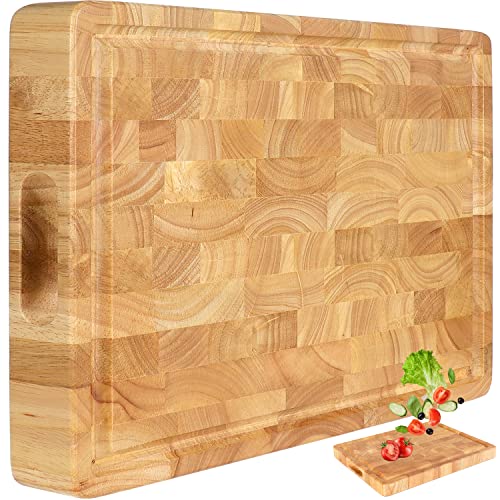
The Wooden Butcher Block by FANICHI is all about maximizing utility on both sides. On the front, you have a deep juice groove for messy carving; on the back, there are carved compartments designed to hold crackers, nuts, or prepped veggies. This “reversible” nature makes it a true workhorse. At 1.5 inches thick, it has the mass required to stay still while you’re dicing, and the inner side handles are actually deep enough to get a secure grip.
This is a great choice for the “all-in-one” shopper. If you only want to own one nice board that handles Tuesday night dinner prep and Saturday night wine-and-cheese hosting, this fits the bill. The 17×13 inch dimensions are standard enough to fit most kitchens, and the end-grain construction ensures your expensive knives won’t dull prematurely.
One thing to watch out for is that having compartments on the “back” side means you have less flat surface area when you flip it. If you’re doing a massive prep job that requires every square inch of the board, those carved-out wells on the reverse side might feel like wasted space. It’s a trade-off: you get organization and serving features, but you lose a bit of raw, flat chopping real estate on that second side.
The Boardsmith Maple End Grain Cutting Board – Premium, Hand Crafted End Grain Wood Cutting Board for Kitchen – Butcher Block – Handmade Cutting Board (Medium)

The Boardsmith is widely considered the “gold standard” in the world of end-grain boards, and this Maple version shows why. Handcrafted in Texas, it stands out because of its incredible 2-inch thickness and the inclusion of handmade wooden feet. Unlike many mass-produced boards that use stick-on rubber, these feet are a permanent part of the design, ensuring the board never sits in a puddle of water and stays perfectly stable. The Hard Maple is a traditional choice because it’s dense, hygienic, and brightens up a kitchen.
This is for the person who wants to buy their “forever board.” It’s an investment piece for a serious cook who appreciates artisan joinery and sustainable American hardwoods. At 12 x 18 inches and weighing nearly 9 pounds, it feels incredibly substantial. The beveled edges make it comfortable to touch, and the factory finish of mineral oil and beeswax is top-tier.
The trade-off is the price and the weight. This is a premium product, and you’re paying for the American labor and the high-grade maple. Also, because it has permanent feet, you cannot use both sides for cutting. You are committed to the top surface only, which is fine for most, but those who like to “flip and keep going” during a long prep session might find that limiting.
Product prices and availability are accurate as of the date/time indicated and are subject to change. Any price and availability information displayed on Amazon.com at the time of purchase will apply to the purchase of this product.
Buying Guide
FAQs
What are the main advantages of an end‑grain cutting board over a flat‑grain board?
End‑grain boards have a lattice of wood fibers that act like a series of tiny knives, allowing the blade to cut between fibers instead of across them. This self‑healing structure reduces wear on both the board and your knives, keeping edges sharper longer. They also tend to be more resistant to deep cuts and moisture, which prolongs their lifespan.
How does wood type affect durability and knife friendliness?
Harder woods such as black walnut and maple provide excellent durability while still being gentle on blades; softer woods like bamboo can dent more easily. Walnut offers a rich aesthetic and natural antimicrobial properties, whereas maple is known for its dense grain and resistance to warping. Choose a wood that matches your style preferences and the level of heavy use you anticipate.
Which board offers the best value for large‑family cooking and entertaining?
The XXL American Black Walnut End Grain Cutting Board (24 × 15 × 1.7 in) combines a generous surface, thick 1.7‑inch construction, and a reversible serving tray, making it versatile for both prep and charcuterie displays. It includes a free organic oil bottle and a 2‑year warranty, adding extra value beyond the raw board. For families needing multiple sizes, the Kikcoin bamboo set provides three boards plus a rack at a lower price point, though it lacks the premium end‑grain benefits.
Do I need a juice groove, and which models include the deepest groove?
A juice groove helps keep countertops clean when cutting juicy meats or fruits, especially on larger boards. The Sonder Los Angeles Alfred and the THETCHRY Walnut boards both feature deep 3‑to‑3.5‑ounce grooves, while the Fanichi reversible butcher block offers a carved groove around one edge. If you frequently work with wet ingredients, prioritize a board with a deeper groove.
How important are non‑slip features, and which boards provide the most stability?
Non‑slip feet or rubber pads prevent the board from sliding during vigorous chopping, enhancing safety. The THETCHRY models include stick‑on rubber feet, the Boardsmith maple board comes with handcrafted wooden feet, and the SHUMARU mahogany board has built‑in rubber feet that also elevate the board for better airflow. Boards without built‑in feet can still be stable if you add a separate silicone mat.
What maintenance routine will keep an end‑grain board in top condition?
Hand‑wash with mild soap and warm water, dry immediately, and avoid soaking or dishwasher use. Oil the surface with food‑grade mineral oil or the included organic oil every 3–4 weeks to prevent drying and cracking. Periodic sanding and re‑oiling can restore a smooth finish if the board becomes rough over time.
Is a larger board always better, or should I consider multiple sizes?
A larger board provides ample space for big cuts and can double as a serving platter, but it may be cumbersome to store. Smaller boards, like the 10 × 7 in bamboo option, are handy for quick prep tasks and fit easily in drawers. Many shoppers find a set of varied sizes—such as the Kikcoin trio—offers the most flexibility for different cooking stages.
How do price and warranty compare across the listed options?
Premium American black walnut boards (e.g., XXL and ExtraThick models) command higher prices but include generous warranties (up to 2 years) and accessories like oil. Mid‑range options like the THETCHRY walnut boards provide solid features with a standard warranty, while the bamboo set is the most budget‑friendly with limited warranty coverage. Consider the long‑term value of durability and after‑sale support when weighing cost.