How To Open Cork Screw
Struggling with how to open cork screw? You’re not alone—many people get stuck right at the start. The good news is, it’s simpler than it looks. Whether you’re using a standard corkscrew or a winged version, we’ve got you covered. No more broken corks or frustration—just easy, foolproof techniques that work every time. Let’s get that bottle open!
How to Open a Corkscrew Correctly
Step-by-step guide to opening a corkscrew
To open a corkscrew correctly, start by ensuring the tool is closed and secure. Hold the corkscrew firmly in one hand and use your other hand to grip the lever or handle.
Slowly and steadily pull the spiral (worm) outward from its housing, keeping your fingers clear of the sharp tip. If it’s a winged corkscrew, lift both wings evenly to avoid bending the metal.
For a waiter’s friend (sommelier knife), pivot the fulcrum lever away from the folded position before unfolding the worm. Always open the corkscrew on a flat surface to maintain control. Once fully extended, check that all moving parts operate smoothly.
This controlled, deliberate motion prevents injury and ensures the tool is ready for use. Practice this sequence regularly to build muscle memory and confidence when opening any type of corkscrew.
Common mistakes when opening a corkscrew
Many people rush the opening process, leading to misaligned parts or accidental slips. One frequent error is using excessive force, which can damage the hinge or bend the spiral, especially on cheaper models.
Another common issue is holding the corkscrew improperly, such as placing fingers near the pivot point, increasing the risk of pinching. Users often ignore resistance and continue forcing the mechanism, which may result in broken components. With winged corkscrews, uneven lifting of the wings can warp the structure over time.
Additionally, attempting to open a corkscrew one-handed without stability compromises control. Always inspect the tool for wear before use, as worn joints can fail unexpectedly. Avoid using corkscrews with loose or wobbly parts, as they reduce effectiveness and safety.
Recognizing these mistakes helps ensure reliable performance and prolongs the tool’s lifespan.
Safety tips for handling corkscrews
Always point the corkscrew’s worm away from your body when opening to prevent injury from sudden movements. Use a stable grip and keep fingers clear of hinges and levers to avoid pinching. Open the corkscrew slowly and deliberately, especially if it’s a model with springs or locking mechanisms.
Wear cut-resistant gloves if handling damaged or rusty tools. Inspect the corkscrew before each use for cracks, sharp edges, or loose screws. Never leave an open corkscrew unattended on countertops or tables where someone might accidentally touch the sharp end.
Store it in a protected case or slot when not in use. Teach children about corkscrew safety and keep it out of reach. If the tool feels stiff, apply a small amount of food-safe lubricant rather than forcing it. Prioritizing safety ensures a smooth, accident-free experience every time.
Types of Corkscrews and How to Open Each

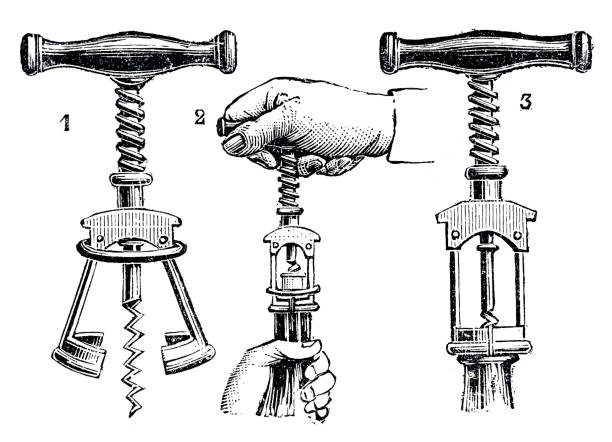
Winged corkscrew: How to open and use
To open a wine bottle with a winged corkscrew, first remove the foil from the bottle’s neck using a foil cutter or the serrated knife on some models.
Center the screw directly over the cork and turn the handle clockwise steadily until the screw is deep enough into the cork—usually about 3–5 full turns. As you turn, the wings will rise automatically due to the internal gear mechanism.
Once the screw is fully embedded, press down on the wings evenly with both hands to lift the cork smoothly from the bottle. Apply even pressure to avoid breaking the cork or spilling wine. If the cork resists, gently wiggle the corkscrew side to side while continuing upward pressure.
This style is ideal for beginners due to its simple mechanics and visual feedback. Always clean the corkscrew after use and store it in a dry place to prevent rust or residue buildup.
Waiter’s friend: Opening and folding steps
A waiter’s friend, or wine key, is a compact, professional tool used by sommeliers. Begin by slicing the foil below the bottle’s lip using the built-in knife. Fold out the screw from the handle and position it at the center of the cork.
Turn the screw clockwise into the cork until the last spiral is just above the cork’s surface—this prevents puncturing the bottom. Next, hook the lever over the bottle’s lip and pull the handle upward to lift the cork halfway.
Then, reposition the lever lower on the handle and complete the extraction with a second pull. Use a controlled motion to avoid jerking. Once the cork is out, wipe the bottle’s rim and fold the screw and knife back into the handle for safe storage.
This method offers maximum control and portability, making it a favorite for servers and travelers.
Electric corkscrew: Powering on and operation
An electric corkscrew simplifies opening wine with minimal effort. Start by removing the foil from the bottle neck to prevent jamming. Place the electric corkscrew vertically on top of the bottle, ensuring the screw aligns with the cork’s center.
Press the downward button (usually labeled “open” or with a downward arrow) to automatically insert the screw and extract the cork. The motor will stop once the cork is fully removed—do not force the device. Once done, press the reverse button if needed to release the cork from the screw.
Some models eject the cork automatically. Hold the base firmly during operation to maintain stability. These devices are ideal for people with limited hand strength or arthritis. After use, turn off and unplug the unit, then wipe the screw with a damp cloth.
Regular charging ensures reliable performance for your next bottle.
How to Open a Bottle with a Corkscrew
Preparing the bottle for opening
Before using a corkscrew, ensure the bottle is stable and upright to prevent spills and maintain control. Wipe the neck of the bottle with a clean cloth to remove dust or residue, especially if the bottle has been stored on its side.
Remove the foil or capsule covering the cork using a foil cutter, the small knife on your corkscrew, or kitchen shears. Make the cut just below the bottle’s lip so no metal is exposed when pouring.
Inspect the cork for damage or brittleness—older bottles may have fragile corks that require extra care. Position the bottle on a flat, non-slip surface. Having a napkin or towel nearby helps with grip and cleanup.
Proper preparation sets the stage for a smooth uncorking process and reduces the risk of breaking the cork or spilling the wine.
Inserting the screw into the cork
Hold the corkscrew handle firmly and position the tip of the screw at the center of the cork. This alignment is crucial—inserting off-center increases the risk of the cork splitting or getting stuck. Begin twisting the screw slowly and steadily using a clockwise motion.
Keep the corkscrew perpendicular to the bottle to ensure even penetration. Stop when one full coil remains above the cork—this provides enough grip without pushing the screw through the bottom of the cork.
If using a two-stage corkscrew, deploy the first lever against the bottle’s lip after the initial twist to assist with leverage. Avoid rushing this step; a controlled insertion prevents damage and ensures a clean extraction. Taking your time here enhances control and reduces the chance of cork breakage.
Removing the cork smoothly
Once the screw is properly embedded, use steady upward pressure to begin extracting the cork. If your corkscrew has levers, engage them one at a time, pressing down on the lever to lift the cork incrementally. Maintain a firm grip on both the corkscrew and bottle to prevent slipping.
Pull straight upward—angled force can cause the cork to snap. As the cork clears the neck, twist it gently free with your fingers if needed. Listen for the soft ‘pop’ that signals a successful opening. After removal, inspect the cork to ensure it’s intact.
Clean the screw and store your corkscrew properly. Now you’re ready to pour and enjoy your wine with confidence and elegance.
Tips for Opening Stubborn Corkscrews
Loosening a stuck corkscrew mechanism
If your corkscrew mechanism is stuck and won’t open, start by inspecting the hinge or pivot point for debris, rust, or dried residue that may be causing resistance. Gently wipe the area with a damp cloth to remove surface grime.
For tougher buildup, apply a small amount of food-safe lubricant or mineral oil directly to the joint, then work the mechanism back and forth to distribute the lubricant. Avoid using water or harsh chemicals, as they can corrode metal parts.
If the corkscrew has a folding design, ensure it’s not locked in place—some models have a safety latch that must be disengaged before opening. Apply gentle, steady pressure while supporting the base to prevent bending.
If the mechanism remains stiff, let the lubricant sit for a few minutes before trying again. Patience and consistent motion often free up the joint without force, preserving the tool’s integrity.
Using tools to assist with opening
When a corkscrew won’t open by hand, use pliers with a soft grip to gently apply leverage without damaging the metal. Wrap the pliers’ jaws in a cloth or use rubber bands to prevent scratching.
Grip the lever or worm arm firmly and apply slow, controlled pressure to open the mechanism. For winged corkscrews, press down on both wings evenly to avoid misalignment—uneven force can bend internal gears.
If the corkscrew is part of a multi-tool, secure the base in a non-slip surface like a rubber mat to stabilize it while you work. In some cases, tapping the hinge lightly with a rubber mallet can dislodge internal obstructions.
Never use excessive force or metal-on-metal impacts, as this can deform parts. Using the right tool with care ensures the corkscrew opens safely and remains functional for future use.
Preventing damage to the corkscrew
To avoid damaging your corkscrew during opening, always handle it with clean, dry hands to maintain grip and control. Regular maintenance is key—clean the mechanism after each use and dry it thoroughly to prevent rust and residue buildup.
Store the corkscrew in a dry place, preferably in a protective sleeve or drawer to avoid impacts. Avoid forcing the mechanism open or closed, as this can bend metal components or strip internal threads.
For lever-style corkscrews, engage the wings or levers smoothly rather than slamming them down, which can misalign gears. Periodically check for loose screws or wobbling parts and tighten them with an appropriate screwdriver. Applying a drop of food-grade lubricant every few months keeps moving parts functioning smoothly.
Treating your corkscrew with care extends its lifespan and ensures reliable performance each time you uncork a bottle.
Best Ways to Store and Maintain Your Corkscrew
Cleaning your corkscrew after use
After each use, clean your corkscrew thoroughly to prevent wine residue and cork particles from building up. Start by wiping the worm (the spiral part) with a damp cloth to remove any visible debris.
For models with crevices or gears, use a soft brush, such as an old toothbrush, to gently scrub hard-to-reach areas. If your corkscrew is dishwasher-safe, disassemble it carefully and place the parts in the utensil compartment; otherwise, hand wash with mild soap and warm water.
Avoid soaking wooden-handled models, as prolonged exposure to water can cause warping or cracking. Dry all components completely with a clean towel before storing. Regular cleaning not only maintains hygiene but also ensures smooth operation the next time you use it.
A clean corkscrew opens bottles more efficiently and reduces wear on mechanical parts, extending the tool’s lifespan significantly.
Proper storage to prevent jamming
Store your corkscrew in a dry, cool place to avoid moisture buildup, which can lead to rust or corrosion—especially in the spiral or hinge areas. For winged or lever-style corkscrews, keep the mechanism in the closed or neutral position to reduce tension on internal springs and gears.
Avoid tossing your corkscrew loosely into a drawer where it can knock against other utensils, potentially bending the worm or damaging the lever. Instead, use a designated utensil tray, a protective sleeve, or a drawer organizer to keep it secure.
Wall-mounted racks or countertop caddies are excellent for visibility and accessibility while protecting the device. If your corkscrew has removable parts, store them together in a small pouch or compartment. Proper storage prevents jamming and mechanical strain, ensuring your corkscrew opens smoothly every time without frustrating resistance or misalignment.
Lubricating moving parts for easy opening
To ensure smooth and effortless operation, apply food-safe lubricant to the moving parts of your corkscrew every few months. Focus on the worm shaft, hinges, and any gears in lever or winged models.
A drop or two of mineral oil or a food-grade silicone lubricant is sufficient—avoid petroleum-based oils that can degrade plastic components or leave harmful residues. Work the mechanism back and forth to distribute the lubricant evenly.
Regular lubrication reduces friction, making it easier to twist the worm into the cork and lift the lever or wings. This is especially important for heavy-duty or frequently used corkscrews. Over time, unlubricated parts can stiffen or corrode, making the tool difficult to open or close.
By maintaining lubrication, you ensure consistent performance and extend the tool’s functional life, turning each bottle opening into a quick, seamless experience.
Troubleshooting Common Corkscrew Issues
Why your corkscrew won’t open or close
A corkscrew that won’t open or close is often due to mechanical resistance or debris buildup in the hinge mechanism. Start by fully extending the corkscrew and inspecting the pivot points for dirt, wine residue, or dried cork particles. Use a soft brush or cloth to clean these areas thoroughly.
Apply a food-safe lubricant, such as mineral oil, to the joints and work the mechanism back and forth to distribute it evenly. Avoid using excessive force, as this can bend or damage the arms.
If the corkscrew has a locking mechanism, ensure it’s disengaged before attempting to open or close it. Regular maintenance prevents stiffness over time. If the problem persists after cleaning and lubrication, internal wear or a bent component may be the cause, which leads into deeper repair or replacement considerations.
Fixing misaligned folding parts
Misaligned folding parts can prevent your corkscrew from operating smoothly or folding securely. Begin by loosening the pivot screw slightly—not completely removing it—to allow realignment of the arms. Carefully adjust the metal arms so they sit parallel and move in unison.
Once aligned, gently tighten the screw while maintaining the correct positioning. Test the movement repeatedly to ensure smooth action without binding. If the parts continue to misalign, check for bent metal or warped joints caused by past misuse.
In some cases, using a pair of needle-nose pliers with a soft cloth covering can help gently bend components back into place. Precision is key—over-tightening can restrict movement, while under-tightening leads to instability. Consistent alignment ensures reliable performance and extends the tool’s lifespan.
Replacing worn-out components
Over time, springs, screws, or hinge pins in a corkscrew can wear out, compromising functionality. Identify the specific worn part—common culprits include the helix (worm), pivot screw, or folding spring. Many manufacturers offer replacement part kits or sell individual components.
Use a small screwdriver or pin to remove the damaged piece, noting its orientation for correct reassembly. When installing the new part, ensure it fits snugly and allows full range of motion. For models with tension springs, verify the spring is properly seated to maintain automatic retraction.
If original parts aren’t available, consider visiting a specialty hardware store for compatible miniature fittings. Regular inspection helps catch wear early, preventing sudden failure. Replacing worn components promptly restores performance and avoids the need for full tool replacement.
Alternative Tools to Open a Corkscrew
Using pliers or a knife safely
If you don’t have a corkscrew, pliers can be a reliable alternative for removing a cork, especially if the top is protruding. Grip the neck of the cork firmly with the pliers and twist slowly while pulling upward to extract it without breaking.
Be sure to use steady pressure to avoid slipping and potential injury. For a knife, use a strong, sharp blade and insert it at a 45-degree angle into the side of the cork. Gently wiggle and twist the knife while pulling up to gradually lift the cork out.
Avoid excessive force to prevent the cork from splitting or the knife from slipping. Always cut away from your body and keep fingers clear. While these methods work in a pinch, they require patience and care.
Prioritize safety by working on a stable surface and using tools with good grip to minimize accidents.
Household items that can help
Several common household items can help open a wine bottle when a corkscrew is unavailable. A screw and hammer combination is one effective method: screw a long screw into the center of the cork, leaving enough exposed to hook with the hammer claw, then gently pull upward.
Shoes can also serve as an improvised tool—place the bottle bottom in the shoe and gently strike a wall or floor to push the cork out with repeated impact.
Another option is using a long wooden spoon or chopstick—push it down the side of the cork while applying upward pressure to inch it out. While unconventional, these tricks can save the moment during a gathering. Always proceed slowly to avoid breaking the cork or shattering the bottle.
These methods work best with natural corks and should be used cautiously to prevent spills or injury.
When to replace a damaged corkscrew
A damaged corkscrew can make opening wine frustrating or unsafe, so knowing when to replace it is essential. If the spiral (worm) is bent, worn, or missing segments, it may not grip the cork properly, leading to breakage or difficulty extracting.
Similarly, if the lever or hinge mechanism on a winged corkscrew is loose or broken, it won’t provide the necessary leverage. Rust or corrosion not only weakens the tool but can also contaminate the wine.
Even with alternative methods available, a reliable corkscrew should be part of every kitchen or bar setup. Regular inspection helps catch issues early. When repairs aren’t feasible, invest in a high-quality replacement—like a waiter’s friend or a lever-pull model—for consistent performance.
Replacing a faulty corkscrew ensures safety, efficiency, and better wine enjoyment over time.
Frequently Asked Questions
What is a corkscrew used for?
A corkscrew is a tool designed to remove cork stoppers from bottles, especially wine bottles. It typically features a metal spiral (called a worm) that is twisted into the cork to pull it out.
How do I use a standard corkscrew to open a wine bottle?
First, insert the tip of the corkscrew’s spiral into the center of the cork. Twist it down until the spiral is almost through the cork, then use the handle or leverage mechanism to slowly pull the cork out of the bottle.
What are the different types of corkscrews?
Common types include the waiter’s friend (double-hinged), winged corkscrew, electric corkscrew, and lever-pull models. Each operates slightly differently but serves the same purpose of removing corks efficiently.
How do I avoid breaking the cork while using a corkscrew?
Insert the corkscrew straight into the center of the cork and twist slowly and steadily. Avoid tilting the corkscrew, and stop twisting once the spiral is securely embedded to prevent pushing the cork into the bottle.
Can I open a wine bottle without a corkscrew?
Yes, alternative methods include using a screw and pliers, a shoe (by gently hammering the bottle base), or a knife, though these carry risks of injury or spillage. Using a proper corkscrew is the safest and most effective method.
How do I clean and maintain my corkscrew?
Wipe the spiral and handle after each use to remove wine residue or cork debris. For deeper cleaning, use a damp cloth or mild soap, and ensure the moving parts are free of buildup to maintain smooth operation.
Conclusion
Opening a corkscrew is simple once you know the right technique. Always position the screw in the center of the cork, twist steadily, and pull gently to avoid breakage. Using the right tool, like a waiter’s corkscrew or lever opener, makes the process smoother. With practice, opening wine becomes quick and effortless. Don’t be discouraged by early struggles—every expert was once a beginner. Keep trying, and soon you’ll open bottles with confidence and ease.