Best Wood To Use For Cutting Boards (Updated | Aug 12th)
Choosing the right wood for your cutting board can feel like a culinary mystery, but it doesn’t have to be. In this guide we’ll break down the top contenders—maple, walnut, cherry, and bamboo—highlighting durability, knife‑friendliness, and hygiene. You’ll learn which grain patterns resist scoring, which woods stay naturally antimicrobial, and how budget plays into the decision. By the end, you’ll feel confident picking a board that’s both beautiful and built to last in your kitchen for everyday cooking adventures together.
Key Takeaways
- Pine is a sustainable and knife-friendly choice for cutting boards.
- Top pick resists heat up to 350°F and is dishwasher safe.
- Choose boards that are gentle on knives to prolong blade life.
- Opt for dual-sided designs for versatile food prep use.
- Prioritize sustainably sourced wood for eco-conscious kitchen tools.

Freshware Wood Cutting Boards for Kitchen
Dishwasher‑Safe Fiber
- Safe for dishwasher use
- Heat resistant up to 350°F
- Knife‑friendly cutting surface
- BEST FOR DISHWASHER‑SAFE FIBER: Freshware Wood Cutting Boards for Kitchen Read More ↓
- BEST FOR ACACIA TRIPLE SET: ROYAL CRAFT WOOD Acacia Wood Cutting Boards Set of 3 – Premium Wooden Cutting Boards for Kitchen Meal Prep & Serving – Charcuterie & Chopping Butcher Block for Meat with Deep Juice Groove Side Handles Read More ↓
- BEST FOR BEESWAX‑INFUSED NATURAL: Non Toxic Wood Cutting Board – Conditioned with Natural Beeswax Flaxseed & Lemon Oil – Free of Mineral Oil – Made of FSC Certified Acacia Wood – 16″ x 11″ Thick Cutting Board by Ziruma Read More ↓
- BEST FOR BAMBOO HANDLE TRIO: ROYAL CRAFT WOOD Wooden Cutting Boards for Kitchen Meal Prep & Serving – Bamboo Wood Serving Board Set with Deep Juice Groove Side Handles – Charcuterie & Chopping Butcher Block for Meat (3 Pcs) Read More ↓
- BEST FOR CARBONIZED BAMBOO STAND: Astercook Deep-Carbonized Bamboo Cutting Boards for Kitchen with Wood Storage Stand Read More ↓
- BEST FOR END‑GRAIN WALNUT ORGANIZER: THETCHRY Walnut Wood Cutting Boards for Kitchen Read More ↓
Product Comparison: Best Wood To Use For Cutting Boards
Freshware Wood Cutting Boards for Kitchen, Dishwasher Safe, Medium 12″ x 9″ and Large, 15″ x 11.25″, Set of 2, Natural
Freshware’s wood‑fiber cutting boards combine the look of natural pine with engineered durability. The set includes a medium 12×9‑inch and a large 15×11.25‑inch board, each double‑sided for versatile prep.
Made from 80 % sustainable pine fibers, they’re BPA‑free and safe for food contact, and they can even survive a dishwasher cycle. Heat resistance up to 350 °F means you can place hot pans without warping, while the gentle fiber surface protects knife edges better than plastic or glass.
A built‑in hanging hole adds convenient storage, making these boards a practical, eco‑friendly kitchen staple.
✓ Reasons to Buy
- Safe for dishwasher use
- Heat resistant up to 350°F
- Knife‑friendly cutting surface
- Made from sustainable pine
- Dual‑sided for versatility
✗ Reasons Not to Buy
- Not solid wood construction
- May warp over time
- Limited color options
ROYAL CRAFT WOOD Acacia Wood Cutting Boards Set of 3 – Premium Wooden Cutting Boards for Kitchen Meal Prep & Serving – Charcuterie & Chopping Butcher Block for Meat with Deep Juice Groove Side Handles

Royal Craft Wood’s acacia cutting board set brings solid‑wood elegance to any kitchen. Three sizes—large 15×10, medium 12×8, and small 9×6 inches—cover every chopping need, while built‑in side handles make transport and serving effortless.
The dense, oil‑rich acacia naturally resists moisture, odors, and stains, keeping the surface knife‑friendly and hygienic. Deep juice grooves capture runoff from fruits, meats, and vegetables, protecting countertops from mess.
Sustainably sourced and finished with a warm grain, these boards double as attractive charcuterie platters, offering durability and style in one package.
✓ Reasons to Buy
- Solid acacia construction
- Deep juice grooves
- Built‑in side handles
- Rich natural grain finish
- Gentle on knife edges
✗ Reasons Not to Buy
- Heavy for small tasks
- Requires regular oiling
- Not dishwasher safe
Non Toxic Wood Cutting Board – Conditioned with Natural Beeswax Flaxseed & Lemon Oil – Free of Mineral Oil – Made of FSC Certified Acacia Wood – 16″ x 11″ Thick Cutting Board by Ziruma

Ziruma’s Non‑Toxic Wood Cutting Board is crafted from sustainably sourced hardwood and finished with a blend of natural beeswax, flaxseed oil, and lemon oil. The conditioning treatment seals the grain, creating a smooth, food‑safe surface that resists staining and odor absorption.
Its generous dimensions accommodate everything from daily chopping to large roasts, while the tapered edges make it easy to lift and transfer. The board’s natural antimicrobial properties help keep bacteria at bay, and the eco‑friendly finish ensures no harmful chemicals leach into your meals.
✓ Reasons to Buy
- Eco‑friendly finish
- Gentle on knives
- Large work surface
- Non‑toxic conditioning
✗ Reasons Not to Buy
- Higher price point
- Requires regular oiling
ROYAL CRAFT WOOD Wooden Cutting Boards for Kitchen Meal Prep & Serving – Bamboo Wood Serving Board Set with Deep Juice Groove Side Handles – Charcuterie & Chopping Butcher Block for Meat (3 Pcs)

Royal Craft Wood’s bamboo cutting board set offers three thoughtfully sized boards—15×10”, 12×8”, and 9×6”—to match every kitchen task. Made from 100% natural bamboo, each board features a smooth, non‑porous surface that resists moisture, odors, and warping.
Integrated side handles let you lift and serve directly from the board, while a deep juice groove captures liquids for mess‑free prep. The bamboo’s natural hardness is gentle on knife edges, extending blade life, and the sleek grain finish adds a modern, elegant touch to any countertop décor.
✓ Reasons to Buy
- Three convenient sizes
- Built‑in juice groove
- Side handles for serving
- Knife‑friendly bamboo
✗ Reasons Not to Buy
- May split over time
- Limited color options
Astercook Deep-Carbonized Bamboo Cutting Boards for Kitchen with Wood Storage Stand, Reversible Charcuterie & Chopping Boards with Juice Grooves and Easy-Grip Handles, Knife-Friendly, Kitchen Gift
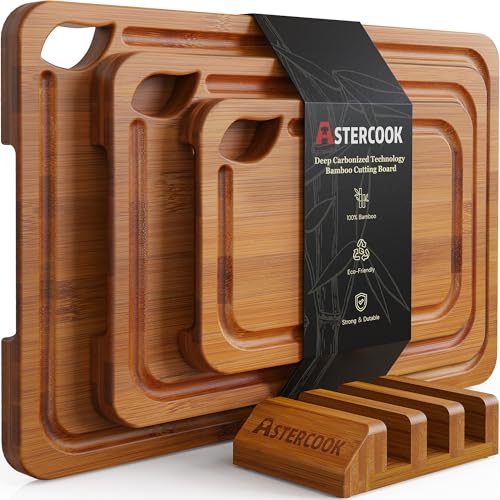
Astercook’s Deep‑Carbonized Bamboo Cutting Board set brings durability and style to any kitchen. Each board is forged from premium bamboo that’s been high‑heat carbonized, making it resistant to warping, cracking, and moisture while protecting knife edges.
The trio—15×10, 12×8, and 9×6 inches—covers everything from chopping vegetables to carving roasts, and each piece is reversible with a smooth side and a deep‑groove side for juices. A sleek, space‑saving stand keeps the boards upright, dry, and organized.
Eco‑friendly, gift‑ready, and elegant, this set is built to last through years of daily prep and entertaining.
✓ Reasons to Buy
- Carbonized bamboo durability
- Reversible with juice grooves
- Space‑saving storage stand
- Multiple sizes included
- Eco‑friendly gift option
✗ Reasons Not to Buy
- Heavier than plastic boards
- Higher price point
- Stand takes countertop space
THETCHRY Walnut Wood Cutting Boards for Kitchen, Large Chopping Board Double Sided, End Grain Cutting Board with Handle, Charcuterie Butcher Block for Meal Prep & Serving with Gift Box, 17″×13″×1″

THETCHRY’s Walnut End‑Grain Cutting Board blends natural beauty with professional performance. The dense walnut fibers create a self‑healing surface that closes around cuts, keeping knives sharper longer.
Measuring a generous size, the board offers a deep 3‑ounce juice groove and built‑in non‑slip rubber feet for safe chopping. A clever sorting compartment slides vegetables or aromatics aside, reducing clutter on the worktop.
Finished with a natural beeswax oil coating, the board resists water and stains without chemicals. Whether serving charcuterie or tackling heavy prep, this versatile walnut board elevates both function and presentation.
✓ Reasons to Buy
- Self‑healing end grain
- Built‑in juice groove
- Non‑slip rubber feet
- Sorting compartment for prep
- Beeswax oil finish
✗ Reasons Not to Buy
- Expensive compared to bamboo
- Heavy and bulky
- Requires regular oiling
Product prices and availability are accurate as of the date/time indicated and are subject to change. Any price and availability information displayed on Amazon.com at the time of purchase will apply to the purchase of this product.
Buying Guide
FAQs
Which wood species are considered the best for cutting boards?
Hardwoods like maple, walnut, and cherry are top choices because they are dense enough to resist knife marks yet gentle on blades. Bamboo is also popular due to its sustainability, though it is technically a grass. Avoid soft woods such as pine, which can scar easily and harbor bacteria.
How does the hardness of a wood affect its performance and durability?
A higher Janka hardness rating means the board will resist deep cuts and last longer under heavy use. However, overly hard woods can dull knives faster, so a balance—typically a rating between 1,000 and 1,500 lbf—is ideal. Medium‑hard woods like maple provide durability without excessive wear on your knives.
What maintenance differences should I expect between maple and walnut boards?
Both require regular oiling with food‑grade mineral oil, but walnut’s darker hue shows stains more readily, so you may need to clean spills promptly. Maple is less porous, so it absorbs fewer odors and is easier to keep looking uniform. Regardless of the wood, avoid soaking or putting the board in the dishwasher.
Is a end‑grain board worth the extra cost compared to a flat‑grain board?
End‑grain boards are built like a stack of tiny knives, allowing cuts to close the wood fibers and extending the board’s life. They tend to be pricier and heavier, but they’re gentler on knife edges and can self‑heal minor scratches. For casual home cooks, a high‑quality flat‑grain board may be sufficient, while professionals often prefer end‑grain for longevity.
How do price and value compare across different wood types?
Maple boards are widely available and usually the most affordable hardwood option, offering solid performance for the price. Walnut and cherry command higher prices due to their aesthetic appeal and density, but they also add a premium look to the kitchen. Bamboo boards can be the least expensive, yet they may require more frequent oiling to prevent cracking.
Can I use a cutting board made from reclaimed wood safely?
Reclaimed wood can be safe if it’s properly sanded, sealed, and finished with food‑grade oil, eliminating any contaminants or splinters. Verify that the wood has no chemical treatments, nails, or glue residues before repurposing. When in doubt, choose certified food‑safe hardwoods to guarantee hygiene.
What are the key features to compare when shopping for a cutting board?
Look at wood species, grain orientation (end‑grain vs. flat‑grain), thickness, size, and finish. A thickness of at least 1.5 inches provides stability, while a smooth, food‑grade oil finish protects the wood and enhances durability. Finally, consider whether the board includes juice grooves or non‑slip edges, which add functional value.