Comparison: Best Large Wood Cutting Board (Updated | Jul 30th)
If you’re on the hunt for the **best large wood cutting board**, you’re not just upgrading your kitchen—you’re investing in something that feels right every time you chop, slice, or serve. We’ve tested the top contenders, from sturdy maple to elegant walnut, weighing durability, size, and care. Whether you’re a home cook or a weekend chef, a great cutting board makes all the difference.
- Best for reversible acacia: Large Acacia Wood Cutting Boards for Kitchen
- Best for handle-ready bamboo: Hiware Extra Large Bamboo Cutting Board for Kitchen
- Best for edge groove acacia: Extra Large Acacia Wood Cutting Board for Kitchen
- Best for thick teak: Sonder Los Angeles
- Best for triple bamboo: Kikcoin Extra Large Bamboo Cutting Boards
- Best for self-healing walnut: THETCHRY Walnut Wood Cutting Boards for Kitchen
- Best for butcher block bamboo: Bamboo Wood Cutting Board for Kitchen
- Best for 5-layer bamboo: XXX Large Bamboo Cutting Board with Non Slip Feet and Over Sink Butcher Block Chopping Board Nice Solid Thick Wooden Juice Groove Huge Big XXl xlarge Best Hardwood Kitchen Counter Organic
- Best for cracker well acacia: Sonder Los Angeles
- Best for invisible handle bamboo: Bamboo Cutting Boards for Kitchen
Product Comparison: Best Large Wood Cutting Board
Large Acacia Wood Cutting Boards for Kitchen, 24 x 18 Inch Extra Large Wooden Cutting Board with Juice Groove, Reversible Butcher Block Cutting Board for Meat and Veggies

If you have ever felt cramped while prepping a holiday meal, the sheer scale of the product_0 Acacia Board will feel like a luxury. At a massive 24 x 18 inches, it is essentially a portable countertop. What really strikes me about this board is the rich, swirling grain of the acacia wood; it is naturally beautiful enough to stay out on display rather than being tucked away in a cabinet. The deep juice groove is a lifesaver when you are carving a large roast or a turkey, as it prevents those inevitable spills from reaching your floor.
I would recommend this specifically for the home cook who handles high-volume prep or loves hosting large dinner parties. It is the ultimate “everything” station where you can chop onions on one corner and still have room for a pile of greens on the other. However, the trade-off for all that real estate is the physical footprint. This thing is a beast to wash in a standard-sized kitchen sink, and you will need significant counter space just to lay it down flat. It is definitely not for someone living in a tiny apartment with limited storage.
Hiware Extra Large Bamboo Cutting Board for Kitchen, Heavy Duty Wood Cutting Board with Juice Groove, 100% Organic Bamboo, Pre Oiled, 18″ x 12″
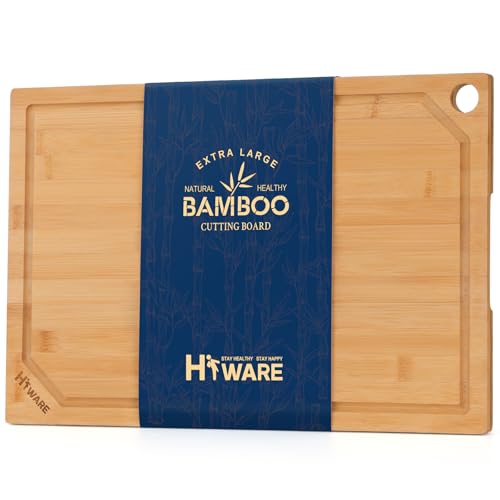
There is a lot to be said for a kitchen tool that just gets the job done without overcomplicating things, and that is exactly what the Hiware Extra Large Bamboo Cutting Board offers. While it is labeled as extra large, its 18 x 12 inch dimensions make it much more manageable for daily tasks compared to the massive butcher blocks on the market. It feels surprisingly sturdy for its weight, and the pre-oiled surface gives it a smooth, professional finish right out of the box. I particularly like the inner handle design on the back, which makes it easy to grab without sacrificing any of your actual cutting surface.
This is the perfect choice for the eco-conscious cook who wants a sustainable, FSC-certified bamboo option that won’t break the bank. It is ideal for slicing bread or prepping nightly stir-fry veggies. The honest downside here is that bamboo is a very hard material; while it is durable, it can be tougher on your knife edges than softer woods like acacia or walnut. You might find yourself reaching for your sharpener a little more often if this is your primary workhorse.
Extra Large Acacia Wood Cutting Board for Kitchen, 24 x 18 Inch Large Butcher Block Chopping Board with Juice Groove, Thick Wood Cutting Boards Carving Board for Turkey Meat Vegetables BBQ

When you are dealing with a 24 x 18 inch slab of wood like this product_2 Acacia Butcher Block, you are looking at a serious piece of kitchen equipment. The standout feature here is the reversible design. You get one side with a deep perimeter groove—perfect for catching the runoff from a resting steak or juicy watermelon—and a completely flat side on the back for rolling out dough or assembling a massive spread of appetizers. It feels incredibly solid under the knife, providing that satisfying “thud” that cheaper, thinner boards lack.
This board belongs in the kitchen of a serious BBQ enthusiast or a “from-scratch” cook who needs a dedicated station for heavy-duty carving. It is basically a butcher block that you can move around. The catch is that acacia wood can vary significantly in color and grain pattern. Because it is a natural product, the board you receive might look quite different from the polished marketing photos, sometimes featuring lighter sapwood streaks that some might find less “premium” than a uniform dark finish.
Sonder Los Angeles, XXL Thick Edge Grain Teak Wood Cutting Board for Kitchen with Juice Groove, 23x17x1.5 Charcuterie Wooden Board in Large (Gift Box Included)
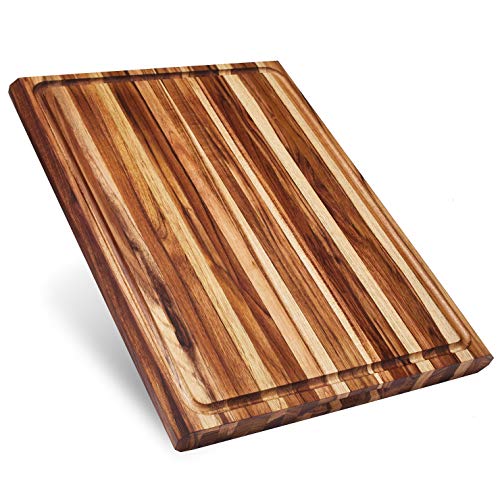
The Sonder Los Angeles Highland board is a masterclass in combining aesthetics with heavy-duty performance. What sets it apart immediately is the use of Edge Grain Teak. Teak is legendary for its high natural oil content, which makes it exceptionally resistant to moisture and bacteria. At 1.5 inches thick, it has a professional heft that prevents it from sliding around while you are kneading heavy dough or carving a brisket. The integrated finger grips are a thoughtful touch, making it much easier to flip this 23-inch giant over to use the smooth side.
I think this is the “buy it once” board for someone who appreciates high-end materials and wants a centerpiece for their kitchen. It is a fantastic gift for a wedding or a serious home chef. However, teak requires consistent maintenance to stay in peak condition. If you aren’t prepared to oil this board every few weeks, the wood can lose its luster or eventually develop cracks. It is a high-performance tool that demands a bit of “TLC” to justify its price tag.
Kikcoin Extra Large Bamboo Cutting Boards, (Set of 3) Chopping Boards with Juice Groove Bamboo Wood Cutting Board Set Butcher Block for Kitchen, End Grain Serving Tray

The Kikcoin Set of 3 Bamboo Boards stands out because it solves the problem of cross-contamination in one go. Instead of one giant slab, you get a tiered system: an XL board for your main proteins, a medium for veggies, and a small one for quick tasks like slicing a lemon. The four-layer thickened construction gives these a much more premium feel than the flimsy bamboo boards you find at big-box stores. Plus, the included storage rack is a game-changer for keeping a tidy countertop.
This set is the best pick for a busy family kitchen where multiple people are prepping at once, or for someone who is just starting to build out their first kitchen. It is incredibly practical to be able to toss the small board in the sink while still having the large one available. The downside to this specific set is the rubber feet; they come separately and you have to stick them on yourself. If the adhesive isn’t perfect or the board gets too wet, they can shift or peel off over time, which can lead to a bit of wobbling.
THETCHRY Walnut Wood Cutting Boards for Kitchen, Large Chopping Board Double Sided, End Grain Cutting Board with Handle, Charcuterie Butcher Block for Meal Prep & Serving with Gift Box, 17″×13″×1″

Visually, the THETCHRY Walnut Wood Board is in a league of its own. Unlike edge-grain boards, this is an end-grain construction, which means the wood fibers stand vertically. This is the “self-healing” secret of high-end butcher blocks—your knife slides between the fibers rather than cutting through them, which keeps your blades sharper for much longer. The sorting compartments carved into the side are a brilliant addition, allowing you to slide diced garlic or herbs out of the way without needing extra bowls.
This is the ideal choice for a knife enthusiast who has spent hundreds on Japanese steel and wants the gentlest surface possible. It also doubles as a stunning charcuterie board for entertaining. The trade-off here is the porosity of end-grain walnut. While it is beautiful, it is much more sensitive to water than bamboo or teak. If you leave it sitting in a puddle on the counter or forget to oil it, it is more prone to warping or absorbing odors compared to simpler builds.
Bamboo Wood Cutting Board for Kitchen, 1″ Thick Butcher Block, Cheese Charcuterie Board, with Side Handles and Juice Grooves, 16×11″
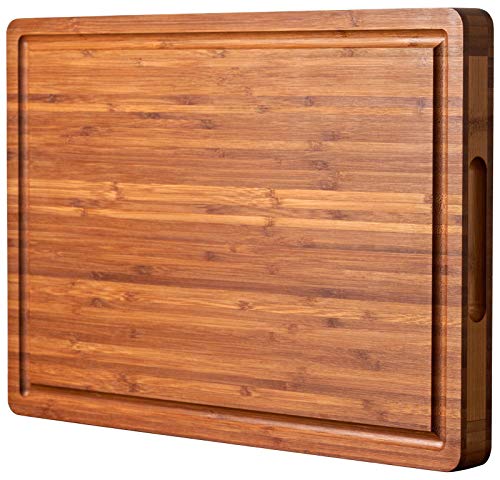
Sometimes you just need a sturdy, reliable board that doesn’t take up the whole counter, and this 1-inch thick Bamboo Butcher Block hits that sweet spot. It feels significantly more substantial than the thin “cutting mats” many people use, but at 16 x 11 inches, it still fits easily into a standard cupboard or a drying rack. The hidden side handles make it very easy to transition from the prep station to the dining table if you are using it to serve a selection of cheeses or appetizers.
I would recommend this for the everyday cook who wants a “daily driver” that can handle heavy chopping without being a literal chore to move. It is a great middle-ground option for those who find the 24-inch boards too intimidating. The honest trade-off is the juice groove depth; while it has one, the board’s smaller footprint means the groove is closer to the edge and can’t hold as much liquid as the larger models. If you are carving a particularly juicy roast, you might still see some overflow.
XXX Large Bamboo Cutting Board with Non Slip Feet and Over Sink Butcher Block Chopping Board Nice Solid Thick Wooden Juice Groove Huge Big XXl xlarge Best Hardwood Kitchen Counter Organic

The XXX Large Bamboo Board from this collection is a beast designed for those who need maximum surface area without the extreme weight of a solid hardwood block. Its 5-layer thickened construction is impressive, specifically engineered to fight the warping that often plagues large, thin bamboo sheets. The inclusion of non-slip rubber feet is the real-world winner here; it stays rock-solid on the counter even when you are applying significant pressure with a heavy knife.
This is a top-tier choice for someone who does a lot of “over-the-sink” prep or needs a massive space for rolling out pastry dough. It is also a smart pick for those who want the look of a huge butcher block but prefer the lighter weight and sustainability of bamboo. However, the sheer size is its own drawback. At this scale, the board can feel a bit unwieldy, and if your countertops aren’t perfectly level, the rigid 5-layer build might not sit perfectly flush despite the feet. It is a lot of board to manage.
Sonder Los Angeles, Thick Sustainable Acacia Wood Cutting Board for Kitchen with Juice Groove, Sorting Compartment, Charcuterie 16x12x1.5 in (Gift Box Included)

The Sonder Los Angeles Winsome board is clearly designed by people who actually spend time in the kitchen. What makes it stand out is the built-in cracker well. It transforms the board from a prep tool into a professional-looking charcuterie display in seconds. The Acacia wood used here is thick and heavy (1.5 inches), giving it a very stable, high-quality feel that doesn’t vibrate when you are dicing through tough root vegetables. It is a beautiful blend of form and function.
This is the perfect gift for the “host with the most”—someone who loves a Friday night wine and cheese spread as much as they love cooking a Sunday roast. It is a dual-purpose item that justifies its price by replacing both a cutting board and a serving platter. The trade-off is that the sorting compartments and wells actually reduce your usable flat cutting area. If you are trying to chop a giant pile of kale, those carved-out sections might actually get in your way, making the board feel smaller than its 16×12 dimensions suggest.
Bamboo Cutting Boards for Kitchen, Extra Large Wood Cutting Board with Deep Juice Groove and Handle Heavy Duty Chopping board, Kikcoin, 20″ x 14″

The Kikcoin 20 x 14 inch Bamboo Board is a fantastic upgrade for anyone who feels limited by standard grocery-store boards but isn’t ready to commit to a 24-inch monster. It provides a generous extra-large workspace that can easily handle a whole chicken or a large pile of veggies. The reversible surface is a key feature here; one side has the deep juice groove for meats, while the other is completely flat, giving you a clean slate for chopping herbs or dicing onions without any obstructions.
I’d suggest this for the practical home cook who wants a heavy-duty feel without the high maintenance and cost of exotic hardwoods. It is a workhorse board that looks good enough to leave out on the counter. The one honest downside is that bamboo can be prone to “splintering” over time if it isn’t kept well-oiled. While it starts out incredibly smooth, the vertical grains of bamboo can eventually lift if the board gets too dry or is subjected to harsh scrubbing, so you have to be diligent with your mineral oil applications.
Product prices and availability are accurate as of the date/time indicated and are subject to change. Any price and availability information displayed on Amazon.com at the time of purchase will apply to the purchase of this product.
Buying Guide
FAQs
What dimensions should I look for in an extra‑large wood cutting board?
For big‑batch cooking or carving roasts, a board of at least 24 × 18 inches provides ample surface area and lets you work without crowding. Boards that are 1–1.5 inches thick add stability and resist warping under heavy use. If space is limited, a 18 × 12 inch board still offers generous room while fitting more easily on most countertops.
How does acacia wood compare to bamboo and teak in terms of durability and knife‑friendliness?
Acacia is a dense hardwood that resists cracks and holds up well to repeated chopping, while its natural oils protect knife edges. Bamboo is lighter and more eco‑friendly, but can be slightly softer and may show knife marks sooner. Teak contains high natural oil content, giving excellent moisture resistance and a gentle surface that preserves blade sharpness, though it is often pricier.
Are reversible cutting boards worth the extra cost?
A reversible board gives you two separate work surfaces—one for raw proteins and another for ready‑to‑eat foods—helping prevent cross‑contamination. Many large boards, such as the acacia models, include this feature without a price penalty, making it a practical value add. If you frequently switch between tasks, the convenience outweighs the modest extra expense.
Why is the depth of the juice groove important?
A deeper groove (typically 0.5–1 inch) captures more liquid from juicy fruits, vegetables, or meats, keeping your countertop clean and reducing slip hazards. Boards like the teak and bamboo options hold up to 5 oz of juice, which is ideal for carving roasts or slicing melons. Shallow grooves may overflow quickly, defeating their purpose.
What maintenance steps will extend the life of a wooden cutting board?
Hand‑wash with warm, soapy water and dry immediately; avoid soaking or dishwasher cycles that can cause warping. Apply food‑grade mineral oil or a beeswax blend once a month to replenish the wood’s natural oils and prevent cracking. Periodic sanding with fine grit paper can restore a smooth surface if it becomes rough over time.
Which large board offers the best value for the price?
The 24 × 18 inch acacia boards provide a solid combination of size, reversible surface, deep juice groove, and durability at a competitive price point. Bamboo boards are often less expensive but may lack the same thickness and long‑term hardness. If you prioritize thickness and a premium finish, the teak board delivers superior performance, though at a higher cost.
How do non‑slip features improve safety during food prep?
Rubber feet or integrated finger grips keep the board firmly in place, preventing it from sliding when applying pressure with a knife. This reduces the risk of accidental cuts and makes it easier to transfer the board from counter to table. Boards like the bamboo set with rubber feet and the walnut model with non‑slip feet excel in this area.
Is an end‑grain walnut board better than an edge‑grain board for preserving knife edges?
End‑grain boards expose the wood fibers vertically, allowing cuts to close like a self‑healing surface, which is gentler on blades and helps maintain sharpness longer. Edge‑grain boards are slightly flatter and can be more stable, but they may cause marginally more wear over time. For chefs who prioritize blade longevity, the end‑grain walnut option is often the preferred choice.