Comparison: Best Cutting Board Not Wood (Updated | Aug 11th)
Tired of your wooden cutting board warping, staining, or needing constant oiling? You’re not alone. While wood has long been the kitchen favorite, there’s a world of durable, low-maintenance alternatives that might actually serve you better. In this comparison, we’ll break down the top contenders, weighing hygiene, durability, and ease of care, so you can pick the perfect board that fits your cooking style without the upkeep hassle.
- Best for dishwasher-safe fiber: Freshware Wood Cutting Boards for Kitchen
- Best for carbonized bamboo set: Keechee Bamboo Cutting Board
- Best for triple bamboo set: Bamboo Cutting Boards for Kitchen [Set of 3] Wood Cutting Board for Chopping Meat
- Best for beeswax-finished acacia: Non Toxic Wood Cutting Board – Conditioned with Natural Beeswax Flaxseed & Lemon Oil – Free of Mineral Oil – Made of FSC Certified Acacia Wood – 16″ x 11″ Thick Cutting Board by Ziruma
- Best for dishwasher-ready bamboo: Keechee Dishwasher Safe Bamboo Cutting Board
- Best for extra-large bamboo: Hiware Extra Large Bamboo Cutting Board for Kitchen
- Best for silicone-edge fiber: Cutting Board for Kitchen Dishwasher Safe
- Best for end-grain walnut: THETCHRY Walnut Wood Cutting Board for Kitchen
- Best for water-locked acacia: Wood Cutting Boards for Kitchen
- Best for reversible jumbo bamboo: Bamboo Cutting Boards for Kitchen
Product Comparison: Best Cutting Board Not Wood
Freshware Wood Cutting Boards for Kitchen, Dishwasher Safe, Medium 12″ x 9″ and Large, 15″ x 11.25″, Set of 2, Natural

If you are tired of the constant maintenance wood requires but hate the “cheap” feel of plastic, the Freshware Wood Fiber Cutting Boards are a clever middle ground. These aren’t solid planks of timber; they are made from compressed wood fiber, which makes them incredibly dense and, most importantly, dishwasher safe. That is the real-world win here. You can break down a raw chicken, toss the board in the machine, and not worry about it warping or splitting like a traditional board would.
I think these are a perfect fit for the busy home cook who values hygiene and speed. The heat resistance up to 350°F also means they can double as a trivet in a pinch. They are thin and lightweight, so sliding them into a narrow cabinet or hanging them by the thumb hole is easy. It’s a “no-fuss” tool for someone who wants the aesthetics of natural materials without the oiling and hand-washing chores.
However, the trade-off is the tactile experience. Because they are so hard and compressed, the surface feels much “clickier” under a knife than soft wood. While they are marketed as knife-friendly, the lack of “give” might feel a bit harsh if you are used to the soft landing of a thick maple block.
Keechee Bamboo Cutting Board, Durable Wood Cutting Boards for Kitchen with Deep Juice Grooves & Built-in Handles, Ideal Charcuterie & Chopping for Meat, Vegetables and Fruits Ideal Kitchen Gifts

The Keechee Bamboo Cutting Board set stands out because it tackles the biggest headache with bamboo: the tendency to dry out and splinter. By using a carbonization process at high heat, they’ve essentially “pre-shrunk” and stabilized the material. This gives the boards a beautiful, darker caramelized tone that looks much more expensive than standard light-colored bamboo. The cross-laminated construction is a smart touch too, as it creates a structural grid that fights against the warping that usually ruins cheap sets.
This three-piece set is ideal for a starter kitchen or an apartment dweller. Having three distinct sizes—from a large 15-inch board for dinner prep to a tiny 9-inch one for slicing a single lemon—means you aren’t constantly washing a giant heavy board for small tasks. The deep juice grooves are a lifesaver when you’re slicing tomatoes or resting a steak, keeping your counters from becoming a swamp.
The honest downside is that bamboo is naturally quite hard on high-end cutlery. While it’s durable and eco-friendly, the high silica content in bamboo fibers can dull a razor-sharp chef’s knife faster than a softer wood like walnut or acacia. If you own professional-grade knives, you’ll likely find yourself sharpening them more frequently with these.
Bamboo Cutting Boards for Kitchen [Set of 3] Wood Cutting Board for Chopping Meat, Vegetables, Fruits, Cheese, Knife Friendly Serving Tray with Handles
![Bamboo Cutting Boards for Kitchen [Set of 3] Wood Cutting Board for Chopping Meat, Vegetables, Fruits, Cheese, Knife Friendly Serving Tray with Handles](https://m.media-amazon.com/images/I/41l-LAYk+mL._SL500_.jpg)
These Freshware Bamboo Cutting Boards are all about maximizing utility for the price. What stands out in a busy kitchen is the triple-layer design, where the middle layer runs horizontally against the vertical top and bottom. This “plywood” style of construction is specifically meant to prevent the boards from snapping or bowing under pressure. It’s a very practical, lightweight set that doesn’t feel like a burden to pull out for a quick sandwich or a snack.
I’d recommend these for someone who does a lot of light meal prep or likes to have dedicated boards for different food groups to avoid cross-contamination. Since you get three sizes, you can designate the small one for garlic and onions and the large one for bread or greens. They are slim enough to fit in almost any drawer, making them a great choice for kitchens where counter space is at a premium.
The trade-off here is the thickness. At only 3/8 of an inch, these are quite thin. While they are reinforced, they lack the “heft” and stability of a heavy chopping block. If you are doing heavy-duty butchery or using a lot of force, you might find these boards sliding around a bit more than a thicker, heavier alternative would.
Non Toxic Wood Cutting Board – Conditioned with Natural Beeswax Flaxseed & Lemon Oil – Free of Mineral Oil – Made of FSC Certified Acacia Wood – 16″ x 11″ Thick Cutting Board by Ziruma

The Ziruma Acacia Wood Board is a refreshing departure from boards saturated in petroleum-based mineral oils. What makes it unique is the finish: a natural blend of beeswax, flaxseed, and lemon oil. In a world of “forever chemicals,” knowing your food is touching a surface treated with food-grade wax is a big selling point. The FSC-certified acacia is naturally dense and oily, which helps it resist bacteria and moisture better than many other hardwoods.
This is the “workhorse” board for the health-conscious cook who wants a substantial, 1-inch thick surface that won’t move during heavy chopping. It’s large enough for a full roast but attractive enough to serve as a charcuterie platter. If you care about the ethics of your kitchenware, the traceable, sustainably sourced wood offers peace of mind that cheaper mystery-wood boards just can’t match.
The honest catch is the maintenance. Because it uses a natural wax finish rather than a heavy synthetic coating, you really have to stay on top of re-oiling it. If you let it dry out or leave it sitting in water, the acacia can lose its luster or even develop small surface cracks. It’s a board for someone who enjoys the ritual of caring for their kitchen tools.
Keechee Dishwasher Safe Bamboo Cutting Board, Lightweight & Durable Wood Cutting Board, Reversible with Juice Groove, Easy to Store & Clean, Ideal Kitchen Gift for Home Cooks
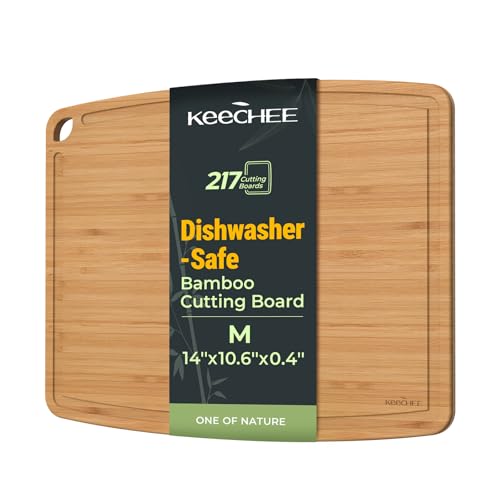
Finding a bamboo board that won’t fall apart in the dishwasher is usually a fool’s errand, but the Keechee Dishwasher Safe Bamboo Board claims to have cracked the code. It is specifically engineered to handle the high heat and moisture cycles of a machine, which is a massive win for anyone who hates hand-washing. It’s lightweight and reversible, featuring a juice groove on one side for messy prep and a flat side for serving.
This is the perfect gift for new homeowners or college students who want the “green” look of bamboo but have zero intention of hand-scrubbing and air-drying their kitchen gear. It’s also great for RV or camping life where space is tight and you need something durable that can be sanitized easily. The fact that it comes in a nice gift box is a cherry on top for those looking for a practical present.
However, the trade-off for that “dishwasher safe” label is often a heavier use of resins or specialized glues to keep the bamboo strips together under thermal stress. While it’s convenient, the surface might feel slightly more “plastic-like” than a traditional, oil-finished bamboo board, and it may lose its “new” look faster if it’s subjected to the harshest dishwasher cycles daily.
Hiware Extra Large Bamboo Cutting Board for Kitchen, Heavy Duty Wood Cutting Board with Juice Groove, 100% Organic Bamboo, Pre Oiled, 18″ x 12″
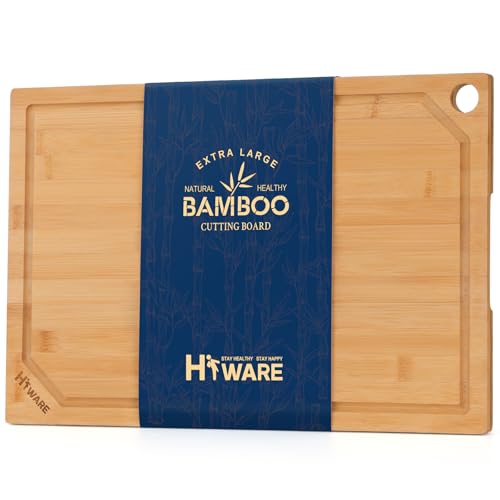
The Hiware Extra Large Bamboo Cutting Board is designed for people who find themselves constantly running out of room on their current board. At 18 x 12 inches, it provides a massive “canvas” for big family meals. The standout feature is the inner handle design—recessed grips on the sides that let you pick up the board without your fingers taking up valuable real estate on the cutting surface. It’s a smart way to maximize every square inch of the organic bamboo.
This is the best choice for the home chef who preps in bulk. If you are dicing five onions, three peppers, and a bunch of cilantro for a big pot of chili, you can just slide the piles to the corners and keep working without clearing the board. It also works beautifully as a giant cheese and wine display for parties because of its smooth, polished finish and impressive scale.
The downside to such a large board is the sink struggle. Before buying this, you need to make sure your kitchen sink is actually wide enough to wash it comfortably. Maneuvering an 18-inch board in a small, divided sink can be a wet and frustrating experience, often leading to water splashing all over the floor during the cleaning process.
Cutting Board for Kitchen Dishwasher Safe, Toptier, Wood, Fiber , Eco-Friendly, Non-Slip, Juice Grooves, Non-Porous, BPA Free, Small, Silicone, 11.5 x 9.25-inch, Natural Slate

The Toptier Wood Fiber Cutting Board stands out because it solves the “sliding board” problem that plagues so many thin surfaces. It features removable silicone corners that act as non-slip feet, gripping the counter so you don’t have to do the old trick of putting a wet paper towel underneath. Like other fiber composites, it is non-porous and dishwasher safe, but it has a more modern, “slate-like” look that feels very contemporary in a minimalist kitchen.
I would recommend this for the safety-conscious cook or someone who is working on their knife skills. The stability provided by the silicone feet makes it much safer for fast chopping. Since it is temperature resistant to 350°F, it’s also a great “all-in-one” tool for a small kitchen where a cutting board might need to serve as a cooling rack or a trivet for a hot pan.
The main trade-off is the size and “clicking” sound. At 11.5 inches, the small version is quite compact, which might feel cramped for anything larger than a single chicken breast or a few veggies. Also, because the material is so dense, it produces a distinct, high-pitched tapping sound when you chop, which can be a bit grating if you prefer the dull “thud” of traditional wood.
THETCHRY Walnut Wood Cutting Board for Kitchen, End Grain Chopping Board with Juice Groove, Heavy Duty Checkered Board for Cheese and Vegetables, Non-slip Feet 16.5″ x 11.6″ x 0.8″

The THETCHRY Walnut Cutting Board is a true showstopper. What sets it apart is the end-grain construction. Instead of the wood fibers running flat, they stand vertically, like a dense brush. This is the gold standard for knives because the blade slides *between* the fibers rather than cutting across them, which makes the board “self-healing” and keeps your expensive knives sharp for much longer. The American Walnut gives it a rich, dark checkered pattern that is undeniably beautiful.
This is a “buy it for life” item for a serious cook or a culinary enthusiast. If you spend a lot of money on Japanese steel or high-end German knives, you owe it to your blades to use an end-grain board like this. It’s heavy, stable, and comes with stick-on rubber feet so you can decide exactly how you want it to sit on your counter.
The honest trade-off here is weight and price. At nearly an inch thick and made of solid walnut, it is heavy and cumbersome to move around. It’s not a board you’ll want to be frequently pulling out and putting away; it’s designed to live permanently on your countertop. It also requires regular oiling to prevent the end-grain from soaking up moisture and expanding.
Wood Cutting Boards for Kitchen, Acacia Wooden Cutting Board Set, Charcuterie Board, Large Solid Chopping Board for Meat, Cheese, Fruit, Vegetables (set of 3)

This Acacia Wood Cutting Board Set stands out for its triple-layer water-locking technology. Acacia can sometimes be finicky with moisture, but these boards are processed to maintain a specific 13% internal moisture content, which significantly reduces the risk of the wood cracking or warping over time. You get three distinct sizes, all featuring hidden side handles and juice grooves, making them incredibly versatile for a busy kitchen.
I think this set is perfect for frequent entertainers. The smallest board is the ideal size for a bar setup (slicing limes and lemons), while the largest 17-inch board can hold a full roast or a massive spread of meats and cheeses. Because acacia has such a dramatic, varying grain, these boards look fantastic when used as serving platters directly on the dinner table.
The honest downside is the initial maintenance. While they come “pre-oiled” with mineral oil, acacia is a very thirsty wood. In my experience, these types of boards often arrive feeling a bit dry or “fuzzy” and really need a few heavy coats of food-grade oil right out of the box to achieve that smooth, professional finish. If you aren’t prepared to oil them, they can feel a bit rough to the touch.
Bamboo Cutting Boards for Kitchen, Extra Large Wood Cutting Board with Deep Juice Groove and Handle Heavy Duty Chopping board, Kikcoin, 17.6″ x 12″

The Kikcoin Extra Large Bamboo Board is a “heavy-duty” take on a material that is usually quite thin. At 17.6 x 12 inches and with significant thickness, it feels much more substantial than the flimsy bamboo boards you find at the grocery store. It features invisible built-in handles carved into the sides, so you can easily carry a heavy load of chopped veggies without sticking your thumbs into the food. It’s a simple, robust design that focuses on durability.
This is a great choice for the practical home cook who wants a large, eco-friendly surface but doesn’t want to pay the premium price of a hardwood like walnut or maple. It’s especially good for carving meats because the juice grooves are quite deep, meaning you won’t have turkey or roast beef drippings running all over your table during Sunday dinner.
The trade-off is that because it is a solid, thick bamboo slab, it is prone to the natural “memory” of the plant. If it isn’t dried properly—standing upright rather than laying flat on a wet counter—it can develop a slight wobble or “cup” over time. Because it’s so large and stiff, even a tiny bit of warping becomes very noticeable when you’re trying to chop on a flat surface.
Product prices and availability are accurate as of the date/time indicated and are subject to change. Any price and availability information displayed on Amazon.com at the time of purchase will apply to the purchase of this product.
Buying Guide
FAQs
What should I prioritize when choosing a cutting board for everyday kitchen use?
Look for a board that balances durability, knife‑friendliness, and easy maintenance. Materials like bamboo, wood fiber, and solid wood each offer natural antimicrobial properties, but bamboo is lighter and dishwasher‑safe while solid wood such as acacia or walnut provides a thicker, more stable surface. Also consider size, juice grooves, and hanging holes to fit your prep style and storage space.
How does a bamboo board compare to a wood‑fiber composite board in terms of durability?
Bamboo boards, especially those carbonized at high temperatures (e.g., Keechee’s 500 °F treatment), resist warping and moisture absorption, making them ideal for frequent dishwasher use. Wood‑fiber composite boards like Freshware or Toptier are engineered to be heat‑resistant up to 350 °F and often include reinforced edges, offering a slightly softer feel that’s gentle on knives. Both are long‑lasting, but bamboo tends to be lighter, while wood‑fiber feels more solid under heavy chopping.
Are solid wood boards such as acacia or walnut worth the extra thickness and price?
Solid wood boards like the 1‑inch thick acacia board provide superior stability, reduced slipping, and a natural oil content that resists bacterial growth without chemicals. Walnut’s end‑grain construction offers a “self‑healing” surface that keeps knives sharper longer, though it requires more careful oiling to maintain its finish. The higher upfront cost is offset by a longer lifespan and a premium aesthetic for serving and charcuterie.
Which cutting board is best for someone who wants a dishwasher‑safe option?
Keechee’s Dishwasher Safe Bamboo board and Freshware’s wood‑fiber composite boards are both rated safe for the dishwasher, thanks to their heat‑treated bamboo fibers and BPA‑free construction. The bamboo board also boasts a slim, lightweight profile that dries quickly, while the wood‑fiber boards include dual‑sided surfaces and silicone corners for added grip. If you prefer a board that can double as a serving platter, the dual‑sided bamboo option is a convenient choice.
Do juice grooves make a real difference during food prep?
A deep juice groove captures runoff from meats, fruits, and vegetables, keeping your countertop clean and reducing the need to constantly wipe the board. Boards like Hiware’s extra‑large bamboo model and THETCHRY’s walnut board feature wide grooves that can hold several ounces of liquid, which is especially helpful for carving roasts or juicy fruits. Smaller boards may lack this feature, so consider the size of the items you most often prepare.
How important is the source and sustainability of the material?
Sustainability matters for both the environment and food safety; boards made from FSC‑certified bamboo or sustainably harvested pine (e.g., Freshware) ensure responsible forest management. Bamboo grows rapidly and can be harvested repeatedly, offering a low‑impact alternative to hardwoods. When a board is labeled as “eco‑friendly” or “earth‑friendly,” it typically means fewer chemicals and a smaller carbon footprint.
What are the benefits of a hanging hole or built‑in handle on a cutting board?
A hanging hole provides a convenient way to store the board on a hook, freeing up drawer space and keeping the surface upright to dry. Built‑in handles, like those on the Acacia set, allow you to lift and transport the board safely, even when it’s loaded with food. Both features add ergonomics and help keep the kitchen organized, especially in smaller spaces.
Is it worth buying a set of multiple sizes versus a single large board?
A set gives you flexibility: small boards are ideal for quick tasks like chopping herbs, medium boards handle everyday vegetables, and large boards accommodate whole roasts or serve as charcuterie platters. Sets often include matching juice grooves and hanging holes, creating a cohesive look. If you have limited counter space, a single oversized board like the 18 × 12 inch Hiware model can serve all purposes, but you may sacrifice the convenience of dedicated sizes.