Best Wood For Cutting Board Countertop (Updated | Mar 23rd)
Choosing the right wood for a cutting‑board countertop can feel like a culinary mystery, but it doesn’t have to be. In this guide we’ll break down the top contenders—maple, walnut, cherry, and bamboo—highlighting durability, knife‑friendliness, and aesthetic appeal. You’ll learn which grain patterns resist warping, how natural oils protect surfaces, and why some woods age beautifully while others need extra care. By the end, you’ll feel confident picking a wood that blends function and style in your kitchen every day.
Key Takeaways
- The editor’s choice offers a knife‑friendly surface with a non‑toxic natural finish.
- Its FSC‑certified, thick, stable wood ensures durability and eco‑friendly sourcing.
- When selecting a cutting‑board countertop, prioritize wood hardness, stability, and food‑safe finishes.
- Avoid boards with excessive glue or synthetic coatings to maintain a healthy kitchen environment.

Non Toxic Wood Cutting Board – Conditioned with Natural Beeswax Flaxseed & Lemon Oil – Free of Mineral Oil – Made of FSC Certified Acacia Wood – 16″ x 11″ Thick Cutting Board by Ziruma
Non Toxic Acacia
- Non‑toxic natural finish
- FSC certified wood
- Knife‑friendly surface
- BEST FOR THICK BAMBOO BLOCK: Bamboo Wood Cutting Board for Kitchen Read More ↓
- BEST FOR NON TOXIC ACACIA: Non Toxic Wood Cutting Board – Conditioned with Natural Beeswax Flaxseed & Lemon Oil – Free of Mineral Oil – Made of FSC Certified Acacia Wood – 16″ x 11″ Thick Cutting Board by Ziruma Read More ↓
- BEST FOR TRIPLE SIZE BAMBOO: Kikcoin Extra Large Bamboo Cutting Boards Read More ↓
- BEST FOR COUNTER EDGE ACACIA: TIDITA Acacia Wood Cutting Board and Chopping Board with Handle for Meat Read More ↓
- BEST FOR COUNTER EDGE BAMBOO: Camco Bamboo Cutting Board with Counter Edge | Perfect for Vegetables Read More ↓
Product Comparison: Best Wood For Cutting Board Countertop
Bamboo Wood Cutting Board for Kitchen, 1″ Thick Butcher Block, Cheese Charcuterie Board, with Side Handles and Juice Grooves, 16×11″
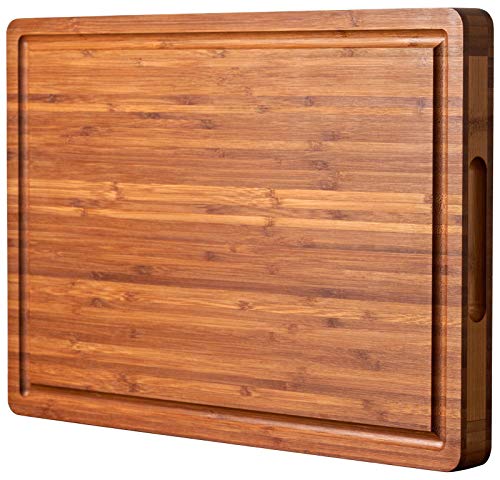
Allsum’s bamboo cutting board combines rugged strength with elegant design. Crafted from premium organic bamboo, the 1‑inch thick slab resists heavy chopping and can double as a butcher block that ages gracefully.
Hidden side handles make it easy to lift and serve as a stylish cheese or charcuterie platter at gatherings. Deep juice grooves capture liquids, keeping your countertop clean, while the smooth surface is gentle on knives.
Hand‑wash only and store in a dry place to maintain its durability. A thoughtful gift for any occasion, it brings both function and flair to the kitchen.
✓ Reasons to Buy
- 1‑inch thick durability
- Hidden side handles
- Deep juice grooves
- Gift‑ready presentation
✗ Reasons Not to Buy
- Cannot dishwasher safe
- Heavy for storage
Non Toxic Wood Cutting Board – Conditioned with Natural Beeswax Flaxseed & Lemon Oil – Free of Mineral Oil – Made of FSC Certified Acacia Wood – 16″ x 11″ Thick Cutting Board by Ziruma
Ziruma’s acacia cutting board offers a premium, non‑toxic surface treated with a blend of unbleached beeswax, flaxseed oil, and lemon oil—no mineral oils or PFAS. FSC‑certified hardwood ensures sustainable sourcing, while natural tannins give the wood resistance to bacteria and moisture.
At 1‑inch thickness, the board provides solid stability and a weight that prevents slipping during chopping or carving. Its knife‑friendly grain helps preserve blade sharpness, and the generous surface area works well for prep and serving.
Regular oiling keeps the finish rich, making this board a lasting kitchen workhorse.
✓ Reasons to Buy
- Non‑toxic natural finish
- FSC certified wood
- Knife‑friendly surface
- Thick, stable build
✗ Reasons Not to Buy
- Requires regular oiling
- Large footprint
Kikcoin Extra Large Bamboo Cutting Boards, (Set of 3) Chopping Boards with Juice Groove Bamboo Wood Cutting Board Set Butcher Block for Kitchen, End Grain Serving Tray

The Kikcoin extra‑large bamboo cutting board set delivers a sturdy, eco‑friendly work surface for any kitchen task. Three boards—XL (17×12×1 in), L (14×10×1 in) and M (10×7.1×0.8 in)—cover everything from steak to fruit, and the deep juice groove catches runoff to keep countertops clean.
Crafted with a four‑layer thickening technique and a precision splicing craft, the boards resist cracking and stay flat longer than typical bamboo. Rounded corners and a discreet handle add safety, while a matching rack keeps them organized.
Finished with mineral oil, they develop a warm patina with proper hand‑washing care.
✓ Reasons to Buy
- Four‑layer durability
- Varied size options
- Deep juice groove
- Easy storage rack
- Elegant serving tray
✗ Reasons Not to Buy
- Requires hand wash
- Rubber mat sold separate
- Heavy for small spaces
TIDITA Acacia Wood Cutting Board and Chopping Board with Handle for Meat, Cheese Board, Vegetables, Bread, and Charcuterie Board – Wooden Serving Board for Kitchen, Dining Room (24″ x 18″)

Tidita’s acacia wood cutting board blends rugged durability with natural beauty, making it a standout centerpiece for prep and presentation. Measuring a generous 24 × 18 in, the board offers ample room for dough kneading, vegetable chopping, meat slicing, and cheese arranging.
A 1‑inch lip rests securely against the countertop edge, preventing slip during vigorous tasks. The distinctive grain patterns and occasional knots give each piece a unique character that deepens over time.
Assembly is straightforward—snap on the lip for stability and remove it for compact storage or transport.
✓ Reasons to Buy
- Spacious 24×18 surface
- Secure countertop lip
- Beautiful acacia grain
- 2‑in‑1 functionality
- Easy assembly
✗ Reasons Not to Buy
- May darken over time
- No built‑in juice groove
- Heavy to lift
Camco Bamboo Cutting Board with Counter Edge | Perfect for Vegetables, Fruits, Meats, and Cheeses | Measures 18-inches x 14-inches x 1-3/4-inches (43545), Brown

The Camco Bamboo Cutting Board with Counter Edge is a versatile kitchen workhorse designed for everything from crisp vegetables to juicy meats and delicate cheeses. Crafted from solid bamboo, the board offers a naturally antimicrobial surface that resists stains and odors while being gentle on knife blades, keeping them sharper longer.
Its built‑in counter edge aligns the board flush with your countertop, providing stability during prep and preventing slip‑offs. A recessed juice groove catches liquids, reducing mess and protecting your work surface.
Easy to clean and resistant to warping, this board combines durability with a sleek, eco‑friendly look that fits any kitchen décor.
✓ Reasons to Buy
- Sturdy counter edge
- Gentle on knives
- Built‑in juice groove
- Eco‑friendly bamboo
- Resists warping
✗ Reasons Not to Buy
- Limited size options
- May stain over time
- Heavier than plastic
Product prices and availability are accurate as of the date/time indicated and are subject to change. Any price and availability information displayed on Amazon.com at the time of purchase will apply to the purchase of this product.
Buying Guide
FAQs
What wood species are best for a cutting‑board countertop?
Hardwoods like maple, walnut, and cherry are top choices because they are dense, resistant to knife marks, and have natural antimicrobial properties. Bamboo is also popular for its sustainability, though it’s technically a grass and can be harder on knives. Avoid soft woods such as pine, which dent and wear quickly.
How does the hardness of the wood affect durability and knife care?
Harder woods (measured by Janka rating) resist dents and scratches, extending the life of the countertop. However, very hard woods like teak can blunt knives faster, so a balance between durability and knife friendliness is ideal. Medium‑hard woods such as maple provide a good compromise.
Should I choose a sealed or unfinished wood surface?
A food‑grade oil finish (e.g., mineral oil or beeswax) protects the wood from moisture while allowing it to breathe, and it’s easy to reapply. Unfinished wood can absorb liquids and stain, leading to bacterial growth. Avoid polyurethane or varnish finishes on cutting surfaces because they can chip and harbor bacteria.
How do price and value compare across different wood options?
Maple and cherry are moderately priced and widely available, offering excellent value for most homeowners. Walnut commands a higher price due to its rich color and premium look, but its durability justifies the cost. Bamboo is often the most budget‑friendly, though you may need to replace it sooner if you do heavy chopping.
What maintenance routine keeps a wood countertop in top condition?
Clean the surface daily with mild soap and water, then dry thoroughly. Every few weeks, apply a food‑grade oil to replenish the protective layer and prevent drying cracks. Periodically sand lightly with fine‑grit sandpaper to remove deep scratches before re‑oiling.
Can I use a wood countertop for both cutting and as a decorative kitchen island?
Yes, many homeowners appreciate the warm aesthetic of a wood countertop that doubles as a cutting surface. Just ensure the finish you choose is food‑safe and maintain a regular oiling schedule to keep the wood from looking dull. Using separate cutting boards for very heavy tasks can extend the countertop’s life.
How does the grain orientation (vertical vs. horizontal) affect performance?
Vertical grain (end grain) cutting boards are gentler on knives because the wood fibers act like a spring, but they are more expensive and require more maintenance. Horizontal grain (edge grain) boards are sturdier and less prone to warping, making them a practical choice for countertops. Choose the orientation based on your budget and how much you value knife preservation.
