Double Boiler Vs Heat Exchanger
If you’re weighing double boiler vs heat exchanger, you’re likely deciding between gentle indirect heat for delicate tasks like melting chocolate versus high-efficiency, continuous thermal transfer for brewing or home heating. The core question is: do you need precise, batch-style temperature control or rapid, scalable heat exchange? You’ve come to the right place—we’ll cut through the confusion so you can choose the right system for your specific application without wasting time or money.
What Is a Double Boiler and How Does It Work?
Key components of a double boiler setup
A double boiler consists of two stacked pots: a lower pot that holds simmering water and an upper pot that fits snugly on top. The lower pot is filled with water, typically an inch or two deep, and heated on a stove.
The upper pot, which holds your ingredients, relies on indirect steam heat from the water below rather than direct contact with the burner. This setup prevents scorching or burning delicate mixtures.
For home brewing, a similar principle applies using a large kettle for water and a smaller vessel for wort, often called a hot liquor tank setup.
Unlike a heat exchanger, which uses a coil or plate system to rapidly transfer heat between liquids, a double boiler relies on gentle, steady steam conduction. To use it effectively, ensure the upper pot does not touch the water; the steam does the work.
This simple design makes it accessible for most kitchens without specialized equipment, focusing on controlled, even heating rather than rapid temperature changes.
Common uses for double boilers in home brewing and cooking
In home brewing, double boilers are ideal for steeping specialty grains or melting brewing adjuncts like honey or malt extract without direct heat, which can cause caramelization or burnt flavors. They also help in sanitizing small equipment like hoses or airlocks by holding them in near-boiling water.
In cooking, double boilers excel at melting chocolate, making custards, or preparing delicate sauces like hollandaise, where preventing curdling is key. For example, to melt chocolate, chop it finely, place it in the upper pot, and stir until smooth over simmering water.
This method offers precise temperature control compared to a heat exchanger, which is designed for fast, high-volume heat transfer in systems like plate chillers. For home brewers, using a double boiler for small batches (under 5 gallons) is practical, but for larger volumes, a heat exchanger is more efficient.
Always use a thermometer to monitor the water temperature, keeping it below boiling to avoid overheating your ingredients.
Pros and cons of using a double boiler
The primary advantage of a double boiler is gentle, even heating, which prevents burning and allows for precise temperature control—perfect for sensitive tasks like melting chocolate or making beer starters. It is also inexpensive and accessible, requiring only two pots.
However, it has limitations: it is slow compared to a heat exchanger, which can rapidly cool or heat large volumes of liquid, making it unsuitable for high-volume brewing. Another con is limited capacity; the upper pot typically holds 2-4 quarts, so it is not practical for full 5-gallon batches.
Additionally, you must monitor water levels to prevent boiling dry, which can damage the pot or create a fire hazard.
For home brewing, a double boiler works well for small tasks like melting ingredients, but for efficient heat exchange during chilling or mashing, a dedicated heat exchanger is faster and more scalable. Evaluate your batch size and heat control needs before choosing between these tools.
What Is a Heat Exchanger and How Does It Work?
Types of heat exchangers: plate, shell-and-tube, and counterflow
Understanding the main types helps you choose the right heat exchanger for your needs. Plate heat exchangers use stacked metal plates with gaskets to transfer heat between fluids, offering high efficiency in a compact size—ideal for residential heating or small breweries.
Shell-and-tube heat exchangers consist of a bundle of tubes inside a large shell; one fluid flows through the tubes while another flows around them. This robust design handles high pressure and temperature, making it common in industrial processes like power plants or chemical production.
Counterflow heat exchangers arrange fluid flow in opposite directions, maximizing temperature gradient and thermal transfer efficiency. This design is often integrated into plate or shell-and-tube units for superior performance. For most home or small-scale applications, a plate counterflow heat exchanger offers the best balance of efficiency and space savings.
When comparing to a double boiler, heat exchangers provide direct, continuous heat transfer without the need for a water bath, enabling faster temperature adjustments.
How heat exchangers transfer heat efficiently
Heat exchangers transfer heat through conduction and convection across a solid barrier, typically metal. The process begins when a hot fluid (like steam or hot water) enters the exchanger and passes along channels or tubes.
Heat energy moves from the hot fluid to the cooler fluid through the conductive wall, without the two fluids mixing. Efficiency is boosted by maximizing surface area—using fins, corrugated plates, or multiple tubes—and by promoting turbulent flow, which increases contact between fluid and wall.
Counterflow designs further enhance efficiency by maintaining a temperature difference along the entire path. In practical terms, this means a heat exchanger can rapidly heat a cold fluid (e.g., brewing wort) while precisely controlling output temperature via flow rate adjustments.
Unlike a double boiler, which relies on indirect steam condensation and can be slower to respond, a heat exchanger delivers immediate, controllable heat transfer, reducing energy waste and process time. Proper sizing and regular cleaning ensure long-term optimal performance.
Pros and cons of using a heat exchanger
Pros: Heat exchangers offer superior energy efficiency by recovering waste heat and minimizing thermal loss. They provide precise temperature control through adjustable flow rates, which is critical for processes like pasteurization or home brewing.
Their compact design saves space, and they can handle continuous operation, unlike a double boiler’s batch process. Additionally, they reduce contamination risk since fluids never mix, making them ideal for sanitary applications.
Cons: Heat exchangers can have higher upfront costs compared to a simple double boiler, especially for stainless steel models. They require regular maintenance to prevent fouling from mineral deposits or debris, which reduces efficiency. Cleaning may involve disassembly or chemical flushing, adding time and effort.
If not properly sized, they can suffer from low temperature differentials or pressure drops. For small-scale or occasional use, a double boiler might be simpler and cheaper. However, for frequent or high-volume tasks, a heat exchanger’s speed and efficiency often outweigh the initial investment and upkeep.
Key Differences Between Double Boiler and Heat Exchanger
Heat transfer efficiency and speed compared
When choosing between a double boiler and a heat exchanger, prioritize heat transfer efficiency based on your specific task.
A heat exchanger, typically used in systems like plate or shell-and-tube designs, offers direct and rapid heat transfer through a conductive surface, making it ideal for processes requiring quick temperature changes or high-volume production.
In contrast, a double boiler relies on indirect steam heat, where the inner pot is heated by simmering water below, resulting in slower, gentler heat transfer. For tasks like melting chocolate or making delicate sauces, the double boiler’s slower pace prevents scorching.
However, if you need to heat large quantities rapidly—such as in commercial brewing or pasteurization—a heat exchanger delivers superior speed. Assess your workflow: for precision over power, choose the double boiler; for speed and volume, the heat exchanger excels.
Temperature control and precision differences
Achieving accurate temperature control is critical, and these tools differ significantly. A double boiler provides natural temperature regulation since water’s boiling point (100°C at sea level) caps the heat, preventing overheating and making it perfect for tempering chocolate or custards.
You can adjust the steam intensity by controlling the burner, but precision is limited without a thermometer. Conversely, a heat exchanger allows precise, programmable temperature management via thermostats and flow controls, enabling you to maintain exact temperatures for sensitive reactions like enzyme activation or pasteurization.
For home cooks, the double boiler’s simplicity works well, but for commercial or scientific applications, a heat exchanger’s digital precision ensures consistency. To optimize, use a double boiler for low-and-slow tasks and a heat exchanger for tight temperature windows—always pair with a reliable probe thermometer for best results.
Maintenance and cleaning requirements
Ease of maintenance can save time and extend equipment life. A double boiler is straightforward: the inner pot is typically dishwasher-safe or hand-washable with mild soap, while the outer pot may need descaling if hard water is used. Avoid abrasive scrubbers to prevent damage.
In contrast, a heat exchanger requires more thorough cleaning due to narrow channels and seals that can trap residue. You must flush it with approved cleaning solutions periodically to prevent clogging or bacterial growth, especially in food-grade applications.
For heavy use, schedule deep cleaning every 1-3 months and inspect gaskets for wear. A double boiler suits users who prioritize quick, low-maintenance cleanup, while a heat exchanger demands regular, systematic upkeep but offers durability.
To simplify, choose a double boiler for occasional use, and invest in a heat exchanger with a clean-in-place (CIP) system for high-frequency operations.
Best Ways to Choose Between Double Boiler and Heat Exchanger
Match your setup to your batch size and scale
Choosing between a double boiler and a heat exchanger largely depends on the volume you plan to produce.
For small-scale or home brewing (5-10 gallons), a double boiler is ideal because it uses a separate hot liquor tank to heat water, which is then pumped through a coil in the mash tun.
This setup is simple, affordable, and easy to clean, but it can be slow for larger batches. For commercial or high-volume operations (over 15 gallons), a heat exchanger is the better choice.
It uses a plate or shell-and-tube system to transfer heat directly from a boiler or steam source, allowing for rapid heating and precise temperature control. This is critical for maintaining mash consistency and speeding up brew day.
If you plan to expand, invest in a heat exchanger now to avoid costly upgrades later. For hobbyists, the double boiler’s lower initial cost and simplicity outweigh the slower pace. Always match your equipment to your current and projected batch sizes to ensure efficiency without overspending.
Consider your budget and long-term costs
Your budget plays a key role in the decision, but don’t just look at the purchase price—consider total cost of ownership. A double boiler system typically costs $200 to $600 for a complete home setup, making it the lowest upfront investment.
However, it uses more energy because you must heat a large volume of water in the hot liquor tank, and it requires more manual labor for cleaning and maintenance. Over time, energy bills can add up.
In contrast, a heat exchanger costs $1,000 to $5,000 or more for a commercial-grade unit, but it saves money in the long run through higher energy efficiency and faster brew times. Heat exchangers also reduce water usage and require less frequent replacement of parts.
If you brew frequently or plan to scale, the heat exchanger pays for itself within a year or two. For occasional brewers, the double boiler’s lower initial cost is more practical. Calculate your annual brew volume and energy costs to see which system offers better ROI for your specific situation.
Evaluate your skill level and time commitment
Your experience and available time should guide your choice. A double boiler is beginner-friendly—it’s straightforward to operate, with fewer moving parts and no complex plumbing. You can easily monitor temperatures manually, and cleaning involves simple disassembly of the coil and tank.
This makes it perfect for hobbyists who brew a few times a month and value simplicity over speed. However, it requires more active attention during the mash to maintain temperature, which can be time-consuming. A heat exchanger, while more efficient, demands higher technical skill for installation, calibration, and troubleshooting.
You’ll need to understand pump flow rates, plate spacing, and temperature differentials to avoid scorching or channeling. It also requires regular deep cleaning to prevent buildup in the plates.
If you’re a commercial brewer or dedicated homebrewer willing to invest time in learning, the heat exchanger offers consistent results and faster turnaround. For casual brewers, the double boiler’s low learning curve and minimal maintenance are the best fit.
How to Use a Double Boiler for Home Brewing
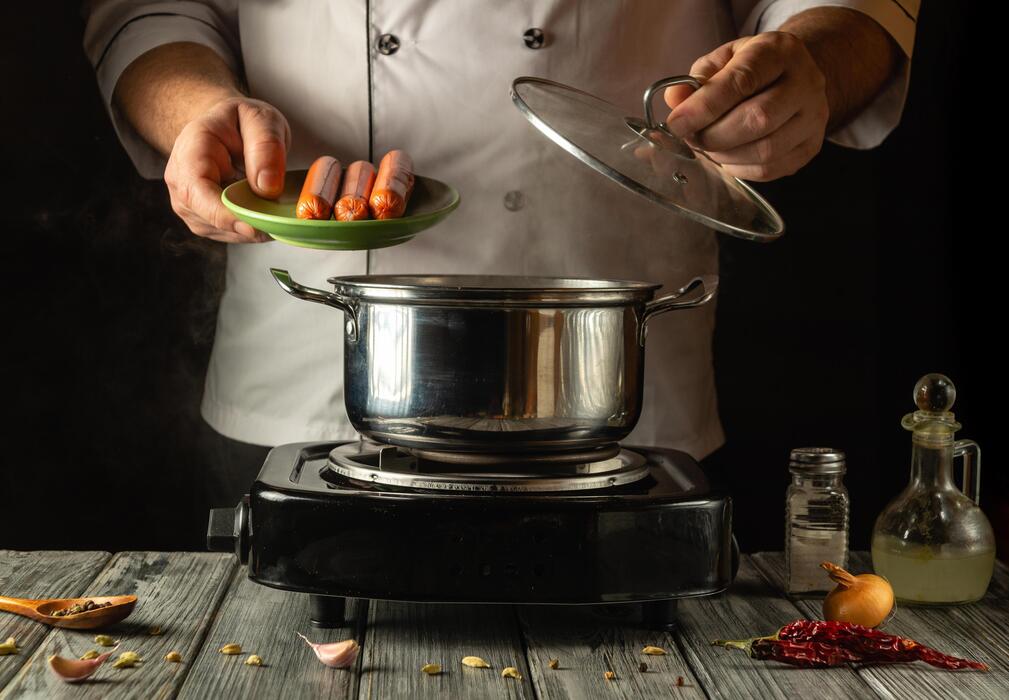
Step-by-step guide to setting up a double boiler
To set up a double boiler for home brewing, start by selecting a large pot (at least 8 quarts) for the bottom and a smaller pot that fits snugly on top, ensuring the bottom of the upper pot does not touch the water.
Fill the bottom pot with 2-3 inches of water, then bring it to a gentle simmer over medium heat—never a rolling boil, as that can cause scorching. Place your brewing ingredients (like hops or specialty grains) in the upper pot with your liquid, and set it atop the bottom pot.
Use a clip-on thermometer to monitor the temperature in the upper pot, aiming for 150-170°F for most mashing or steeping tasks. Stir frequently with a long-handled spoon to distribute heat evenly and prevent hot spots.
This method provides gentle, indirect heat that mimics a heat exchanger’s control but is simpler and cheaper for small batches. Always check water levels periodically, adding more hot water if needed to maintain the simmer.
Tips for avoiding scorching and maintaining steady temps
To avoid scorching with a double boiler, never let the bottom pot boil vigorously—a gentle simmer is key, as aggressive bubbling can splatter and burn ingredients. Use a heat diffuser under the bottom pot if your stove runs hot; this evens out heat and prevents sudden spikes.
For steady temperatures, preheat the water to your target range before adding the upper pot, and adjust the burner as needed to maintain 150-170°F for mashing.
Stir the contents of the upper pot every 2-3 minutes with a silicone or wooden spoon to redistribute heat and prevent sediment from settling and burning. If you notice temperature fluctuations, insulate the sides of the upper pot with a clean kitchen towel (away from burners) to reduce heat loss.
Unlike a heat exchanger, which uses a pump for precise control, the double boiler relies on manual oversight—so keep a thermometer clipped to the pot and check it every 5 minutes. This hands-on approach prevents scorching and ensures consistent results.
Common mistakes to avoid with double boilers
A frequent mistake is allowing the water in the bottom pot to touch the upper pot, which can cause direct heating and scorching—ensure a 1-2 inch gap. Another error is starting with cold water in the bottom pot; always preheat to a simmer first to avoid temperature lag.
Many brewers also neglect to stir regularly, leading to hot spots and burned ingredients—set a timer for every 3 minutes. Overfilling the upper pot is common; leave 2-3 inches of headspace to prevent boil-overs and splashing.
Avoid using high heat to speed up the process—this can cause the water to boil violently, damaging the setup. Finally, don’t skip checking water levels during long sessions; if the bottom pot runs dry, you risk melting the pot or ruining the batch.
Compared to a heat exchanger, the double boiler requires more attention, so avoid distractions. By sidestepping these pitfalls, you’ll achieve gentle, even heating that protects your brew’s flavors and textures.
How to Use a Heat Exchanger for Home Brewing
Step-by-step guide to integrating a heat exchanger
Begin by selecting a plate or counterflow heat exchanger that matches your batch size (e.g., 30-50 plates for 5-gallon batches). Connect the wort outlet from your boil kettle to the hot side input using high-temperature silicone tubing.
Attach a cold water source (garden hose or pump from ice reservoir) to the cold side input, ensuring counterflow direction for maximum efficiency. Sanitize the entire system by recirculating boiling water through the wort side for 10 minutes before use.
After boiling, cool the wort by running cold water while gravity-feeding or pumping wort through the hot side. Monitor the output temperature with a digital thermometer at the collection point; adjust water flow to achieve pitching temperature (65-70°F for ales).
Once collected, flush with hot water and PBW cleaner immediately to prevent clogging. This setup eliminates the need for a double boiler’s batch cooling, offering continuous, fast chilling with precise control.
Tips for optimizing flow rates and temperature control
Achieve optimal heat transfer by maintaining a wort flow rate of 1-2 gallons per minute (adjust with a ball valve). For temperature control, run cold water at a slightly higher flow rate than wort (e.g., 1.5x) to drop from boiling to 70°F in a single pass.
Use a pre-chiller setup if ground water is warm (above 75°F): recirculate ice water through the cold side via a submersible pump. Monitor both input and output temperatures with inline thermometers; if output is too warm, reduce wort flow or increase cold water flow.
Prevent thermal shock by gradually starting the cold water before wort flow. For precise fermentation temps, connect a temperature controller to a solenoid valve on the cold water line, adjusting based on real-time wort readings.
This method outperforms a double boiler’s static cooling by enabling dynamic, continuous adjustment without waiting for bath recharges.
Common mistakes to avoid with heat exchangers
Avoid using a heat exchanger without proper sanitization—always recirculate boiling water or starsan solution before use to prevent contamination. Do not ignore flow rate balance: running wort too fast reduces cooling efficiency, while too slow risks clogging from hop debris (use a hop filter or bag in the boil kettle).
Never disconnect tubing while hot—pressure buildup can cause burns; always shut off flow first. Steer clear of inadequate cleaning—flush immediately after use with hot water, then recirculate PBW, followed by acid rinse to prevent mineral scaling.
Another mistake is using undersized tubing (less than 1/2 inch ID), which restricts flow and causes backpressure. Unlike a double boiler’s simple immersion, heat exchangers require vigilant monitoring of temperature gradients; failing to pre-chill warm ground water can result in wort above 80°F.
Finally, avoid storing wet—disassemble and dry thoroughly to prevent mold growth, ensuring longevity.
Cost and Efficiency Comparison: Double Boiler vs Heat Exchanger
Initial purchase and installation costs
When comparing initial costs, double boilers generally have a lower purchase price than heat exchangers, often by 20-40% for comparable capacity models. However, installation expenses can offset this difference.
Double boilers are simpler to install with standard plumbing connections, but they require more floor space and may need reinforced flooring due to their heavier weight when filled with water. Heat exchangers, while pricier upfront, offer space-saving wall-mounted options and can integrate with existing hot water systems more seamlessly.
For a typical home setup, expect to pay $3,000-$5,000 for a quality double boiler installed, versus $4,500-$7,000 for a heat exchanger system. Consider your available space and existing infrastructure—if you have limited room, the heat exchanger’s higher initial cost may be justified by its compact footprint and reduced renovation needs.
Always get multiple quotes and factor in any electrical upgrades required.
Energy consumption and operating expenses
In terms of ongoing costs, heat exchangers are typically 15-25% more energy-efficient than double boilers because they heat water on demand without maintaining a reservoir. Double boilers constantly heat a large water volume, leading to standby heat losses of 1-2 kWh per day, even during idle periods.
This translates to $50-$150 higher annual energy bills for a typical household using a double boiler. However, heat exchangers require higher water flow rates to activate, which can increase water usage if you frequently run taps briefly.
For commercial settings with high hot water demand, heat exchangers excel by reducing energy waste. To minimize expenses with a double boiler, install a programmable timer to heat water only during peak usage hours.
With a heat exchanger, ensure proper insulation of pipes and set the thermostat to the lowest comfortable temperature to maximize savings.
Long-term durability and replacement parts
Durability considerations favor double boilers for longevity, often lasting 15-20 years with minimal maintenance, as they have fewer moving parts and simpler construction. Replacement parts like heating elements and thermostats are widely available and inexpensive, typically costing $50-$200.
Heat exchangers, while also durable, have more complex components like plate stacks and control valves that may require professional servicing every 5-7 years. Replacement parts for heat exchangers can cost $300-$800 due to specialized designs.
For maximum lifespan, flush your double boiler annually to remove sediment buildup, which can reduce efficiency. With heat exchangers, install a water softener if you have hard water to prevent scale accumulation on heat transfer plates.
Both systems benefit from annual inspections, but the double boiler’s simplicity makes it more DIY-friendly. If you prioritize long-term reliability with lower replacement costs, the double boiler is the safer choice.
Frequently Asked Questions
What is the main difference between a double boiler and a heat exchanger?
A double boiler uses a separate steam bath or hot water bath to gently heat a container, while a heat exchanger directly transfers heat between fluids (e.g., steam and wort) through a sealed system. Double boilers are simpler and avoid scorching, whereas heat exchangers are more efficient for continuous, large-scale heating.
Which is better for home brewing: a double boiler or a heat exchanger?
For small-scale home brewing, a double boiler is often easier to set up and clean, providing gentle heat for mashing or melting ingredients. A heat exchanger is better for larger batches or all-grain brewing where rapid cooling or precise temperature control is needed, but it requires more equipment and expertise.
Can I use a double boiler as a heat exchanger for chocolate tempering?
Yes, a double boiler is commonly used for chocolate tempering because it provides indirect, gentle heat that prevents scorching and allows precise temperature control. A heat exchanger is not typically used for chocolate due to its rapid heat transfer, which can cause uneven melting or overheating.
How do I choose between a double boiler and a heat exchanger for distilling?
For distilling, a heat exchanger is preferred for efficient vapor condensation and energy recovery in continuous systems, while a double boiler is rarely used due to its lower efficiency. However, for small-batch pot distilling, a double boiler can be adapted for gentle heating of delicate spirits.
Which is more energy-efficient: a double boiler or a heat exchanger?
A heat exchanger is generally more energy-efficient because it directly transfers heat with minimal loss, often recovering waste heat. A double boiler loses more energy through steam or hot water vapor, making it less efficient for continuous or high-volume applications.
Can a double boiler be used for pasteurization instead of a heat exchanger?
A double boiler can pasteurize small batches (e.g., milk or juice) by holding it at a specific temperature for a set time, but it is slower and less precise. A heat exchanger is more efficient for continuous pasteurization in commercial settings, ensuring rapid heating and cooling.
What are the safety differences between a double boiler and a heat exchanger?
Double boilers are safer for home use because they operate at lower pressures and reduce the risk of burns from direct steam or hot surfaces. Heat exchangers, especially those handling high-pressure steam or hot fluids, require proper insulation and pressure relief valves to prevent accidents.
Is a double boiler or heat exchanger easier to clean?
A double boiler is easier to clean because it typically has fewer parts and surfaces that contact food or liquids. Heat exchangers have complex internal channels or plates that can trap residues, requiring disassembly and specialized cleaning for hygiene in brewing or dairy use.
Conclusion
Choosing between a double boiler and a heat exchanger depends on your brewing priorities. The double boiler offers unmatched temperature stability and simultaneous steaming for espresso purists, while the heat exchanger provides faster recovery and efficiency for high-volume milk drinks. Ultimately, both can produce excellent coffee. Assess your typical workflow and budget, then invest confidently. Master your machine, and enjoy the journey of perfecting your craft.