
Keg To Keg Transfer
Transferring beer from one keg to another doesn’t have to be a messy or intimidating process. Whether you are looking to leave sediment behind, split a large batch, or move your brew into a serving keg, a closed-loop transfer is the best way to keep your beer fresh and oxygen-free. In this guide, we will show you exactly how to perform a seamless keg to keg transfer using simple tools like jumpers and CO2 to protect your flavor.
Why you should use a keg to keg transfer
Moving beer from a fermentation keg to a serving keg
Transferring beer from a fermentation keg to a dedicated serving vessel is a critical step for maintaining professional quality at home. By utilizing a closed-loop pressure transfer, you can move your finished beer without exposing it to the atmosphere.
This method ensures that the carbonation levels remain stable and the beverage stays carbonated throughout the process. Using a liquid-to-liquid line connection allows you to leave behind the trub and yeast cake that settled during fermentation.
This results in a cleaner flavor profile and prevents off-flavors that can occur when beer sits on spent yeast for too long.
Mastering this transfer technique allows you to free up your fermentation equipment quickly, enabling a faster brewing rotation while ensuring your serving keg contains only the highest quality finished product ready for immediate chilling and carbonation.
Filtering out sediment and hop particles
A primary benefit of a keg to keg transfer is the ability to achieve commercial-grade clarity through mechanical filtration.
By placing an inline filter between two kegs, you can effectively trap hop debris, proteins, and yeast cells that would otherwise cause cloudiness or ‘chill haze.’ This process is far more efficient than relying on gravity alone, as the pressurized flow forces the liquid through fine mesh screens or cartridges.
Using a 5-micron or 1-micron filter during the transfer ensures that every pour from your serving tap is sparkling clear and free of gritty particles. This is especially important for heavily dry-hopped styles like NEIPAs or West Coast IPAs, where hop creep and particulate matter can negatively impact the mouthfeel.
A clean transfer results in a visually appealing beer with a crisp, professional finish that highlights the intended malt and hop characteristics.
Splitting a large batch into smaller containers
Performing a keg to keg transfer is the most efficient way to manage inventory and distribution of a large batch. Whether you have brewed a 10-gallon batch or simply want to share a portion of a standard keg, transferring to smaller 1.5-gallon or 2.5-gallon ‘stackable’ kegs offers incredible flexibility.
This method allows you to reserve a portion for aging while consuming the rest immediately, or easily transport smaller vessels to social gatherings without hauling a full-sized setup. By using counter-pressure techniques, you can fill these smaller containers without losing carbonation or introducing air.
This versatility ensures that your beer stays fresh in appropriately sized vessels, reducing the headspace that can lead to stale flavors over time. It is a practical solution for brewers who want to experiment with different infusions or dry-hopping additions in smaller sub-batches from a single master brew.
Protecting your beer from oxidation
Oxidation is the primary enemy of fresh beer, leading to cardboard-like flavors and darkened colors, but a keg to keg transfer provides the ultimate defense against oxygen. By purging the receiving keg with CO2 and utilizing a closed system, you ensure the beer never touches the outside air.
This anaerobic environment is vital for preserving the delicate volatile aromatics found in hop-forward beers. Using a spunding valve on the receiving end allows you to maintain back-pressure, which prevents foaming and keeps the dissolved gases in solution.
This meticulous approach to oxygen management significantly extends the shelf life of your brew, keeping it tasting ‘brewery fresh’ for months.
Investing the time in a proper pressure transfer is the single best way to protect your hard work and ensure that the final glass tastes exactly as you intended when the recipe was designed.
Essential equipment for a closed loop transfer
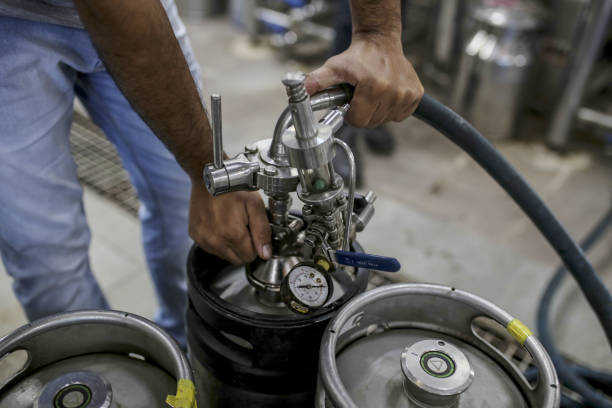
Liquid-to-liquid jumper lines
To facilitate a seamless transfer between two kegs, the most critical piece of hardware is a liquid-to-liquid jumper line. This assembly consists of a length of food-grade tubing, typically made of reinforced PVC or antimicrobial barrier hose, fitted with liquid ball lock or pin lock disconnects on both ends.
This specialized line allows beer to flow directly from the ‘out’ post of the full keg to the ‘out’ post of the receiving keg, ensuring the beverage travels through the dip tube to minimize splashing.
By keeping the liquid submerged during the entire process, you effectively eliminate oxygen contact, which is the primary goal of a closed loop system. It is vital to ensure that all connections are secured with stainless steel Oetiker or worm gear clamps to prevent leaks under pressure.
Before starting the transfer, you should always sanitize the jumper line thoroughly by pushing a small amount of Star San through the hose to maintain the microbiological stability of your finished beer.
Gas manifolds and CO2 regulators
Managing the pressure differential between the source and destination is impossible without a reliable CO2 regulator and a gas manifold. A high-quality dual-gauge regulator allows you to monitor the remaining volume in your tank while precisely controlling the output PSI delivered to the source keg.
Using a gas manifold or a simple Y-splitter is highly recommended because it enables you to apply pressure to the full keg while simultaneously purging or pre-pressurizing the receiving vessel. This hardware ensures that the entire environment remains anaerobic.
You should look for regulators with fine-tune adjustment knobs to maintain a low pressure delta, usually around 2 to 4 PSI, which prevents excessive foaming during the move.
By utilizing a manifold with integrated check valves, you protect your equipment from accidental backflow, ensuring that no liquid ever enters your gas lines.
This setup provides the necessary force to push the liquid through the jumper line while maintaining the carbonation levels and structural integrity of the beer throughout the transfer process.
Pressure relief valves and spunding valves
While the gas side pushes the liquid, the receiving end must be able to vent gas to make room for the incoming beer, which is where pressure relief valves and spunding valves become essential.
A standard manual relief valve on the keg lid can be used to bleed pressure, but a dedicated spunding valve offers far superior control. By attaching a spunding valve to the gas ‘in’ post of the receiving keg, you can set a specific back-pressure limit.
This allows the gas to exit slowly and automatically as the liquid level rises, maintaining a consistent flow rate without the need for manual intervention. This precise regulation prevents the beer from rushing into the new keg too quickly, which helps reduce turbulence and CO2 breakout.
Furthermore, using a spunding valve ensures that the receiving keg never drops to atmospheric pressure, thereby preserving the head retention and delicate aromatics of the brew. Investing in an accurate digital or analog gauge for your spunding assembly allows for a perfectly balanced closed loop transfer every time.
How to prepare and sanitize your kegs
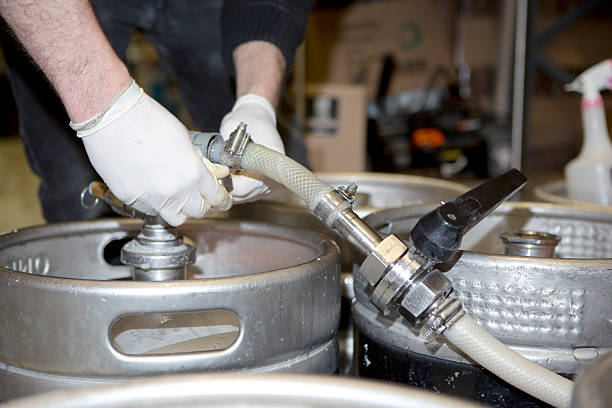
Cleaning steps for used kegs
Before initiating a keg to keg transfer, you must ensure the receiving vessel is free of organic residue or beer stone. Begin by rinsing the interior with warm water to remove loose debris, then fill the keg with a hot solution of alkaline brewery wash or PBW.
Allow this to soak for at least thirty minutes to break down stubborn proteins. For a thorough deep clean, disassemble the liquid and gas posts using a socket wrench to inspect the poppets and dip tubes for hidden buildup.
Use a dedicated nylon brush to scrub the interior walls and the long liquid dip tube specifically. Once the soaking period is complete, scrub any remaining spots and rinse the keg repeatedly with clean water until no slippery residue remains.
Checking the integrity of the rubber O-rings during this stage is vital; if they appear cracked or flattened, replace them immediately to prevent oxygen ingress or pressure leaks during the subsequent transfer process.
Purging the receiving keg with CO2
To prevent oxidation during a keg to keg transfer, you must eliminate all oxygen from the destination vessel. The most effective method is a liquid-star purge, which involves filling the sanitized keg to the absolute brim with sanitizer solution and then sealing the lid.
Connect your CO2 tank to the gas-in post and a picnic tap to the liquid-out post, then use pressurized gas to push the entire volume of liquid out into a bucket. This ensures that only pure carbon dioxide remains inside the keg, leaving no pockets of air behind.
Alternatively, you can perform a series of high-pressure purges by pressurizing the empty keg to 30 PSI and venting the pressure relief valve at least five to ten times. However, the liquid displacement method is widely considered the gold standard for sensitive styles like NEIPAs.
Maintaining a closed-loop environment is the single most important factor in preserving the delicate hop aromatics and flavor stability of your finished beer.
Sanitizing connectors and jumper lines
The final preparation step involves treating every piece of transfer hardware with a no-rinse sanitizer like Star San. You must submerge your stainless steel jumper line and both liquid ball-lock disconnects in a prepared sanitizing solution for at least two minutes.
Ensure the solution flows through the interior of the tubing to reach all internal surfaces where bacteria could hide. It is helpful to use a small syringe to force sanitizer through the poppets of the disconnects, ensuring the internal springs and seals are fully wetted.
Before connecting the jumper between the two kegs, spray the exterior of the keg posts liberally with a spray bottle. This double-sanitization approach minimizes the risk of introducing wild yeast or spoilage organisms during the move.
Once the lines are treated, keep them submerged or connected to a pressurized source until the exact moment of transfer to maintain a sterile environment. Proper hygiene of these small components is often the difference between a shelf-stable brew and a contaminated batch.
Step-by-step guide to a gravity-fed transfer
Setting up the height differential
To initiate a successful gravity-fed transfer, you must first establish a significant vertical distance between your source vessel and the receiving keg.
Place the full keg on a sturdy elevated surface, such as a high countertop, workbench, or a dedicated brewing stand, while positioning the empty target keg directly on the floor.
This height differential is the primary engine of the process, as gravity must overcome the initial resistance within the tubing to maintain a steady flow. Ensure that both kegs are completely stable and that the area is clear of obstructions that could cause a tip-over during the move.
Before proceeding, verify that the source beer has been properly chilled, as cold liquids retain carbonation much better and are less prone to excessive foaming during the transition.
By maximizing the vertical drop and stabilizing both vessels, you create the necessary potential energy to move the liquid efficiently without needing an external mechanical pump or high-pressure gas source to drive the flow.
Connecting the liquid lines
Once the kegs are positioned, you need to establish a sanitary bridge between them using a dedicated jumper line. This assembly consists of a length of beverage tubing equipped with liquid ball-lock or pin-lock disconnects on both ends.
Start by thoroughly sanitizing the jumper line and the posts of both kegs to prevent any bacterial contamination. Attach the first disconnect to the liquid-out post of the elevated source keg, then connect the other end to the liquid-out post of the receiving keg on the floor.
This configuration is essential because it allows the beer to enter the destination vessel through the internal dip tube, which facilitates a bottom-up fill to minimize splashing and oxygen contact.
Using a sanitized jumper line ensures that your beverage remains clean, while the liquid-to-liquid connection maintains a closed system that protects the delicate flavor profile of your brew. Keep the tubing as straight as possible to avoid air pockets or flow restrictions that could stall the gravity transfer mid-way.
Managing the gas back-pressure
The final critical step in a gravity transfer is managing the internal pressure to allow the liquid to move freely. As beer enters the lower keg, it displaces the gas inside; if this gas has nowhere to go, the flow will quickly stop.
To prevent this, you must link the gas-in posts of both kegs using a second jumper line, creating a continuous loop. This allows the displaced gas from the bottom keg to travel up into the top keg, equalizing the pressure between both vessels.
If the flow is sluggish, you can briefly pull the pressure relief valve on the receiving keg to kickstart the siphon, but be careful not to create a massive pressure drop that causes foaming.
By equalizing the head space between the two containers, you ensure a smooth and consistent flow that relies entirely on gravity. This closed-loop method is the most effective way to prevent oxidation, as it ensures that no outside air ever touches the beer during the entire movement process.
How to perform a pressure-aided transfer
Setting the correct PSI levels
To initiate a successful pressure-aided transfer, you must first establish a precise pressure differential between the source and receiving kegs. Start by ensuring your source keg is pressurized slightly higher than the destination vessel to encourage liquid movement.
A common recommendation is to set your CO2 regulator to approximately 2 to 5 PSI higher than the pressure currently inside the receiving keg.
If the receiving keg is at atmospheric pressure, simply setting your regulator to a low, steady 5 PSI is often sufficient to move the liquid without causing excessive turbulence or foaming.
It is critical to avoid high-pressure surges, as these can disturb any sediment at the bottom of the source keg, leading to a cloudy final product. By maintaining a gentle and consistent pressure gradient, you ensure that the beer flows smoothly through the liquid-to-liquid jumper line.
Always double-check your gas connections for leaks before starting the flow to prevent any oxygen ingress or loss of precious carbon dioxide during the process.
Using a spunding valve for flow control
A spunding valve is an essential tool for managing a closed-loop pressure transfer because it allows you to regulate the backpressure in the receiving keg with extreme precision.
Attach the spunding valve to the gas-in post of the destination keg and slowly adjust the dial to release pressure until the liquid begins to flow from the source.
By maintaining a steady backpressure that is just slightly lower than the supply pressure, you prevent the beer from rushing too quickly, which effectively minimizes foaming and preserves carbonation levels. This method is particularly useful for transferring carbonated beverages that are prone to breakout if the pressure drops too suddenly.
As the liquid fills the new vessel, the spunding valve will automatically vent excess gas to maintain your pre-set equilibrium, ensuring a calm and controlled environment.
This technique not only protects the delicate flavor profile of your brew but also provides a much more predictable transfer rate compared to manually venting the pressure relief valve on the keg lid.
Monitoring the transfer volume
Because you are working with opaque stainless steel vessels, monitoring the transfer volume requires a bit of ingenuity to avoid overfilling or losing prime.
One of the most effective methods is to use a digital scale to weigh the receiving keg in real-time; since one gallon of beer weighs approximately 8.34 pounds, you can track the progress with high accuracy.
Alternatively, you can use a condensation line or a stick-on liquid level strip if the keg is sufficiently chilled, as the temperature difference will create a visible mark on the exterior of the steel.
It is vital to stop the transfer before the source keg runs dry to prevent gas from entering the lines, which can cause splashing and unwanted oxidation. Once the target weight or level is reached, immediately disconnect the liquid jumper and close the gas supply.
Keeping a close eye on these metrics ensures that you leave enough headspace in the destination keg for stable storage while maximizing the yield from your batch without the risk of messy overflows or gas-related turbulence.
Common mistakes and how to fix them
Dealing with clogged poppets and dip tubes
One of the most frustrating hurdles during a keg to keg transfer is a sudden drop in flow caused by debris. This usually happens when hop matter or yeast sediment gets sucked into the liquid dip tube of the source keg, instantly jamming the poppet valve.
To fix this, you should first depressurize the receiving keg and then briefly apply a higher pressure of CO2 through the liquid out post of the source keg to back-flush the obstruction into the tank.
If the clog persists, you must sanitize your tools, remove the liquid post entirely, and clear the spring and poppet manually. To prevent this in the future, always cold crash your beer thoroughly before attempting a transfer to ensure sediment stays at the bottom.
Additionally, using a floating dip tube in the source vessel allows you to draw clear liquid from the top, effectively bypassing the trub layer entirely and ensuring a seamless, clog-free movement of your beverage between the two containers.
Stopping leaks in the jumper line
A leaking jumper line can lead to a sticky mess and significant product loss if not addressed immediately. Most leaks occur at the interface between the tubing and the barb or due to a compromised O-ring on the keg post.
If you notice spraying or dripping, the first step is to check the integrity of your O-rings and apply a thin layer of food-grade keg lubricant to ensure a vacuum-tight seal.
Ensure that your worm clamps or Oetiker clamps are tightened securely around the liquid-to-liquid jumper line to prevent gas from entering the stream. If the leak is coming from the disconnect itself, it may be time to replace the internal gasket or the entire ball-lock assembly.
Always perform a quick pressure test with a small amount of CO2 before opening the main valves to verify that every connection is secure.
Maintaining your hardware by replacing worn rubber components annually will minimize these failures and keep your transfer process efficient, clean, and professional every time you move your brew.
Preventing foam during the transfer process
Excessive foaming during a transfer is typically caused by a pressure differential that is too wide, causing CO2 to break out of the solution. To fix this, you must equalize the pressure between both kegs before you begin the liquid flow.
Start by pressurizing the receiving keg to the exact same PSI as the source keg, then use a spunding valve on the receiving side to slowly bleed off pressure. This creates a controlled, slow flow that keeps the beer under constant tension, preventing the turbulence that triggers foam.
It is also vital to chill both kegs to the same cold temperature, as warmer liquid cannot hold onto carbonation as effectively as cold liquid. If you see bubbles forming in the jumper line, reduce the pressure gap immediately by tightening the spunding valve.
By maintaining a high head pressure in the receiving vessel and ensuring a slow and steady flow rate, you can achieve a quiet, foam-free transfer that preserves the carbonation levels and the delicate aroma of your finished product.
Best practices for maintaining beer quality
Temperature control during the move
Maintaining a consistent environment is critical when executing a keg to keg transfer to preserve the delicate flavor profile of your brew.
Before you begin the process, ensure that both the source vessel and the receiving keg are chilled to the exact same temperature, ideally between thirty-four and thirty-eight degrees Fahrenheit. This synchronization prevents the release of dissolved carbon dioxide, which occurs rapidly when cold liquid hits a warmer surface.
If the receiving keg is too warm, you will encounter excessive foaming that disrupts the flow and leads to significant product loss. Furthermore, keeping the beer cold protects the volatile hop aromatics from degrading due to thermal stress.
Professionals often use a refrigerated environment or insulated jackets during the move to guarantee stability.
By prioritizing strict temperature management, you ensure that the carbonation remains integrated within the liquid, resulting in a seamless transition that maintains the original quality and mouthfeel of the beer without the risk of premature oxidation or unwanted off-flavors.
Minimizing agitation and splashing
The primary goal during any liquid transfer is to protect the beverage from oxygen exposure, which is the leading cause of staling and cardboard-like off-flavors. To achieve this, always utilize a closed-loop system where the beer travels through dedicated lines rather than being poured openly.
You should pre-purge the receiving keg with food-grade CO2 to displace all atmospheric oxygen before starting the flow. During the move, keep the pressure differential between the two vessels as low as possible; a slow, steady stream is far superior to a high-pressure blast.
High velocity causes turbulence and splashing, which increases the surface area of the beer and encourages gas breakout. By using a bottom-up filling technique and maintaining a low-pressure differential, you significantly reduce the risk of mechanical agitation.
This gentle approach preserves the delicate proteins responsible for head retention and ensures that the finished product tastes as fresh as it did in the primary fermenter, free from the damaging effects of aeration.
Post-transfer storage tips
Once the transfer is successfully completed, the way you store the secondary keg will determine the longevity and final clarity of the beer.
Immediately after sealing the receiving vessel, apply a small burst of CO2 and vent the head space several times to ensure any trace amounts of oxygen are fully purged.
Store the keg in a dark, vibration-free environment at a constant serving temperature to allow any remaining particulates to settle at the bottom.
It is highly recommended to let the keg rest for at least twenty-four to forty-eight hours before tapping; this stabilization period allows the carbonation to equalize and prevents a ‘green’ or sharp carbonic bite.
Keeping the keg stationary is essential, as frequent movement can stir up sediment and cloud the pour. By implementing proper head space purging and allowing for a dedicated stabilization period, you maximize the shelf life of your brew.
These final steps are the hallmark of quality control, ensuring every pint poured is crystal clear and perfectly carbonated for the consumer.
Frequently Asked Questions
What is a keg to keg transfer?
A keg to keg transfer is the process of moving beverage from one pressurized container to another, typically to remove sediment or split a large batch. By using a closed-loop system with CO2, you can move the liquid without exposing it to oxygen.
What equipment is needed for a closed-loop keg transfer?
You need two kegs, a CO2 tank with a regulator, and a jumper line consisting of two liquid-out disconnects joined by beverage tubing. A gas-to-gas jumper line is also recommended to equalize pressure between the two vessels.
How do I perform a pressurized keg to keg transfer?
Connect the liquid jumper line between the ‘liquid out’ posts of both kegs. Apply slightly higher CO2 pressure to the full keg while venting the receiving keg, or connect their gas posts to create a balanced loop that allows gravity or a small pressure differential to move the liquid.
Why should I transfer beer from one keg to another?
The primary reasons are to leave behind yeast and sediment after cold crashing or to move finished beer into a smaller serving keg. This results in a clearer final product and prevents ‘off-flavors’ from prolonged contact with the trub.
How do I prevent oxidation during a keg transfer?
To prevent oxidation, you must purge the receiving keg with CO2 before starting the transfer. Using a closed-loop system ensures the beverage only contacts CO2, preserving the flavor and shelf life of the beer.
How long does a keg to keg transfer take?
Depending on the pressure differential and the diameter of your tubing, a standard 5-gallon transfer typically takes between 5 and 10 minutes. Moving the liquid too quickly can cause excessive foaming, so a slow, steady flow is preferred.
Can I transfer beer from a commercial keg to a Cornelius keg?
Yes, this is possible using a Sanke tap adapter. You connect the liquid line from the Sanke coupler to the liquid-in post of the Corny keg, ensuring the receiving keg is pressurized and purged to match the commercial keg’s environment.
Conclusion
Mastering the keg to keg transfer is a vital skill for any homebrewer looking to preserve beer quality and clarity. By utilizing a closed-loop system and minimizing oxygen exposure, you ensure your hard work stays fresh and flavorful. While the process requires patience and attention to detail, the professional results are well worth the effort. Stay consistent with your sanitation, keep practicing your technique, and enjoy serving brewery-quality pints from your own home setup.

