Best Weber Grill Thermometer (Updated | Mar 24th)
Choosing the right thermometer for your Weber grill can feel like a culinary puzzle, but fear not—I’ve tested the top models so you don’t have to. From sleek Bluetooth gadgets that sync with your phone to rugged analog sticks that survive backyard battles, each option brings unique perks. In this guide, I’ll break down accuracy, durability, and price, helping you grill with confidence and serve perfectly cooked meals every time. Plus, I’ll share a quick tip for calibrating any sensor instantly.
Key Takeaways
- The top pick excels with four heat-resistant probes for precise multi-zone monitoring.
- Bluetooth app integration allows real-time temperature tracking from your smartphone.
- Long battery life ensures reliability during extended grilling sessions.
- Choose a thermometer with probe flexibility and app connectivity for best results.
- Ensure heat resistance and wireless range match your grilling setup needs.
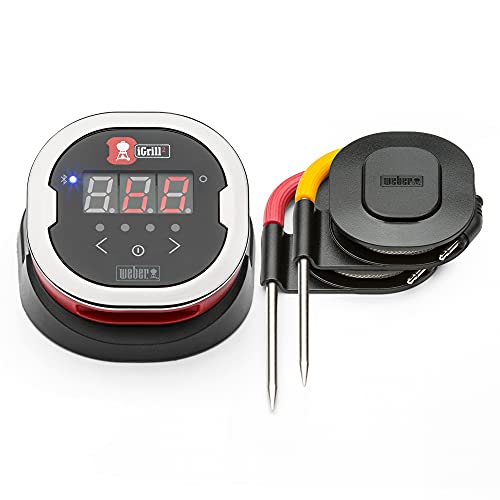
Weber 7203 iGrill Thermometer
Four-Probe Bluetooth
- Four probe flexibility
- Heat resistant probes
- Bluetooth app integration
- BEST FOR FOUR-PROBE BLUETOOTH: Weber 7203 iGrill Thermometer Read More ↓
Product Comparison: Best Weber Grill Thermometer
Weber 7203 iGrill Thermometer
The Weber 7203 iGrill brings smart technology to backyard cooking, letting you monitor up to four probes—two of which come pre‑installed for meat—directly from your phone. Its Bluetooth® connection streams real‑time temperature data to the Weber iGrill app, where you can set custom alerts and watch the grill heat up to 716°F without worry.
A bright LED display on the unit offers a quick glance at current readings, while the 200‑hour battery life means you won’t be swapping cells mid‑cook. Designed for both novice grillers and seasoned pitmasters, it adds precision without complicating the grilling experience.
✓ Reasons to Buy
- Four probe flexibility
- Heat resistant probes
- Bluetooth app integration
- Long battery life
✗ Reasons Not to Buy
- App can lag
- No built-in speaker
Product prices and availability are accurate as of the date/time indicated and are subject to change. Any price and availability information displayed on Amazon.com at the time of purchase will apply to the purchase of this product.
Buying Guide
FAQs
What key features should I prioritize when choosing a Weber grill thermometer?
Look for a reliable temperature range that covers both low‑heat smoking and high‑heat searing, typically 150°F to 500°F. A clear, easy‑to‑read display and a sturdy, heat‑resistant probe are essential for accurate readings. Consider models with wireless connectivity if you want to monitor temperatures from a distance using a smartphone app.
How does the Weber iGrill 2 compare to the basic Weber iGrill 1?
The iGrill 2 adds Bluetooth 5.0 for a more stable connection and supports up to three probes, while the iGrill 1 is limited to a single probe and uses older Bluetooth standards. Battery life is also improved in the iGrill 2, lasting up to 10 hours of continuous use versus about 7 hours on the iGrill 1. Both models integrate with the Weber iGrill app, but the newer version offers more customizable alerts and cooking presets.
Is a wireless thermometer worth the extra cost over a traditional wired model?
Wireless thermometers provide greater flexibility, allowing you to step away from the grill without losing sight of the temperature readout. They often come with smartphone integration, which can send alerts when target temperatures are reached, reducing the risk of overcooking. However, they tend to be pricier and require battery maintenance, so if you only grill occasionally, a wired model may be more cost‑effective.
What should I know about probe durability and cleaning for Weber thermometers?
Weber probes are typically made from stainless steel or high‑temperature silicone, which resists corrosion and can withstand repeated exposure to heat. To maintain accuracy, clean the probe after each use with warm, soapy water and avoid submerging the electronic unit. Some models feature detachable probes, making deep cleaning easier and extending the lifespan of the thermometer.
How do Weber thermometers compare to generic brand alternatives in terms of value?
Weber thermometers generally offer tighter temperature tolerances, more robust construction, and seamless integration with the Weber iGrill app ecosystem. Generic brands may provide similar temperature ranges at lower prices, but they often lack the same level of durability and software support. If you value long‑term reliability and advanced features, the premium price of a Weber model can be justified.
Can I use a Weber thermometer with any type of grill, such as charcoal, gas, or pellet?
Yes, Weber thermometers are designed to be grill‑agnostic; the probe can be inserted into any cooking chamber regardless of fuel source. For charcoal grills, you may need to position the probe through the lid to avoid direct exposure to ash. Ensure the probe length is sufficient for the depth of your grill’s cooking area to get an accurate reading.
What are the best practices for calibrating a Weber grill thermometer?
Most Weber thermometers are factory‑calibrated, but you can verify accuracy by comparing readings with a known reference, such as an oven thermometer set to a specific temperature. If there’s a discrepancy, use the calibration feature in the iGrill app to adjust the offset. Regular calibration checks, especially after battery changes, help maintain precise temperature monitoring.